
Ever felt unprepared before a test? It's much like awaiting clear orders before a morning drill. Breaking down exam questions helps you see exactly what the examiners expect. This simple method lets you spot where you shine and where you might need a little extra practice. When you understand each part, you can plan your moves better and build true confidence. In this briefing, I'll guide you step by step on how a straightforward question analysis can boost your exam readiness and lead you to success.
Military Exam Question Analysis: Key Components and Approach

Question analysis is a way to break an exam question into clear, simple parts. It shows you exactly what examiners are asking and helps pinpoint where you do well and where you might need more practice. Think of it like getting a heads-up before a drill, it helps you tackle each part of the test with confidence.
The exam has four main sections: general reasoning, general knowledge, general science, and mathematics. You will face 50 questions with a total of 100 marks, and you only have 1 hour for everything. Knowing the layout, how many questions there are, how scoring works, and how much time you have, means you can plan your moves and keep your energy up like managing a mission.
The main steps are:
- Figure out the question type
- Decide how hard it is
- Map out what you need to know
- Check your time plans
Once you sort the questions, gauge their difficulty, and plan your time, you’re set to tackle the exam confidently. Just follow a step-by-step plan, much like those military exam strategies you've heard about, and you’ll see your confidence grow as you work through each section.
Dissecting Military Exam Question Types for Analysis

Military exams feature a mix of question styles that test your memory, math skills, and logical thinking. You might need to remember facts, work out problems (simple arithmetic like interest or percentages), or spot patterns in a series of symbols. Each type calls for its own approach, kind of like planning different steps before a mission.
Memory-Based Knowledge Items
These questions check how well you recall information from earlier lessons. They might ask about historical topics, like comparing ancient shelters from Jain and Buddhist traditions. A smart move is to jot down key points while you study, kind of like remembering the exact order of events during a critical drill. That extra bit of practice can really help when you need to pull details from memory during the exam.
Numerical Reasoning Scenarios
This section is all about arithmetic and numbers. Whether it’s working out simple interest on a sum of money, finding ratios, or calculating percentages, break the problem down into easy-to-follow steps. Think of it like organizing a supply run for your unit: first, break the task into small moves, then handle each one in order. This method makes even tricky numbers feel more manageable.
Logical and Code-Language Challenges
These tasks focus on spotting patterns and decoding symbols. You may have to decipher a set of symbols to reveal a hidden message, much like cracking a secret code during a field operation. Practice by looking for repeating shapes or numbers, and quickly rule out options that don’t match. With regular practice, you’ll sharpen your ability to see the clues and act fast.
Focus on each type with tailored drills, targeted memory exercises, step-by-step number practice, and regular pattern decoding. This way, you’re not just studying; you’re building the confidence to tackle any exam question that comes your way.
Analytical Rationale Review: Sample Question Breakdown

Understanding why exam questions are designed the way they are can really boost your exam prep. Instead of rehashing all the details from our sections on Numerical Reasoning Scenarios and Logical and Code-Language Challenges, here we'll focus on common pitfalls and simple tricks to spot hidden hints in question design.
Misleading answer choices pop up a lot. Sometimes an option might seem right at first glance because the numbers or symbols look familiar, but there’s a small error in the way it’s presented. Try this quick check: ask yourself, “Is there a tiny difference here that doesn't match the overall pattern?” For instance, if one number in a sequence is rounded differently than the others, that’s a clear sign to take a closer look.
When it comes to code language challenges, the mapping rules often blur the obvious patterns. The trick is to quickly eliminate answers that stray from the key details. Keep an eye out for any minor inconsistencies, they're usually the hidden cues meant to trick you if you’re not paying attention.
By taking a closer look at how each question is structured, you'll be in a better position to spot these tricky distractions and pick the right answer when it really counts.
Item Difficulty Evaluation and Performance Metrics in Question Analysis
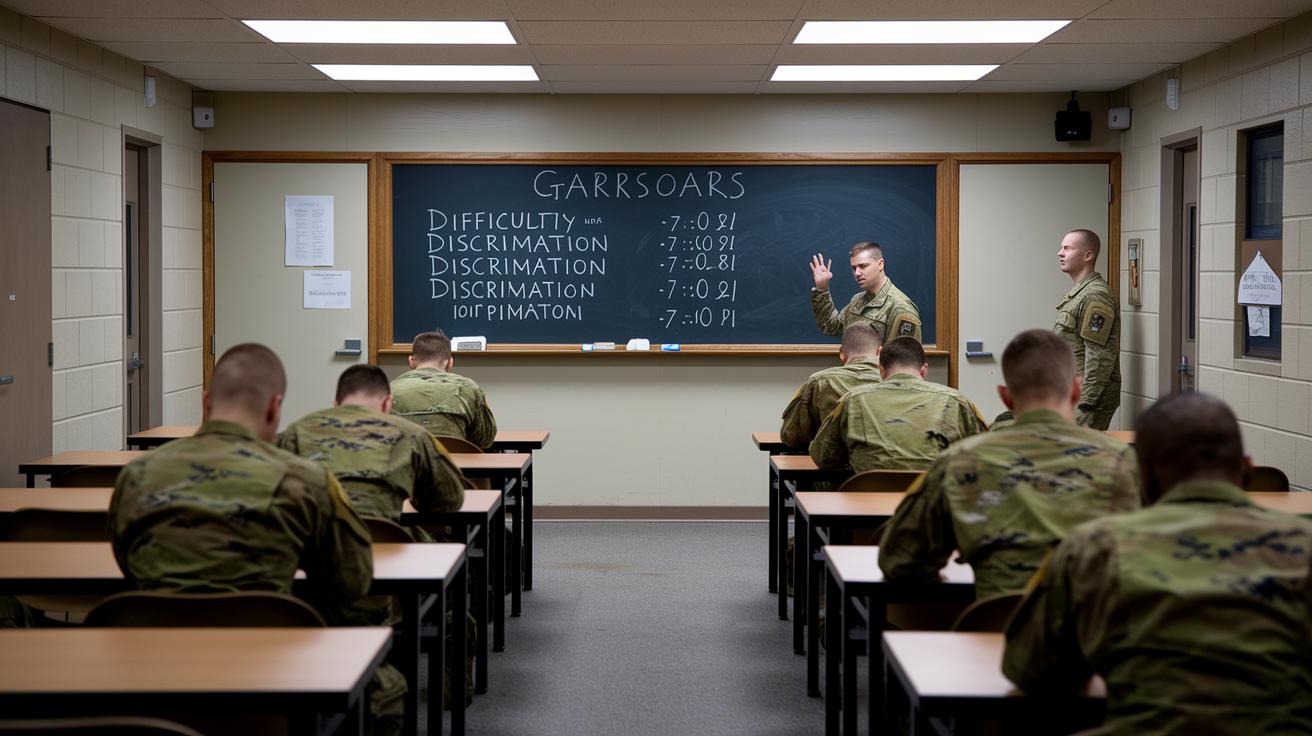
When you get ready for a military exam, it's important to know how each question is rated. One key measure is the difficulty index. This tells you how many people answered correctly. A higher number means most folks got it right, and a lower one means the question is harder. Then there's the discrimination index. This shows the gap between high scorers and low scorers, which helps you see if a question sets apart those who truly understand from those who might be guessing. In the 2025 exam, the overall rating was moderate, but the math section proved to be a bit tougher. These numbers can really help you figure out where to focus your study efforts.
Other useful numbers include the good attempt rate, the average score per section, and comments from other test-takers. The good attempt rate is simply the average count of correct answers in each section. The average score gives you a snapshot of overall performance, and feedback from peers can highlight any tricky parts of the test.
| Metric | Definition | Example |
|---|---|---|
| Difficulty Index | Proportion of correct answers | 0.65 |
| Discrimination Index | Difference between high and low scorers | 0.40 |
| Good Attempt Rate | Average correct answers per section | 38/50 |
Keep these metrics in mind while you plan your study sessions. Work harder on sections with a low difficulty index or where the good attempt rate is down. And if you want more tips on how to use this data for your advantage, check out these strategies for effective data interpretation on military cognitive tests.
Identifying Knowledge Gaps Through Military Exam Question Analysis

When you get a question wrong, it’s like spotting a weak link in your training. You can see which subjects, say, General Science or coding challenges, trouble you the most. It reminds me of noticing you need extra drill practice when something just doesn’t feel right. By writing down the questions you miss, you can link each error to topics like General Knowledge, General Science, Mathematics, or Logical Reasoning.
- Record wrong answers
- Tag by subject
- Tally frequency
- Compare to pass-rate benchmarks
- Set targeted review objectives
Now that you know where your gaps are, the next step is to match your study materials with the official exam layout. This way, your study sessions cover exactly what gets tested, and you can focus on the areas that need a little extra work. Aligning your practice questions and study guides with the exam’s structure not only clears things up but also builds the confidence you need to tackle every section.
Data-Driven Analysis Review for Enhanced Test Preparation

Tracking your performance by session gives you a clear view of how you handle exam conditions. For example, checking data from different times, like June 30 during the 08:30–09:30, 11:30–12:30, and 14:30–15:30 slots, shows how your scores change with the time of day. It’s pretty much like doing an equipment check before a mission; you know exactly where you shine and where you might be a bit off.
- Shift averages
- Subject accuracy rates
- Time per question
- Self-assessment insights
By looking at these core numbers, you can tweak your study tactics and adjust your timing drills. If one slot shows lower scores or slower answers, you might want to give it some extra practice. Regular self-checks along with these insights help fine-tune your strategy, making every minute of your exam practice count.
Tactical Review Process: Applying Military Exam Question Analysis to Strategy

Your tactical review cycle is like planning a mission. It’s your chance to turn exam feedback into clear steps for success. Think of it as a final drill, each detail gets a close look, and every small improvement counts.
Start by digging into your item analysis. Maybe you need 12 out of 15 in General Knowledge, 10 of 12 in Science, 11 of 13 in Math, and 8 of 10 in Logical Reasoning. These numbers help you set realistic time goals for each section and pace yourself evenly. Picture your plan as a set of clear steps that keep you on target during the exam.
- Sectional time blocks: Set specific minutes for each part to keep a steady pace.
- Skip-and-return policy: Flag tough questions to review later, saving precious time now.
- Timed mini-tests on weak spots: Practice under exam-like conditions to boost speed and accuracy where you struggle.
After each practice drill, take a moment to review how you did. This constant look-back helps refine your tactics, making your approach both flexible and strong. Every practice run builds up your confidence and gets you ready for test day.
Final Words
In the action, we broke down the exam into its key parts. We reviewed question types, numerical reasoning, and code challenges, while showing how to spot knowledge gaps. We examined performance metrics and used data-driven insights to build a smart study plan. For those looking for a step-by-step approach, check out our military exam strategies (https://militaryaptitudetests.com?p=2289). This military exam question analysis keeps you focused, ready, and confident for the next test. Keep pushing forward and stay sharp.
FAQ
What is the military exam question analysis PDF?
The military exam question analysis PDF explains how exam questions are broken down by type, difficulty, and time management. It helps you spot patterns that boost exam performance.
What are ASVAB practice tests?
ASVAB practice tests give you sample questions similar to the actual exam, helping you build confidence, fine-tune strategies, and spotlight areas for more focused review.
What do military practice tests include?
Military practice tests cover sections like reasoning, math, science, and coding, offering sample questions and answer strategies that mirror the real exam structure.
How do ASVAB test questions assist in exam preparation?
ASVAB test questions let you see common formats and problem types. They help you understand the exam pattern and develop better methods for answering efficiently.
How can I get an ASVAB practice Test PDF?
The ASVAB practice Test PDF is available through military aptitude test resources. It provides a downloadable set of exam-style questions for self-paced, thorough preparation.
What do Army test questions and answers entail?
Army test questions and answers show real exam formats with sample responses that explain correct strategies. They guide you in understanding how to approach similar questions on test day.
How does the ASVAB test differ for the Army and Navy?
The ASVAB test for the Army and Navy covers common subjects, but each emphasizes skills needed for their field. Army tests often focus on general aptitude, while Navy tests target technical skills.
How do I analyze exam questions effectively?
Analyzing exam questions means breaking them down by type, difficulty, required knowledge, and time needed. This method guides you in choosing the right answer more confidently.
Is 21 a bad ASVAB score?
A score of 21 on the ASVAB is considered low for many military roles. It indicates you might need additional practice and targeted study before attempting the exam again.
Is the ASVAB hard to pass?
The ASVAB can be challenging if you aren’t prepared, but with focused practice and a clear strategy, you can master its moderate difficulty and meet the required standards.
What type of questions are on the military test?
The military test features memory-based questions, numerical reasoning, logical puzzles, and code-language challenges. Each is designed to assess your quick thinking and analytical skills.