
Have you ever noticed how some soldiers can remember every little detail when it matters most? Research tells us that simple memory drills work like sharpening a blade before a mission.
In this guide, I'll share easy tactics that help you recall important facts before any military test (an exam that measures your skills). These straightforward steps turn study time into a smart training session, getting you ready for pressure plateaus on the field.
So, get set to learn techniques that boost not only your exam performance but also your quick thinking during action.
Memory retention tips for military assessments: Winning Tactics
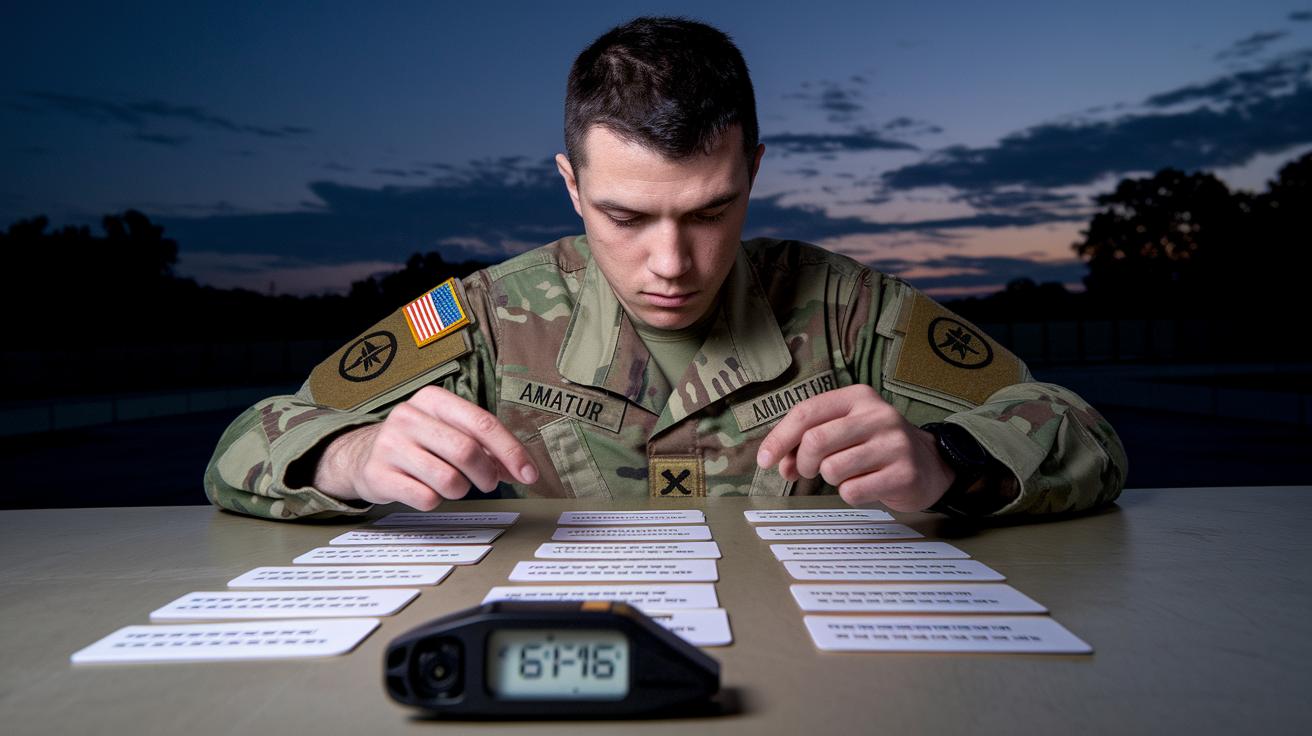
Research shows that soldiers boost their memory when they use science-backed methods. One study in Military Psychology found that regular brain drills helped improve soldiers’ working memory (the short-term storage that also lets you quickly use information). Imagine reading a list once and then recalling every detail in a tough situation. Early drills even let soldiers shine during combat simulations by sharpening their skill to recall things on the fly.
The military often uses a free, 6-minute cognitive test that checks working memory, response control, and motor performance under stress. Think of it like a quick equipment check before heading out on a mission. Soldiers practice active memory drills that turn simple studying into tactical recall, ready for action.
Here are some effective approaches:
| Approach | What to Do |
|---|---|
| Recall Practice | Try to remember details without your notes |
| Chunking | Break info into small parts and review them often |
| Simulated Tests | Create time limits to mimic exam pressure |
Each of these methods is a key part of armed forces exam strategies. They ensure that memory stays active and flexible, especially when every second matters on a mission. Active recall drills help sharpen quick thinking under pressure and keep critical information at your fingertips, exactly when you need it most.
Working Memory Versus Short-Term Memory in Military Assessments
Working memory is like your brain’s real-time processing unit, it helps you handle and use information on the fly. On the other hand, short-term memory is more about holding details for a few seconds without changing them. Recent studies show that soldiers with better working memory make faster and more accurate decisions under pressure, which boosts situational awareness.
New military drills are now training soldiers to use their working memory more effectively. For example, a six-minute cognitive test challenges you to quickly react, manage fatigue, and juggle multiple pieces of information at once. Imagine a scenario during a training operation where a soldier using these drills recalls unit positions and enemy moves almost instantly, proving that active processing beats simple data holding.
Advanced training now includes exercises that mix what you hear with what you see. Soldiers practice by listening to auditory commands while watching visual cues, such as recalling multiple signals during a tactical exercise. One drill had Lt. Smith managing unit positions even amidst heavy distractions during an urban combat simulation, a clear win over standard short-term retention methods.
Military experts emphasize these focused techniques to build strong cognitive endurance. By sharpening your working memory, you’re better prepared for real-life mission situations.
- Active processing instead of just holding data
- Six-minute tests that measure cognitive endurance
- Real-world case studies from military operations
Adaptive Recall Practices and Memory Palace Techniques from SEAL Training
A former Navy SEAL instructor once read 30 phone numbers just one time and later remembered every single digit. That impressive feat shows how effective these memory palace methods and adaptive recall practices can be, especially when you’re under pressure. He first got interested in these techniques during a deployment in Kuwait before 9/11. At the PX, he picked up a book on photographic memory that sparked his curiosity about quick ways to store and recall info. He even remarked, "I glanced at a long string of numbers and in moments, they were all clear in my mind – ready for action."
At sniper school, these methods were sharpened further with focused drills designed to test rapid recall in high-stress situations. During impromptu demonstrations on the street, including one with Senior Chief Otto, soldiers used these memory techniques to create mental maps or memory palaces on the fly. These skills aren’t just for the field; they later proved useful in leadership roles and even in business decision-making.
Here are some adaptive recall strategies soldiers can use for exam study:
- Use vivid mental imagery to connect pieces of information.
- Build a memory palace by linking key points with specific, memorable spots.
- Practice recalling information right after you learn it to strengthen your memory.
These techniques not only gear you up for test situations but also train you for real-world operations. They boost your confidence and ensure that every important detail is ready to be recalled when every second counts.
Neuroplastic Learning Drills for Military Memory Retention

Today’s training drills use special exercises that fire up your brain. They work a bit like your physical workouts; your brain is the muscle here. Programs like NeuroTracker help boost your reaction time, spatial skills, and decision-making (choosing the best option quickly), which is key when every second counts.
Research from Military Psychology shows that regular brain drills can actually increase your working memory (the part of your mind that holds and uses information). Think of it like upgrading your brain’s operating system. Each drill tunes your mind to handle fast, changing information even under stress. Picture a drill that mimics the chaos of a high-pressure mission, where you manage visual cues and sound signals in just a few minutes. One study even found that soldiers improved their decision speed by nearly 20 percent. Impressive, right?
These cognitive challenges do more than just improve raw data processing. They also strengthen the memory networks you depend on during tests. Integrated into regular training, these exercises ensure that when you step up for a mission or exam, your mind is as agile and tough as a seasoned operator.
Session Structuring Tactics and Material Segmentation for Military Memory Retention

Design your study sessions like you're planning a mission. Break up your study material into small, easy chunks. Each segment is like a checkpoint where you review key points before moving to the next part. For instance, study a section for 20 minutes, take a short break, and then tackle the next module, kind of like shifting from one tactical position to the next in field training.
Set up your sessions with regular review intervals. This not only helps the information stick but also builds your mental endurance. Picture it like a drill: after finishing a module, take a few minutes to remember the details without looking at your notes. This active recall works like a quick debrief after a mission, boosting your working memory (the part of your brain that handles immediate tasks).
Remember, institutional resources can be a big help. Many programs and career centers offer structured sessions and feedback loops, making it easier to tailor your study plan. You might even book an info session to set up a calendar with focused modules. Using tools like the "revision methods for military exams" resource can help you plan out your review rhythm. Breaking a large amount of information into bite-sized tasks turns an overwhelming job into clear, achievable steps that keep your memory sharp for military assessments.
Exam Simulation Practice and Stress Response Management for Military Assessments
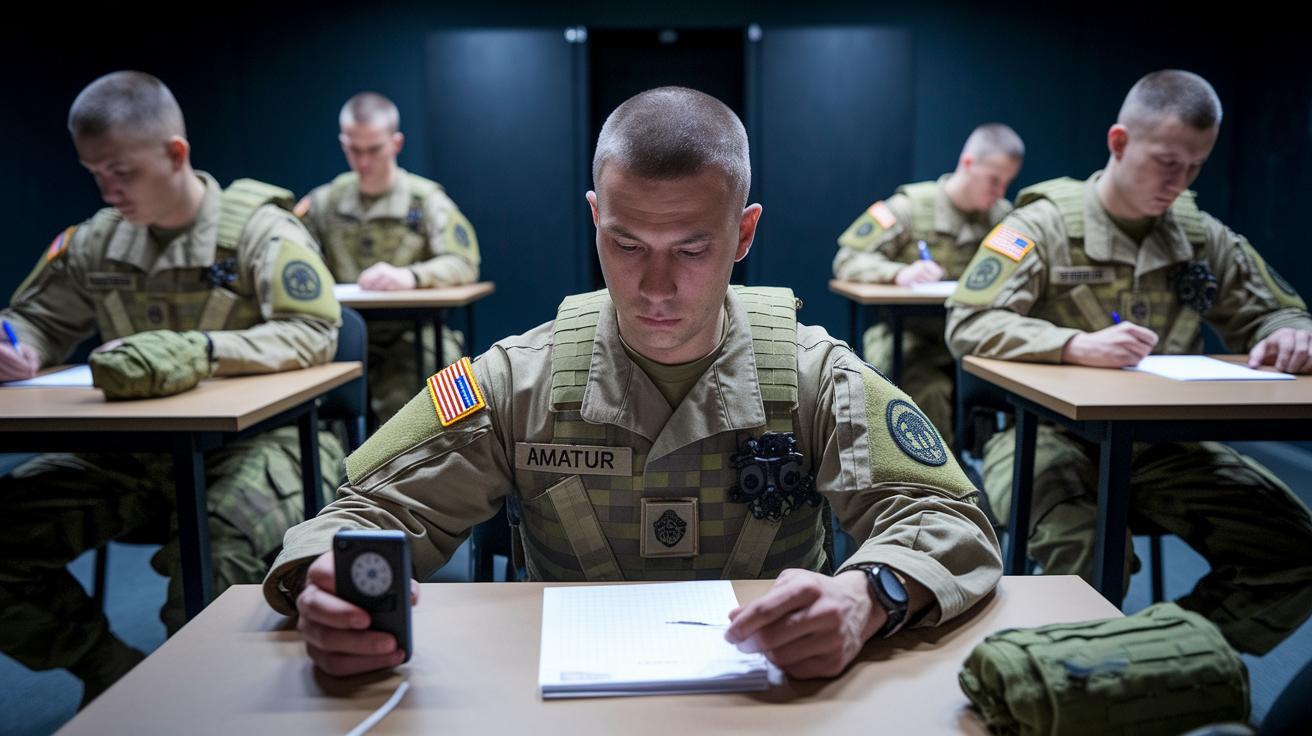
Exam simulation practice is a smart way to get ready for military assessments. It sets up full-scale mock exams that mimic real test conditions so that soldiers can get a feel for the experience. When you work under timed drills that are a lot like field equipment evaluations, it helps you handle stress and sharpen your working memory (that's the ability to hold and process information quickly). This realistic practice helps ease anxiety and builds confidence.
During these drills, soldiers use easy yet effective stress management techniques like deep breathing and visualization. Imagine a moment in a drill where you pause, breathe in slowly, hold it for a second, then exhale completely. That simple act helps calm your nerves before you jump back in. Studies show these timed drills not only boost test performance but also enhance your focus when it really counts.
Mixing exam simulation with stress response techniques gives military personnel more control over their anxiety. This means memory recall becomes more reliable, even under pressure. Practicing under realistic exam conditions makes soldiers familiar with the kind of limited time and high stakes they might face. Each simulation is a chance to build mental strength and improve reaction times when quick decisions are needed.
Final Words
In the action, we covered research-backed tactics that boost working memory and quick thinking. We broke down adaptive recall practices, memory palace techniques, and neuroplastic drills to prepare the mind for test day.
The guide also stressed structuring study sessions and running full-scale exam simulations to manage stress and sharpen focus. All these insights serve as memory retention tips for military assessments, giving you solid tools to build confidence and readiness. Stay determined and keep advancing toward success.
FAQ
Q: What do memory retention tips for military assessments PDF provide?
A: The PDF offers practical memory retention tips that combine active recall practices, session structuring, and neuroplastic drills to boost working memory—a key asset for handling mission-critical tasks during exams.
Q: What does the 8 second bedtime memory technique involve?
A: The 8-second bedtime memory technique involves a quick review of key points right before sleep, helping the brain shift important information into long-term storage during your rest period.
Q: What types of memory strategies are used in military training?
A: Military memory strategies include adaptive recall training, mnemonic devices like the memory palace, and focused neurocognitive drills, all designed to enhance recall and maintain situational awareness under pressure.
Q: How does memory training bolster exam performance and learning?
A: Memory training for exams uses active retrieval, structured review sessions, and simulation practices that reduce test stress while strengthening neural connections crucial for retaining complex information.
Q: What is the 2 7 30 trick for remembering information?
A: The 2 7 30 trick uses spaced reviews at 2, 7, and 30 minutes after learning to reinforce memory retention, making it easier to recall details when you need them most.
Q: What does the 7 3 2 1 memory technique entail?
A: The 7 3 2 1 memory technique guides you to review key information in a set sequence, helping you encode, reinforce, and quickly retrieve details with improved mental agility.
Q: What are the three R’s of memory and how do they work?
A: The three R’s refer to retain, recall, and review. Retaining secures new information, recall retrieves it when needed, and reviewing reinforces memory connections for lasting understanding.
amoxicillin 500mg price
amoxicillin 500mg price
furosemide 20 mg oral tablet
furosemide 20 mg oral tablet
sildenafil para perros
sildenafil para perros
semaglutide nome commerciale compresse
semaglutide nome commerciale compresse
what is the normal dose of topamax for weight loss
what is the normal dose of topamax for weight loss
viagra 100mg price
viagra 100mg price
levitra generic brand
levitra generic brand
doxycycline hyclate and alcohol consumption
doxycycline hyclate and alcohol consumption
acyclovir ointment price in india
acyclovir ointment price in india
orlistat side reviews
orlistat side reviews
ivermectin strongyloidiasis outcomes
ivermectin strongyloidiasis outcomes
avanafil side effect information
avanafil side effect information
vardenafil absorption timeline
vardenafil absorption timeline
insurance coverage approval
insurance coverage approval