
Ever notice your energy fading as exam time starts? Military exam stamina is not only about studying hard, it is about using smart and steady tactics that feel like planning a mission.
Think of each practice test as your mission report. It shows you exactly where you stand and what you need to target.
By taking full-length tests and focusing on key drills, you build the strength required for exam day.
In this post, we will go over proven methods to boost your endurance so you can perform your best when the pressure is on.
Operational Preparedness Blueprint for Military Exam Endurance

Start your study cycle with a full-length practice test like the CAT-ASVAB (135 questions in 173 minutes) or the P&P-ASVAB (225 questions in 149 minutes). These tests are like your mission report, giving you a clear look at where you stand. They show your timing and accuracy so you can see your strengths and know exactly where to focus more effort. One recruit even said, "Taking a diagnostic test was like reading my personal mission report; it showed exactly where I needed extra practice."
This first evaluation sets your baseline for training. It helps you map out a plan that changes as you improve. If your early results show a delay in some sections, adjust your study sessions with focused mini drills on those topics. Think of it like reassigning tasks during a mission when new intel comes in.
Use your diagnostic results to build a personalized study plan. Rely on your strengths to boost confidence and schedule extra work for areas that need it. Switch between intense focus on some subjects and refining your techniques in others. This approach sets clear goals and makes sure each study session readies you even better for exam day.
Simulation Exposure Drills to Build Military Exam Endurance
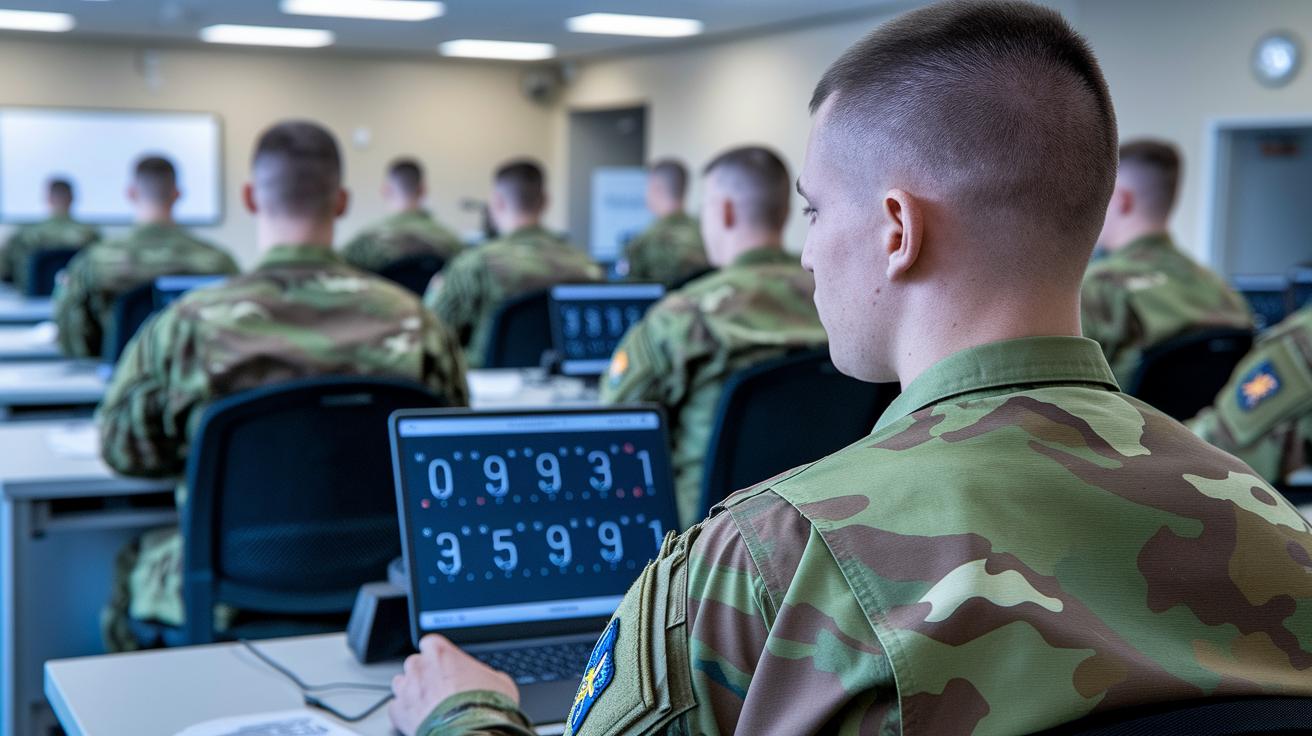
Start by creating drills that mimic the real exam setting. Army SIFT practice tests let you work with strict timers so you learn to manage every ticking second. Try doing a full-length simulation as if you're really in the exam room. You might even think, "I felt the clock ticking like boots on parade, and every second sharpened my focus."
When you repeat these tests, you'll start to notice certain patterns. These patterns help you see where your decision-making speeds up or slows down. Digital drills match real exam conditions with on-screen navigation and realistic timing. They help you get used to the kind of pressure you'll face during the actual exam.
Use the immediate feedback from each drill to zero in on where you can improve. Reviewing the detailed explanations for each answer is like debriefing after a mission, it tones up your decision-making. Mix up your practice by switching between different types of exam questions to build both speed and accuracy under pressure.
Set up these drills as routinely as you would prepare for a mission, and you'll soon see your decision-making skills sharpen as you adjust to different testing scenarios.
Force Readiness Optimization Through Structured Study Schedules

Think of your study time like planning a mission. Set aside 90 to 120 minutes, just like real test conditions. For example, if your exam has 135 questions in 173 minutes or 225 questions in 149 minutes, shape your sessions to match those limits. Start each block with focused work, then take a quick break to catch your breath before diving back in.
Mix up your topics like mini-missions. One round might be all about math basics, while the next focuses on vocabulary or reading skills. Switching gears like this keeps your brain alert and ready for action.
Keep a weekly log of your progress. Write down how you did in each session and mark any areas that need extra work. This simple record helps you adjust your study time and focus on what matters most each day.
Use a timer just like on exam day and stick to the schedule. With each session, you'll build the stamina to tackle the test head-on. Every block of study is a step toward feeling confident and fully prepared when it counts.
Cognitive Agility Routines and Memory Enhancement for Military Exam Endurance

Plan your study time like a mission. Set clear focus blocks of 25 minutes followed by a quick 5-minute break. This method keeps your mind sharp and makes sure you remember key details, even when you’re tired. It’s like drilling repeatedly on the field, each session builds your concentration and helps you notice important patterns.
During your sessions, use simple memory tricks like mnemonics and chunking to break up tough subjects into easy bits. Think of spaced repetition as your way of running through maneuvers before a big operation. After each study block, take a moment to check what needs a little extra work.
Push yourself with drills that mimic exam stress, ensuring your responses stay fast and accurate. Imagine making a split-second decision on a mission where every moment matters. To build this skill, try these techniques:
- Use mnemonic acronyms for tough technical terms
- Create visual maps for different question types
- Review with flashcards at spaced intervals
- Run quick, 3–5 minute review sprints after study blocks
- Combine words with pictures to remember better (dual-coding)
This structured practice not only trains your brain for quick recall but also makes it easier to keep the vital information locked in. When exam day comes, you’ll be ready to act decisively, just like a well-prepared service member on a mission.
Performance Benchmarking Insights to Sustain Military Exam Endurance

Keep track of your answer times and score changes throughout your tests. Use simple data tools to build visual dashboards that show trends and alert you when something doesn’t add up. For example, when I noticed my answers came in faster but with more mistakes, I slowed down to balance speed with accuracy.
Also, use feedback loops that update your performance in real time. Don’t just stick with basic drill logs, add details like recurring error patterns and changes in specific subjects.
You might try these strategies:
- Use charts and graphs to spot shifts in your performance.
- Rely on real-time feedback that lets you adjust your training on the fly.
- Look closely at detailed numbers to see how managing your time affects your accuracy.
- Use automated tools to cut down on manual logging.
- Review trends over longer periods to tweak your training plan.
Think of these advanced metrics like an after-action report. They help you pinpoint exactly where to improve, so you stay strong and ready for your next exam.
Anxiety Abatement Protocols for Steady Military Exam Endurance

When you practice under exam-like pressure, your mind learns to deal with stress better. Try doing drills with a strict timer. This helps you get used to the pace and pressure, builds your confidence, and keeps panic at bay.
Before you start, take a moment to focus on your breathing. Inhale slowly, hold for a second, then exhale gradually. It’s a simple reset that clears your mind when things feel intense.
Also, include short breaks in your study time. Even a one-minute pause to stretch or breathe can stop your mind from getting overloaded. Think of these breaks as mini mission pauses that keep you sharp.
Picture yourself handling tough questions with a calm, steady approach. Imagine walking through each section with clear focus. This mental rehearsal trains you to stay cool under pressure. Stick with these strategies, and you'll face exam day with a clear, ready mind.
Final Words
In the action, we reviewed a blueprint that starts with a full-length diagnostic test, moves through timed simulation drills, and builds structured study schedules. We also covered routines for boosting memory and focus, along with steps to track progress and cut test anxiety. Every part of this plan works together to build readiness, strength, and mental clarity. Keep practicing these strategic methods for military exam endurance, and you’ll see steady improvement with each session. Stay focused and positive on your path to success.
FAQ
How to pass an endurance test and prepare for one?
Passing an endurance test starts with steady simulation drills and timed practice sessions. Use performance feedback and controlled breathing techniques to build focus and confidence for success.
How to build endurance for the military?
Building military endurance means using full-length practice exams, simulation drills, and structured study sessions. Over time, these methods boost both your physical stamina and mental focus to excel on test day.
What is the hardest fitness test in the military?
The toughest fitness test often varies by branch, with some tests combining rigorous strength, speed, and stamina elements that challenge even seasoned service members.