
Ever wondered if you're ready when the pressure is on? Military tests push you to use both a focused mind and solid physical strength. It's like planning a mission where every move really matters. In this post, we'll share easy strategies to build your resilience. These tips help strengthen both your mind and body so you can give your best even when things get tough.
Think of these strategies as tools to help you shake off stress and perform at your peak in any high-stakes test.
Key resilience strategies to excel in high-pressure military tests

When you mix strong mental training with solid physical drills, you set yourself up to meet any challenge head-on. Think of it like combining the Navy SEALs’ “40% Rule” (which pushes you past your limits) with Admiral McRaven’s “Make Your Bed” idea (a daily task that builds momentum). This blend gets both your mind and body ready for extreme tests and tough situations.
When pressure mounts, raw strength isn’t enough. You need quick, clear thinking practiced even when you’re tired, much like soldiers face in SAS or French Foreign Legion selections. Adding in planned recovery steps (time to bounce back) after every workout helps build lasting mental and physical stamina. This balanced system is key for overcoming limits and excelling under stress.
- Mental training using the Navy SEALs’ “40% Rule” to push beyond what you think is possible
- A daily habit of finishing a small task to keep up momentum and build discipline
- Physical endurance drills that mimic the stress of real combat situations
- Tactical decision-making practice under fatigue, inspired by elite military courses
- Structured recovery routines that help you rebuild and stay sharp
Bringing these strategies together strengthens both your mind and body. You build better stress management and cognitive endurance, making it easier to tackle unexpected challenges. In truth, when you practice these methods, you not only become more resilient but also more focused and determined. This integrated approach ensures you’re ready to succeed in the most demanding tests.
Mental conditioning and mental toughness exercises for high-pressure military resilience

Mental toughness is what keeps every soldier moving forward when the going gets tough. Take the Navy SEALs’ "40% Rule" for example, when you feel like you've hit your limit, you’re really only at 40% of what you can do. This simple idea builds your endurance, highlights your hidden strengths, and pushes your mind to break past the comfort zone. It's like giving yourself a quick pep talk just when you need it most.
Daily habits and focused drills are the real game-changers for building this mindset. Simple tasks like making your bed every morning might seem small, but they create a strong routine and boost your confidence with every completed step. Programs like the U.S. Army Master Resilience Trainer offer straightforward techniques to avoid falling into negative thought traps (these are patterns of thinking that hold you back). And when you mix in mental speed drills and exercises that mimic high-pressure scenarios, you sharpen your ability to make quick, solid decisions, just like you would on the field.
Using these methods can really help you keep your cool during stressful tests or missions. When the pressure ramps up, sticking to your proven routines and thinking fast helps you control your emotions and stay clear-headed. Over time, these consistent habits build a rock-solid resilience that makes it easier to stay calm and perform your best, no matter what challenges come your way.
Physical endurance training to boost resilience in high-stress military tests

Extreme endurance events are the backbone of staying combat-ready. Think about events like BUD/S Hell Week, where candidates push themselves for over five days with hardly any sleep. Or the SAS Selection Fan Dance, a 24 km march with a 45 lb pack that must be completed against the clock. These tough challenges push body and mind, echoing the nonstop pressures experienced on the battlefield.
Signature exercises work on more than just muscle, they build overall durability too. For instance, the French Foreign Legion uses long weighted marches and obstacle courses that force recruits to tackle rough terrain while carrying heavy loads. These drills prepare soldiers for harsh conditions, teaching them to keep moving even when fatigue sets in, just like a drawn-out field operation.
Training like this not only toughens your body but also your mind. Every grueling drill helps your system perform under extreme weariness while keeping your focus sharp. Over time, enduring these challenges builds a strong mental state, allowing you to stay calm and collected during those high-stress moments in military tests.
Stress management and recovery protocols for operational stress control

When you're in a high-pressure test, stress can sneak up on you and flip your mind into fight-or-flight mode, making it tough to think straight. A few deep breaths and a bit of mindfulness can clear your head and slow your pounding heart, kind of like pausing before a tricky drill so you can refocus.
After a tough training session, taking time to recover is just as important as the drill itself. A little stretching helps loosen up tight muscles, while eating right and getting solid sleep recharges your body. Picture finishing a grueling workout, then cooling down with some stretches and a healthy snack, it’s a great way to rebuild your energy and keep performing at your best.
Don’t forget the power of having a strong team behind you. Sharing a laugh with your peers and talking through stressful moments can lighten the mood while you swap tips on handling the pressure. Rely on veteran groups or supportive networks, they’re like a safety net that keeps you sharp and ready for the next challenge.
Adaptive simulation drills and cognitive training for sustained resilience

Simulation drills offer soldiers a secure way to practice handling intense pressure. They’re like realistic run-throughs that help you get comfortable in high-stress moments. This training lets you experience combat-like conditions without any real danger, which is key to building mental toughness.
In hands-on exercises, you might take part in SERE (Survival, Evasion, Resistance, Escape) scenarios that mimic the challenges of capture and evasion. You also work on tactical decision-making drills where quick thinking under tight deadlines is a must. These sessions push you to assess risks rapidly and adapt on the fly, much like you’d need to during an actual mission.
Developing your cognitive skills is a big part of this training. Besides strengthening your body, you build mental endurance through situational awareness drills that keep you tuned in to even the smallest changes around you. This training sharpens your focus and helps you make timely, accurate decisions, even when you’re running low on energy.
When you regularly include simulation drills in your training, you not only boost your mental stamina but also sharpen your stress-management skills for real-life operations. These exercises get you ready to decide clearly, stay focused, and act decisively under pressure, ensuring you’re prepared for any challenging mission ahead.
Real-world lessons from elite military programs on resilience building
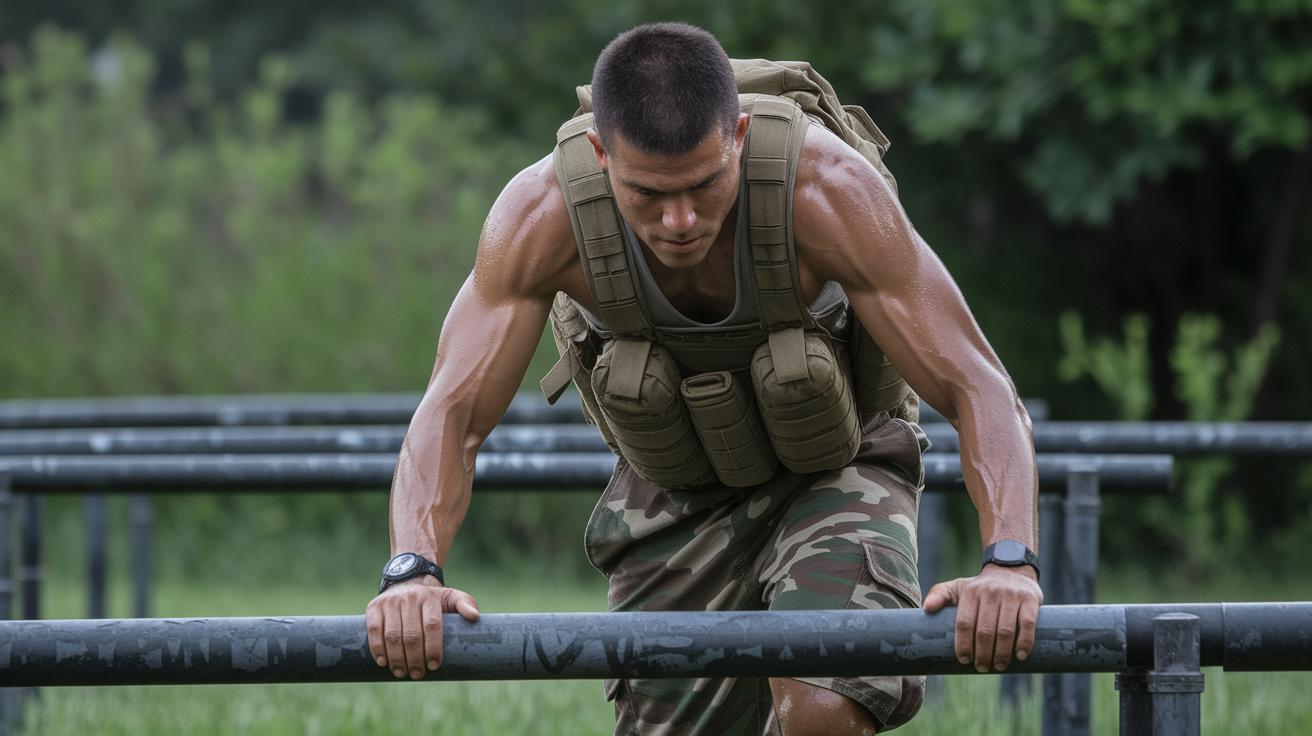
We’ve pulled real examples from demanding courses like SAS Selection, Navy SEALs BUD/S, and the Master Resilience Trainer Program. These insights break down mental toughness, explain the 40% Rule (when you think you’re at your limit, you’ve only hit about 40% of your potential), and show you how to power through with endurance drills.
Final Words
In the action, you learned a mix of mental drills, steady habits, and solid physical training to boost your performance. The blog covered key methods drawn from elite units, giving you clear tactics that build focus and calm in high-demand situations.
By applying these resilience strategies for high-pressure military tests, you can sharpen your cognitive skills, manage stress, and build a lasting, strong mindset. Stay determined, keep practicing these methods, and watch your confidence grow with every step.
FAQ
Where can I access free PDF resources on high-pressure military test resilience strategies?
The free PDF resources provide clear guidance on boosting endurance and mental toughness by sharing elite training methods adapted for high-pressure military testing.
Where can I find military mental toughness training exercises and PDF guides?
Military mental training exercises and PDFs detail techniques for building focus and strength under stress, featuring methods like the “40% Rule” that elite forces use.
What does the military mindset involve?
The military mindset involves staying sharp under stress by using mental conditioning and routine habits that build confidence and enable soldiers to push beyond their perceived limits.
What are the 5 pillars of resilience in the Army?
The 5 pillars of resilience in the Army consist of teamwork, adaptability, self-control, physical readiness, and mental fortitude, all working together to handle tough conditions.
What are the 4 C’s of resilience?
The 4 C’s of resilience are control, commitment, challenge, and connection, which together help soldiers manage stress and maintain high performance.
What is the military resilience testing strategy?
The military resilience testing strategy combines mental conditioning, structured physical drills, and stress exercises to pinpoint strengths and improve performance under pressure.
How does the military teach resilience?
The military teaches resilience by blending mental toughness drills, endurance training, and recovery protocols, ensuring soldiers are fully prepared for high-stress situations.