
Ever wonder why your exam practice tests keep showing the same mistakes? These errors are like missed steps during a training drill. They tell you exactly where you need to improve.
When you review and jot down your mistakes, you turn them into useful lessons that boost your performance. In this post, we share easy tips to help you fix weak spots and build better exam readiness.
Key Error Analysis Strategies to Enhance Military Exam Performance

Using a detailed error review can seriously boost your readiness for military exams. Instead of just chasing a higher score on practice tests, you can turn every mistake into a learning moment. Think of it like debriefing after a drill, each error shows a gap that you can work on to improve your performance.
Start by jotting down every mistake right after your test, just like noting a missed target during training. Then, focus on the errors that keep happening; if a particular mistake happens again and again, give it some extra attention. Next, put together a plan with specific steps to fix each type of error, similar to planning a mission with clear objectives.
Dig deep to understand why each mistake happened by asking "why" a few times. Look for patterns across different tests to spot common trouble spots. Finally, design practice drills that directly target these recurring issues.
When you turn errors into stepping stones, you set yourself up for real growth. With a careful review and clear, practical steps, you’ll stop repeating the same mistakes and gain the confidence you need, just like fine-tuning your skills before an important mission.
Categorizing and Documenting Military Exam Errors

Keeping track of your mistakes is a key part of getting ready for military exams. When you take practice tests, you'll likely notice the same kinds of issues, whether it's mixing up concepts, missing steps, or not managing your time well. Breaking your errors into simple categories, like conceptual, procedural, carelessness, and time management, helps you focus your study sessions more effectively. This kind of organization lets you spot trends, figure out which mistakes hurt your score the most, and know exactly where to put in extra effort.
| Error Type | Example | Impact |
|---|---|---|
| Conceptual | Misunderstanding exam theory | Creates overall confusion |
| Procedural | Skipping steps while solving problems | Leads to incomplete answers |
| Careless | Misreading questions | Results in avoidable errors |
| Time Management | Spending too long on one section | Leaves less time for other parts |
It’s a smart move to keep your error log up to date. Write down your mistakes as soon as they happen and note the type. After a few drills or practice tests, take a look at your log to see how often different errors pop up. This review helps you focus on the areas that need the most work. Regular check-ins with your error log let you adjust your study plan so you don’t keep making the same mistakes, steadily boosting your exam readiness.
Applying Root Cause Analysis to Military Exam Mistakes
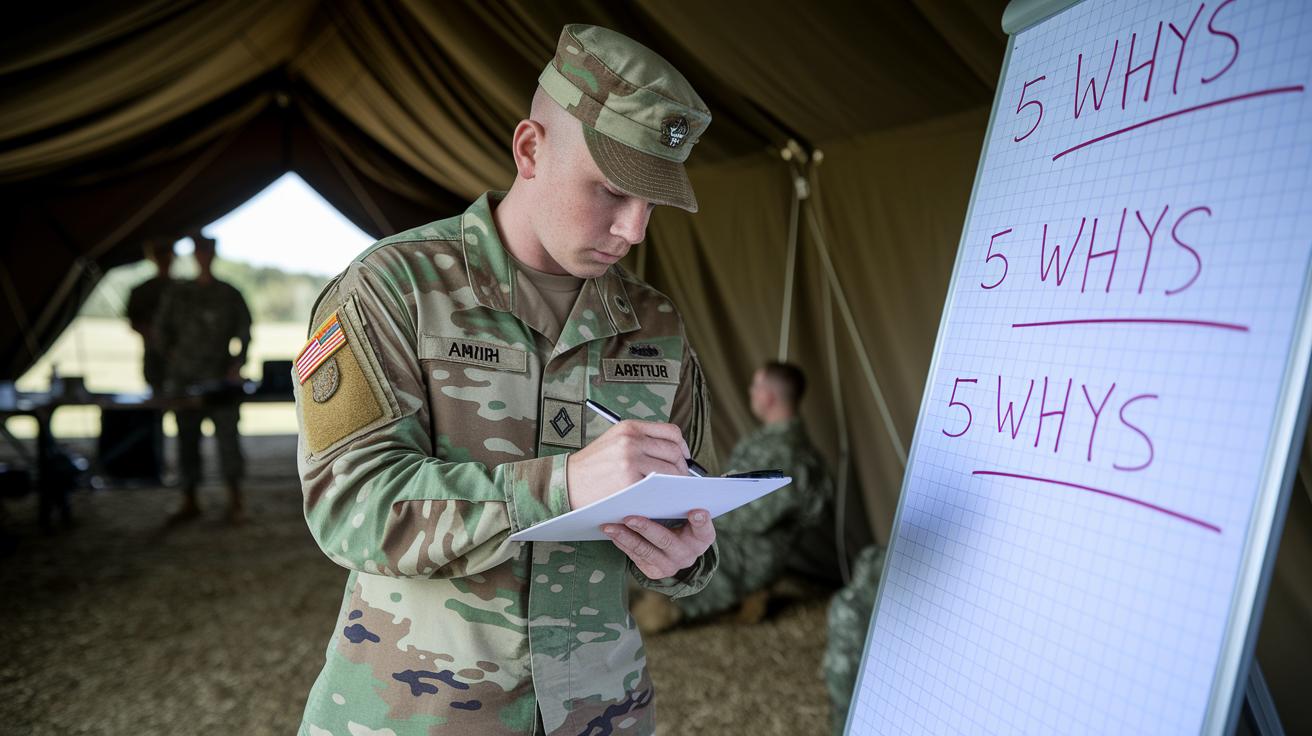
Root cause analysis digs deep into why you keep making the same mistakes during military exam practice. Instead of just treating the symptoms, you find the real issues behind your errors. Think of it like preparing for a mission, you review every detail to see what went wrong. When you know the true cause of a mistake, your study time becomes much more focused.
5 Whys Technique:
The 5 Whys Technique is a simple method that gets to the bottom of a mistake by asking "why" several times. If you miss a question on a tactical problem, ask yourself why. Maybe it was because you glossed over a key concept. Then ask again, “Why was that concept hard to grasp?” Keep probing until you uncover the real gap in your understanding. This method turns each error into a chance to improve and build a stronger base of knowledge.
Fishbone Diagram Approach:
A fishbone diagram is a visual tool that helps you map out all the potential factors behind a mistake. Picture it like this: you create a main line for the error and branch off into factors like misreading instructions, using unclear study materials, or dealing with stressful test conditions. By linking these factors, you can see the whole situation more clearly. Breaking down the problem into smaller parts makes it much easier to fix the root issue.
Using these techniques in your study routine means you’re not just fixing mistakes; you’re learning why they happen. Every practice test becomes like a mission debrief, getting you ready for real exam conditions by focusing on the areas that need improvement.
Recognizing Patterns and Creating Targeted Study Plans

When you go over your mistakes, it’s like having a debrief after a mission. Every error you make gives you a hint on which subjects need extra work. For instance, if you keep getting stuck on test procedures, that’s your clear signal to focus there.
Try making a simple visual chart to record how often each mistake happens. Write down the mistake type, like “time management,” and note how frequently it occurs. For example, you might have an entry that reads, “Technical skills: 5 times.” This chart helps you clearly see which topics need the most attention.
Once your chart is ready, design your study sessions to target these problem areas. Pick practice drills that work on your most frequent errors. You might even use digital tools to track your progress over time. By aligning your study plan with the chart, you sharpen your skills and build genuine confidence for the test.
Essential Tools and Resources for Military Error Analysis

Keeping track of your mistakes is a lot like reviewing a mission debrief. Whether you use digital tools or simply jot things down on paper, these methods help you record errors quickly and clearly. They give you a fast look at how often mistakes occur and what types they are, so you can adjust your study plan on the fly. This means less time wasted and more focus on getting better.
Digital Tracking Software:
Digital platforms work like a trusty watchdog. They provide real-time data and sort your errors into clear categories. You get instant performance charts that show you exactly where you need more work. And by pairing your study sessions with tools like military exam answer optimization strategies (a way to improve your answers fast), you can integrate smart data into your routine for a quicker, more effective response.
Manual Error Log Templates:
Every now and then, the simple act of writing things down makes all the difference. A well-structured manual log lets you record each mistake and track your progress over time. These logs are perfect for one-on-one sessions, where personal feedback turns your notes into clear, actionable steps for improvement.
Continuous Improvement and Case Studies in Military Exam Error Analysis

A recent study showed that candidates bumped up their scores by 15% when they used a structured error analysis process. They reviewed every mistake and worked on fixing them, turning their study routine into an exact, results-driven method. Simply put, learning from errors set a strong base for tackling military exams.
Getting one-on-one guidance based on detailed error logs can really keep your performance growing. When you sit down with a mentor to talk about repeating mistakes, you can set up personalized plans that target exactly where you need help. This tailored approach makes every study session more effective and turns error analysis into a powerful tool for progress.
Regularly checking your error logs is key for staying ready for exams. Short debriefing sessions help you spot new patterns and adjust your study plan quickly. Try to build a routine where you review your mistakes and fine-tune your tactics. Think of using targeted revision strategies for military tests (more info here: https://militaryaptitudetests.com?p=1173) as a way to sharpen your skills, bringing you one step closer to success each time.
Final Words
In the action, the post reviewed structured error analysis by breaking down mistakes with clear, practical steps. It explained how to categorize errors, apply root cause techniques like the 5 Whys and fishbone diagrams, and use targeted study plans supported by both digital and manual tools.
By integrating effective error analysis strategies for military exam improvement, every step builds confidence and readiness. Keep moving forward, learn from each practice session, and take on your next test with renewed determination.
FAQ
Q: What are effective error analysis strategies for military exam improvement (Reddit, 2022, 2021) and what is the error analysis strategy?
A: The effective error analysis strategy turns mistakes into learning opportunities by using systematic logging, prioritized review, personalized action plans, root cause investigation, pattern recognition, and targeted practice drills.
Q: What are the 4 procedures for error analysis?
A: The four procedures for error analysis include recording mistakes, categorizing error types, investigating error causes, and creating corrective practice plans to improve exam readiness.
Q: What are the 5 steps of error analysis?
A: The five steps of error analysis involve reviewing test performance, categorizing mistakes, identifying error patterns, analyzing root causes, and applying targeted practice drills for continuous improvement.
Q: What are the 4 types of error analysis?
A: The four types of error analysis focus on conceptual errors, procedural mistakes, carelessness, and time management issues, guiding focused study sessions to boost exam performance.