
Ever wonder if a few simple exercises can really prep your brain for test day? Imagine rushing through quick math questions, solving fun puzzles, and sharpening your memory, all in just a few minutes. This kind of practice is like a warm-up drill that gets your mind in gear, building speed and focus while boosting your confidence before the exam. It strengthens your mental agility and gets you ready to tackle the real test with determination.
Hands-on cognitive test practice toolkit

Looking to sharpen your mind for the real challenge? Our interactive tools let you build your skills under exam-like conditions. One free CCAT practice tool even gives you a smaller version of the full test, 30 questions to tackle in 9 minutes. It covers basic math and algebra problems (that means doing calculations in your head without a calculator). It also tests your verbal and logic skills with simple analogies and puzzles. Plus, drills in abstract and spatial reasoning help you get a feel for spotting patterns with matrix and shape questions.
Try this out: solve 5 quick math problems in under 2 minutes. It’s a neat way to train your pace and focus while feeling the pressure of test day. There are also extra exercises like memory tasks that ask you to remember a series of numbers or symbols after a brief look, which boosts your short-term recall.
Here are some top interactive platforms:
- Free CCAT simulators with timed scoring
- Memory analysis tasks and drills
- Online brain-quiz modules with printable score reports
Each tool is designed to build your confidence and speed while getting you used to the exam format. Practice in similar conditions to test day and watch your overall performance improve.
Cognitive test practice: Sharpen Your Mind

Start your warm-up with a brisk 5-minute session to get your brain in gear. For instance, kick off by answering three quick number questions in under a minute – like “What is 5 + 6?”. This simple drill helps speed you up, getting you ready for the tougher challenges ahead.
Next, break your main practice into 15-minute sessions focused on two key areas: numerical reasoning and non-verbal puzzles. For numerical reasoning, work on basic arithmetic and algebra problems as if you’re in a timed race. And for non-verbal exercises, try out pattern recognition tasks – think of puzzles where you spot differences in shapes or find the odd one out. One example might ask: “List the next shape in this series: square, triangle, square, ?”. This kind of practice really sharpens the skills you'll need during the test.
Once you finish your drills, spend a final 5 minutes going over your answers. Look back at any questions that gave you trouble so you can learn from them. Typically, average candidates get about 24 out of 50 CCAT questions right. But if you’re aiming for those competitive roles, try pushing for 30–35. Simulating timed, test-like conditions during practice makes the experience feel real, boosting your confidence for the big day.
Neural reasoning modules for cognitive test practice

This training module mimics real exam tasks by using timed drills that boost your core reasoning skills. About one out of every three CCAT questions focuses on number puzzles like simple math and algebra (basic calculation without a calculator), so practicing here sharpens your quick math skills for test day.
Numerical Reasoning Drills
Timed arithmetic and algebra challenges help you build quick calculation skills. You'll tackle problems like "What is 7 × 6?" or "Solve 15 − 8", just the kind of puzzles you'll see on test day. I remember starting out with drills like these to build my mental agility.
Verbal & Logical Reasoning Tasks
These exercises push you with timed analogy puzzles and deductive reasoning tests that require you to connect ideas fast. For example, you might be asked, "Complete the analogy: soldier is to weapon as driver is to ___?" This trains you to switch between language and logic on the fly. Picture yourself solving that puzzle during a drill, it really gets you thinking quickly.
Abstract & Spatial Reasoning Drills
In these drills, you'll work through shape matrices, series completion puzzles, and tasks that ask you to find the odd one out. They teach you to notice subtle differences and patterns, which is key to scoring well. Imagine scanning a set of shapes and picking out the one that doesn't belong, it’s all about honing your detail vision.
For more advanced strategies, check out our targeted practice guide for military cognitive tests.
Memory analysis tasks in cognitive test practice

Memory analysis tasks are like drills for your brain. They help you sharpen your memory so you can recall important details during tests. Try an associative memory drill where you quickly remember a string of letters, like A, F, K, P, U. It’s just like running through a mission checklist in a tight timeframe.
Word fluency drills are another key part of your practice. Imagine you have 60 seconds to write a brief email. You might say, "Great job today, everyone. Let's keep up the strong work!" This quick exercise helps you choose words faster, like getting your orders clear before heading out on a mission.
Perceptual speed exercises get you to spot the odd symbol in a set. Picture a group of symbols, %, &, @, *, and quickly pick the one that doesn’t fit. These drills train you to think fast, which can really make a difference when every second counts.
Spatial recall challenges ask you to study a grid of objects for 30 seconds and then remember exactly where each item was located. By practicing these drills regularly, you boost your memory strength, making your test sessions sharper and more effective.
Timed reasoning drills for cognitive test practice
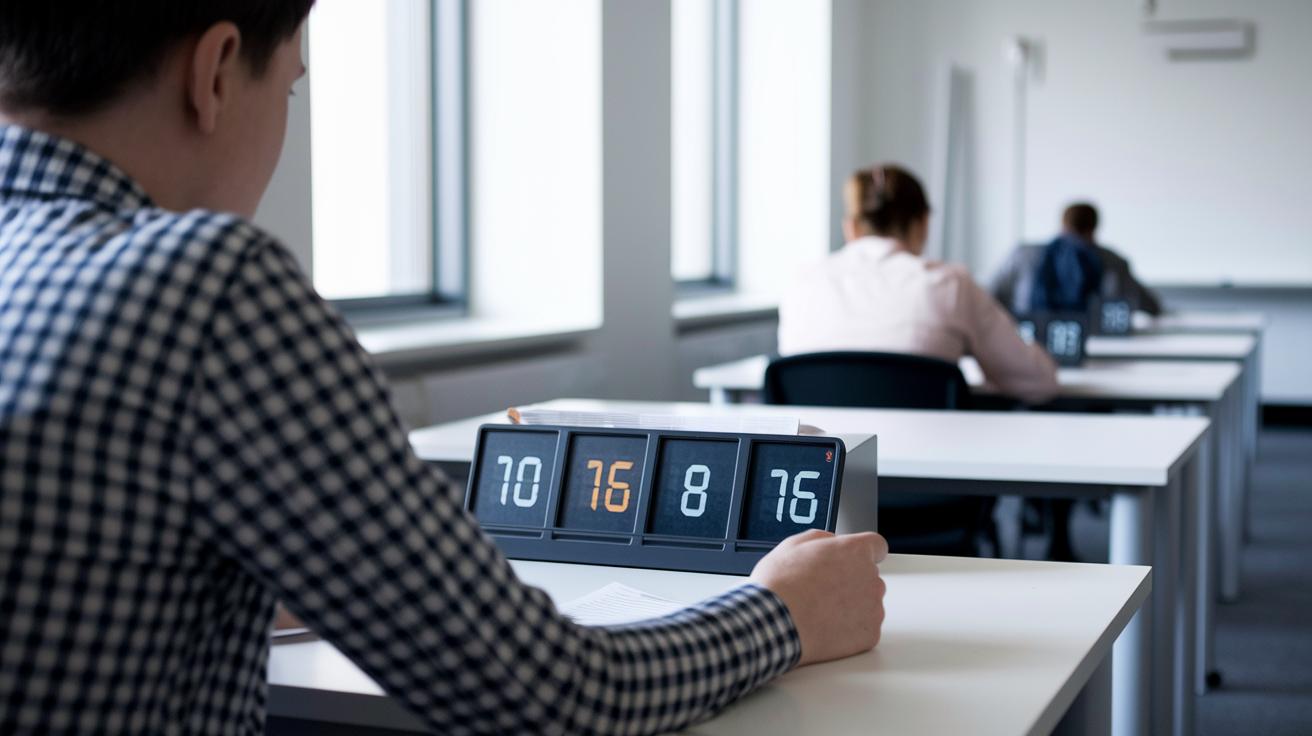
Try practicing under real exam conditions with timed drills that mimic the real test's pressure. Most folks get about 24 out of 50 questions right on the CCAT, but tougher roles need around 30 to 35 correct answers. Using a strict countdown timer and tools that act like live proctor cues (simple signals that show you’re being watched) prepares you for test day.
These cues create a real sense of urgency, training you to work fast and think on your feet. Instead of going over simple math or choosing the odd item from a list, focus on drills that push you with sudden changes. For instance, when a cue signals a new time segment, you have to quickly reset your thoughts and adapt your plan, just like on the actual exam.
Mix in tasks that test your decision-making and attention, like picking out small differences in a picture while racing against the clock. This method builds your ability to handle pressure and sharpens your reflexes.
In short, these drills boost both your speed and mental toughness. They help you stay calm and focused, so when test day comes, you're ready to tackle every challenge the exam brings.
Final Words
in the action, we broke down the key components of practical test drills, from interactive CCAT simulators and targeted memory tasks to structured sessions that mix warm-ups, focused drills, and review blocks. We included exercises for numerical, verbal, and abstract reasoning, making it clear how to sharpen skills under timed conditions. Each module was designed to gear you up and boost your confidence. Keep pushing forward with steady cognitive test practice, and you'll find yourself ready to take on any challenge with a positive mindset.
FAQ
What does free cognitive test practice provide?
The free cognitive test practice provides sample drills that mimic real exam conditions through exercises focusing on numerical puzzles, logical reasoning, and memory tasks to help build familiarity and boost confidence.
Does a cognitive test practice PDF with answers exist?
The cognitive test practice PDF with answers offers complete sample questions paired with correct responses, allowing you to review techniques and track improvement under conditions similar to actual test environments.
Can I try a 12-minute free cognitive test?
The 12-minute free cognitive test gives you a brief, focused walkthrough of test sections like numerical and abstract reasoning, helping you assess quick decision-making skills under time constraints.
What are the 30 questions on a cognitive test with answers?
The 30-question cognitive test sample covers various areas including math, verbal, and spatial reasoning, each question coming with an answer to let you check accuracy as you refine your approach.
Can you practice for a cognitive test?
The practice for a cognitive test involves using interactive drills, timed simulations, and memory exercises that help improve speed and accuracy, ensuring you’re ready for the exam’s challenges.
How does one remember three words in a cognitive test?
The three-word memory challenge utilizes simple techniques like creating visual images or linking words to familiar objects, a practical method to improve recall during tests under time pressure.
What is an example of a cognitive test for seniors?
The cognitive test example for seniors focuses on basic memory recall and straightforward problem-solving tasks designed to assess attention, reasoning, and language skills in an accessible format.
What does a 50-question, 12-minute cognitive test entail?
The 50-question, 12-minute cognitive test entails rapid arithmetic, verbal analogies, and pattern recognition puzzles that assess how quickly and accurately you process various reasoning tasks.