
Have you ever wondered if a study guide can boost your confidence and sharpen your skills? This simple guide covers the basics like following orders, staying focused on your mission, and keeping steady discipline (which means staying reliable).
Think of these fundamentals as the first moves in a training drill, they're straightforward yet powerful. Master them now, and you'll be well-prepared for tougher challenges ahead. A strong start like this sets you up for success both on the field and in everyday life.
Core Concepts of Military Training in a Basic Military Study Guide

Military training rests on a few simple ideas. First, there’s the chain of command, where every member knows exactly who to follow. Then, mission focus means always keeping your goal in sight, even when things get tough. Discipline is all about steady self-control, and core values guide how we act every day. Picture a drill: a sergeant gives a clear command and everyone moves immediately, that’s the chain of command in action.
Every day, these ideas shape the routines of our training. Recruits line up at dawn, practice drills, and make fast decisions under pressure. A squad works together by following orders and supporting one another. These principles help everyone act quickly and build trust, which leads to strong teamwork during challenging training rounds.
New recruits learn these basics before moving on to more advanced skills. When you respect the chain of command, stay mission-focused, and maintain discipline, you’re ready for specialized training. Think of it like learning the basic moves in a hand-to-hand fight: get the fundamentals right, and every following step becomes clearer and more effective.
Key Military Terminology and Rank Structure in a Basic Military Study Guide

In our military world, clear rank definitions are a must. Enlisted members form the backbone of our operations by taking on everyday tasks, while noncommissioned officers (NCOs, leaders at the squad level) guide and support their teams. Warrant officers are our technical experts, and commissioned officers set the overall mission strategies. You might hear terms like MOS (military occupational specialty, which tells you your primary job), AFSC (Air Force Specialty Code, a way to identify your role), and SOP (standard operating procedure, the set of rules to follow) during briefings. These abbreviations cut through the clutter and help everyone focus on what matters.
Each rank brings its own duties that shape our military life. Enlisted personnel develop the ground-level expertise that keeps our operations running, while NCOs make sure daily routines stay on track. Warrant officers bring detailed technical skills to the table, and commissioned officers plan the big picture by setting goals and tactics. Think of it like a well-executed drill, everyone plays their part and knows exactly who to listen to.
New recruits learn a core set of rules designed to keep order and respect within the ranks. Uniform standards, SOP handbooks, and a strict code of conduct lay the foundation for a professional environment. Following these rules not only keeps things running smoothly but also builds the confidence needed for advanced training.
Enlistment Procedures and Entry Requirements in a Basic Military Study Guide
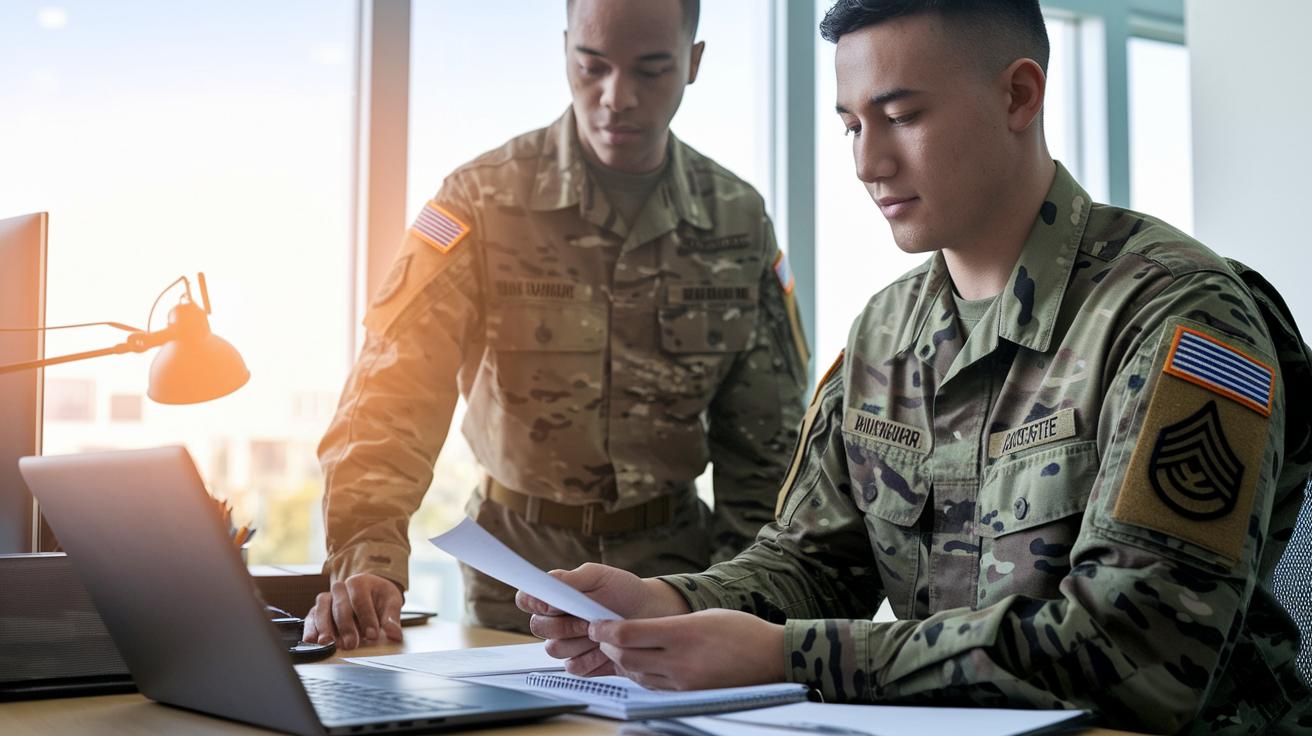
To join up, you need to hit some basic marks like the right age, a particular level of education, and citizenship. Usually, your journey begins with a chat with a recruiter. In that meeting, you talk about your background and check if you're a good fit for service, kind of like your first rundown before a training drill.
Then, you'll need to round up some key papers. This includes things like your school records, birth certificate, and any work history you’ve got. Think of the service entry handbook as your trusty field guide; it walks you through filling out forms and getting every background check done right.
Finally, there's a check-up. You'll go through a medical exam to see if you're physically up to the task, and then a security screening makes sure all is clear. After that comes the ASVAB (a test that measures your skills). Once you pass these steps, you sign the enlistment oath, which officially puts you on the path to advanced training.
Boot Camp Essentials and Curriculum Framework for Recruits in a Basic Military Study Guide

Boot camp is split into clear stages that get you ready for military life. You start with induction, learning the proper greetings and handling important paperwork. Then you move on to basic soldier skills, where you practice marching in sync and build strong teamwork and discipline. Next comes marksmanship training, which sharpens your rifle skills, followed by field exercises that challenge you to face real-life obstacles head-on.
During orientation, every recruit gets a checklist to make sure nothing is missed. You also receive essential gear like uniforms, boots, and protective equipment. Safety briefings explain what to do in emergencies and set the rules for the training area. These early steps lay the foundation for a safe environment and help you build trust with your fellow recruits.
Your weekly schedule packs in several training modules. One module reinforces weapons safety, ensuring that you handle arms carefully. Another teaches map reading and land navigation, helping you spot landmarks and chart effective routes. You also learn first aid basics so you can act quickly in urgent situations. This balanced curriculum builds both your confidence and your skills.
Time management is a big part of boot camp success. Stick to a strict schedule that mixes study sessions with drills, and use brief breaks to review notes or practice commands. Balancing intense physical training with proper rest helps you stay sharp and avoid fatigue. A solid routine like this not only boosts your confidence on the range but also in every challenge you face.
Branch‐specific Orientation Guides in a Basic Military Study Guide

The Army Induction Manual starts you off with clear administrative steps. First, they check your paperwork and run you through an initial round of physical training (PT is just a way to test your fitness). Next, you get a rundown of your MOS (that’s your job role), so you know exactly what to expect. Imagine standing in line for a morning drill, your uniform inspected, and then being told what mission you’re about to carry out.
The Naval Boot Camp Overview dives right into the life aboard a ship. Recruits train with shipboard drills that mimic the tight spaces and constant motion you’d feel at sea. You also go through damage control training (learning to act fast during emergencies) and pick up seamanship basics. Think of it as learning the ropes to work well on a ship no matter what the weather throws at you.
The Air Force Orientation Guide puts you up close with aircraft. Here, you learn the ins and outs of the planes you might work with, and you even study aerospace (this means learning how modern tech powers air missions). They put a big emphasis on flight line safety with clear, practical examples like moving in sync with air traffic and understanding simple aircraft maintenance to keep everything running smoothly.
The Marines Core Principles get you into the heart of their tough training. Right at the start, recruits dive into amphibious operations, practicing the skill of moving from ship to shore with perfect timing. Core values like honor, courage, and commitment are drilled into you through real-life exercises. Close-order drill sessions (where you march in precise formation) help build solid teamwork and a keen eye for detail, making sure every Marine is ready for any challenge that comes their way.
Drill and Ceremony Protocols and Discipline Principles in a Basic Military Study Guide

Basic drill commands like "dress right dress" and "about face" are the foundation of our movement routines. Recruits quickly learn to react and align perfectly, marching in step to a steady beat. Picture this: when a leader calls out "about face," everyone turns smoothly together, just like soldiers synchronizing their steps during an early-morning drill. This type of order is built from Day One.
Ceremony duties include tasks like presenting the colors and inspecting uniforms with careful attention. During a colors presentation, one soldier carries the flag while the rest stand sharply, showing respect for our emblem. Uniform inspections make sure every detail is right, from the proper fit to the gleam on each piece of clothing, ensuring that every recruit is ready and looking sharp before any event.
Mastering these drill commands boosts discipline, fine-tunes attention to detail, and sparks unit pride. When each step is nailed, you really feel the value of consistency and accountability. It’s a lot like executing a perfectly rehearsed routine; every command builds confidence, gears you up for real-life challenges, and strengthens the entire team's spirit.
Physical Fitness Regimens and Field Exercise Preparation in a Basic Military Study Guide

Physical fitness tests form the base of every recruit's training. New recruits do push-ups, sit-ups, and a 2-mile run to set the standard. They must meet a set number of push-ups and sit-ups within a given time and finish the run under a target time. These benchmarks show how strong and fit they are, getting them ready for the tough challenges ahead.
Each week, the PT schedule builds overall fitness step by step. It starts with warm-ups to get your muscles loose and ready. Then, recruits move into strength drills that work different parts of the body, paired with endurance runs that boost stamina. The routine changes every day to keep workouts fresh and allow proper recovery. This approach grows muscle strength and sharpens mental readiness along the way.
Field exercises check a recruit’s true readiness and teach vital survival skills. Drills like heavy ruck marches improve load-bearing endurance, while land navigation practices sharpen map-reading skills. Camouflage drills help boost tactical awareness too. Safety is key from start to finish, with gear checks and clear instructions on how to move. These exercises give recruits the hands-on skills needed for both training and real-world missions.
Leadership Development Strategies and Honor Code in a Basic Military Study Guide

Young leaders in our forces learn early that stepping up means taking charge from the very start. In basic drills, you might find yourself making fast decisions, like picking the best tactic during a high-pressure exercise. Mentors, often seasoned veterans, share practical tips and real-life experiences to help you handle situations when it matters most. For example, a junior leader might run a simulated mission and, in doing so, discovers how to make split-second decisions even under stress.
The honor code is a firm set of values that every service member lives by. It covers basic principles like honesty, respect, and responsibility, ensuring ethical behavior is front and center. You’re encouraged to report any misconduct, which keeps the team tight and fair. This code makes sure that integrity isn’t just a word, it shows up in every drill and every interaction.
Early leadership tests often come in the form of handling mixed orders or calming down a heated moment during training. The usual approach is to ask for advice from a trusted supervisor and lean on protocols learned during mentorship sessions. For instance, clearing up a disagreement with a fellow trainee might come down to using simple, clear communication techniques practiced early on in drills.
Essential Study Materials Compilation and Resources for Military Training

Our resource directory brings together a variety of study guides to help you prepare for your exams. These free guides cover the main ASVAB subjects and are perfect for boosting your confidence as you study. Think of this collection as your all-in-one study kit that makes your review sessions simpler.
You get access to:
- Official publications
- PDF manuals
- Online courses
- Flashcards
- Practice exams
| Subject | Pages | Purpose |
|---|---|---|
| Arithmetic Reasoning | 6 | Learn to solve word problems and number puzzles |
| Assembling Objects | 1 | Improve your ability to see how parts fit together |
| Auto and Shop Information | 5 | Get the basics on car care and tool use |
| Electronics Information | 3 | Understand simple electrical ideas and circuits |
| General Science | 4 | Familiarize yourself with basic science principles |
| Mathematics Knowledge | 5 | Review key math ideas and problem-solving tips |
| Mechanical Comprehension | 2 | Learn basic mechanical ideas and physical laws |
| Paragraph Comprehension | 2 | Practice reading and pulling out important details |
| Word Knowledge | 1 | Expand your vocabulary and learn quick word meanings |
Download these guides from our directory and add them to your study plan. Try setting aside just 20 minutes a day; this regular review, along with sample problems, will help you reinforce what you’ve learned and boost your confidence for the test.
Entrance Exam Preparation and ASVAB Workflow in a Basic Military Study Guide

The ASVAB is a timed exam that covers many skills to check if you're ready for military service. It’s held in more than 14,000 schools and military stations across the country and is run by the Department of Defense. Each military branch reads your scores in its own way. For example, the Army turns your scores into 10 different line scores, the Marines use MOS codes (job classifications), and the Air Force relies on AFSC qualifications (specific job codes). Your overall AFQT score is a big factor in whether you can enlist. Think of it like your mission briefing that outlines the path ahead.
Here’s what you need to know:
- Over 14,000 testing locations are available in schools and military bases.
- The exam has several subtests that cover various skill areas.
- Your AFQT score is the key to unlocking enlistment.
- Calculators aren’t allowed; you’ll be doing the math on paper.
- If you need to retake the exam, you must wait one month after your first try and six months after a third attempt.
- Around 70% of candidates take the computer-adaptive CAT-ASVAB, which adjusts question difficulty based on your answers.
- Some qualified recruits can take the unproctored PiCAT as an alternative option.
Start your study plan at least two months in advance to make sure you have enough time to review all your materials and practice regularly. I’d recommend using an online ASVAB practice test to mimic the real exam setup. Regular practice tests, paired with thorough review sessions, will help sharpen your skills and boost your confidence when test day arrives.
Final Words
In the action, we covered core service concepts, rank structure basics, enlistment steps, boot camp details, branch-specific guides, drill protocols, fitness routines, leadership strategies, and study material tips. Each section ties into building a strong foundation for military success.
Our basic military study guide reminds you that solid preparation and clear strategies boost confidence and readiness. Keep pushing forward with determination and focus on steady progress every day.
FAQ
What is included in the Air Force BMT study guide pdf?
What does a basic military training study guide cover?
What makes the BMT study guide 2025 different from earlier guides?
What is covered within the Air Force BMT prep guide?
What determines the basic training Air Force location?
What items are allowed at Basic Training Air Force?
What is included in the Air Force BMT packing list 2025?