
Ever wonder if you’re missing a secret to ace your military exams? This guide is like a clear map that helps you turn your study time into a simple, step-by-step plan. It breaks down key topics such as math, word knowledge, and reasoning into easy-to-digest parts that let you meet your enlistment standards without the hassle.
This plan is written for service members, just like you. It lays out a study routine that feels as straightforward as following orders before a drill. With smart study sessions and regular practice tests, you’ll see your scores improve and your confidence soar.
Ultimate Handbook to Military Exam Preparation
This guide has everything you need to tackle your military exam with confidence. Crafted by the Department of Defense, it checks your abilities in nine areas like math, science, and technical skills (think of these as the building blocks of your mission readiness). Four areas stand out, Word Knowledge, Paragraph Comprehension, Mathematics Knowledge, and Arithmetic Reasoning, because they help decide if you meet the enlistment score requirements. It’s like having a clear set of orders and study tips that keep you on track for success.
The exam comes in two flavors. One version is computer-adaptive and usually taken at testing centers, with the Word Knowledge section featuring 15 questions to be answered in 9 minutes. The paper version, on the other hand, offers 35 questions over 11 minutes. Each format is laid out in plain terms, so you know exactly what to expect, imagine having a detailed map before a long run. This guide breaks down each subtest with clear steps and simple examples.
Getting ready should start about two months before your test day. The handbook recommends a 4–6-week study plan with daily sessions of 1–2 hours. Work on one section at a time, and keep revisiting earlier material to sharpen your skills. Regular practice tests aren’t just drills; they can boost your score by 10–15 AFQT points and improve your performance by about 20% on test day. Follow these steps, and you’ll feel as prepared as you would for any big drill in the field.
Ultimate Military Exam Handbook Study Strategies

If you’re ready to level up, take a look at our military exam strategies (https://militaryaptitudetests.com?p=2289). Think of it like fine-tuning your gear, you start with the basics and then add your own smart tricks until you hit the mark every time.
Make a plan where you study in 1–2-hour blocks split into focused bursts. Try out the Pomodoro method: study hard for 25 minutes and then grab a 5-minute break. It’s a great way to keep your mind sharp for both mental tasks and physical drills, so you don’t get burned out.
Instead of just reviewing old topics, mix it up by solving practice problems, whether you’re in a group study or getting one-on-one help. Group study lets you talk through tough ideas, and tutoring gives you custom drills for parts like verbal reasoning (a test of how well you know words) and math. Picture sitting down with a buddy to work through questions together, like training side by side before a mission.
- Break your study time into short, focused bursts with planned breaks so your mind stays fresh.
- Join group study sessions to mimic real test settings and spark active discussions.
- Practice recalling information on your own, like using flashcards or self-quizzing.
- Manage your time by using different pacing strategies for areas such as math versus spatial reasoning (a test that measures how well you can picture shapes).
- Plan regular tutoring sessions to get personalized feedback and hone in on tricky topics.
Practice Tests and Sample Questions in the Ultimate Military Exam Handbook
Regular practice tests really help sharpen your quick thinking and reveal the common traps in your questions. They let you review clear answer explanations so you can see patterns in the mistakes, like realizing after a drill, “I keep mixing up these ideas,” and then focusing on fixing that issue.
When you go over your practice sessions, dig into why a question stumped you. Think about what in the wording might have signaled a trap, like a sneaky clue you missed the first time.
Here are a few simple steps to guide you:
- Check out detailed answer explanations to find the weak spots.
- Look closely at the wording of each question to catch hidden traps.
- Write down the questions you got wrong to notice any repeating mistakes.
- Do timed drills to boost your speed when pressure is on.
- Use adaptive simulations to challenge your thinking and tweak your strategy.
Keep practicing, adjust your focus, and you'll be ready to tackle any exam challenge.
Scoring Insights and Performance Metrics in Ultimate Military Exam Handbook
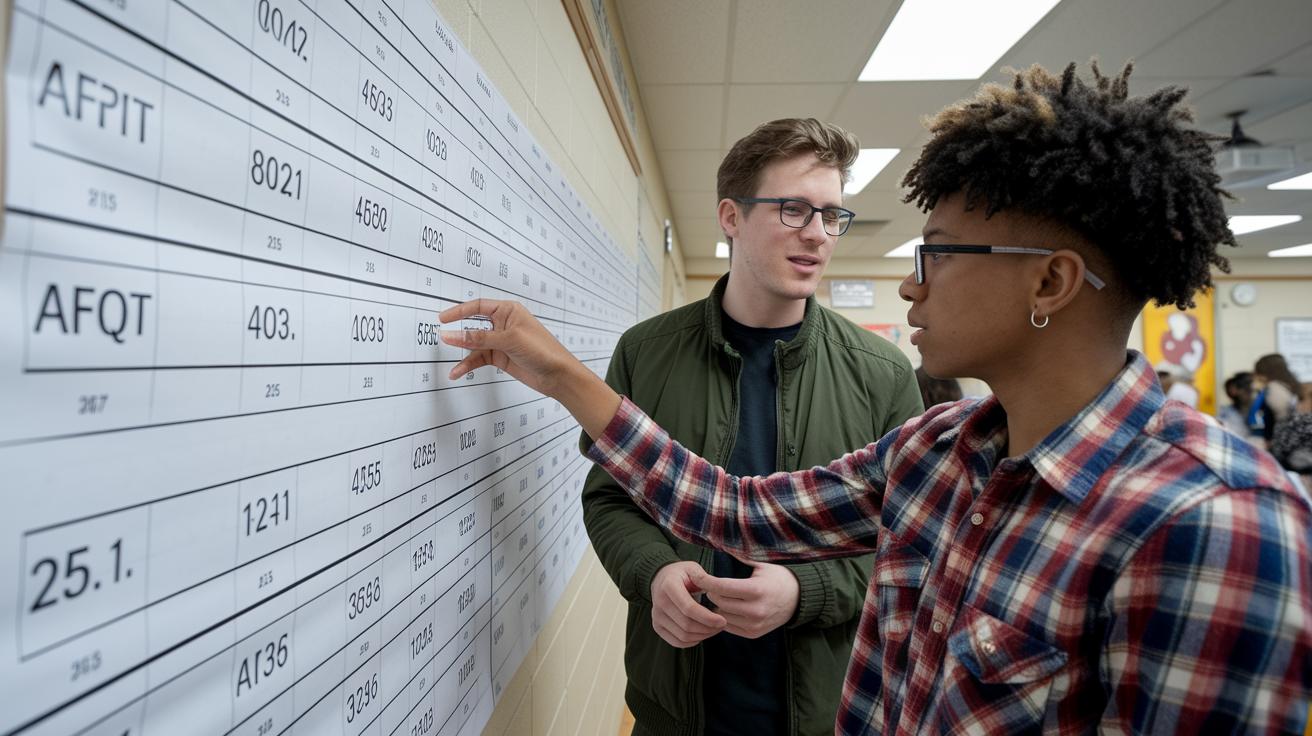
Understanding AFQT Scores
AFQT scores show how you stack up against others aged 18 to 23. A score of 70 means you did better than 70% of the group. It's like a quick status check to see if you meet the basic standards. For example, if you're aiming for the Army, you'll need at least 31 points, while the Coast Guard looks for around 36. Your score isn't just a figure, it plays a big part in qualifying for enlistment and can shape your military journey. So if you hit the high 60s, that’s a clear sign you’re set for more advanced training since you’re performing above many of your peers.
Composite (Line) Scores
Composite scores mix several test results to help match you with the right military job. These groupings, often called line scores, let recruiters see which roles might be a good fit for you. Each subtest is scored with 50 as the average, with most scores falling between 30 and 70. When these tests are combined, they give a clear picture of your strengths, whether that's in technical skills or verbal reasoning. For instance, if your scores in math and mechanical comprehension are strong, you could be a great match for roles that need sharp analytical skills and careful technical work. This system helps recruiters quickly see where you shine and guides your career placement.
Test Day Tactics in the Ultimate Military Exam Handbook
On test day at your MEPS or MET site, be sure to get there early and bring a valid ID. This small step can save you from any last-minute hassle.
Leave your calculator at home since they aren't allowed. Instead, trust your brain and pencil to work things out. Think of it like counting your ammo on the fly.
When you sit down, take a deep breath and scan every instruction carefully, just like you’d check your gear before heading out on a mission.
If you're taking the computer-adaptive test (CAT, which changes based on your answers), use elimination tactics. If an answer looks wrong, cross it out and keep moving forward.
Keep an eye on the clock for each section. Don’t let a tricky question hold you up too long, or you might have to rush at the end. Visualize it like staying steady during a drill, calm and methodical.
These straightforward tips help you stay sharp and focused so you can meet the exam requirements and take a solid step toward your military career goals.
Physical and Mental Readiness in Ultimate Military Exam Handbook

Keeping a steady physical routine can really boost your performance on exam day. A regular sleep schedule helps you wake up ready for action, just like checking your gear before a mission. Eating balanced meals fuels both your body and mind so you can stay focused during your study sessions. And even a simple walk or some stretches can ease muscle tension and lower stress, it's like making sure your equipment is running smoothly when you need it most.
Staying mentally strong is just as important. Taking short breaks for deep breaths or a quick stroll helps clear your head and stops burnout during long study periods. These pauses are like a brief regroup during field drills, keeping your focus sharp. With a blend of regular physical habits and smart mental breaks, you'll stay calm and ready to give your best on exam day.
Retake Policy and Career Implications in Ultimate Military Exam Handbook
The ASVAB retake policy lets you give it another shot when your first score isn’t quite what you hoped. You can take the exam again one month after your first try, and if you need more time to improve, the wait between tests gets longer. This system is set up to give you a clear path to keep getting better at the exam (ASVAB: Armed Services Vocational Aptitude Battery, a test that measures your skills).
Taking a break between attempts is a chance to focus on your weak spots. Use that time to figure out which parts trip you up and work on extra practice questions. Think of it like a drill before a big mission; you sharpen your skills bit by bit, so you’re ready when it really counts. Keep at it with determination.
Scoring high on the ASVAB can really open up your military career options. Doing well shows you meet the basic enlistment marks and even helps you qualify for specialized roles like aviation mechanics or cybersecurity. Top scores might also mean you get bonuses, college benefits, or access to advanced training. Every point you gain boosts your profile and gets you closer to a career that matches your skills and goals.
Final Words
in the action, we covered exam formats, study schedules, practice tests, and scoring insights while stressing physical and mental readiness. This article gave clear, step-by-step tips to boost your skills, from test-day tactics to retake policies and career opportunities. Remember, the ultimate military exam handbook offers practical guidance to help you build confidence and clear your exam with ease. Stay focused, work smart, and keep pushing forward, you’ve got this!
FAQ
Q: Is it hard to pass the ASVAB?
A: When you ask if passing the ASVAB is hard, preparation is key. With a structured study plan and practice tests, you can build the skills needed to meet enlistment requirements confidently.
Q: Is there a study guide for the ASVAB test?
A: When you ask about study guides, there are numerous resources available. These guides break down each subtest, provide practice questions, and offer strategies to boost your score before test day.
Q: How many questions are on the military exam?
A: When you ask about the number of questions, the ASVAB contains nine subtests with different totals. The computer version uses fewer, timed questions, while the paper format includes more items per subtest.
Q: How long should you study for the ASVAB test?
A: When you ask how long to study, a two-month preparation period is recommended. A 4–6-week focused schedule of 1–2 hours daily helps review key sections and build the confidence needed for the exam.