
Have you ever wondered if your strength is truly battle-ready? The Marine Combat Fitness Test makes sure every Marine can handle real missions. It’s more than just a workout; it sets up drills that mimic real combat by testing your speed, power, and agility.
In this post, we look at key events like the 880-yard run and the two-minute ammo can lift. These drills help build real strength and show if you’re ready for the challenges on the field.
Stick with us to find out what it takes to rise above the challenge and get mission-ready.
Navigating Marine Combat Fitness Test Standards

The Marine Combat Fitness Test, or CFT (a performance evaluation of strength, speed, and agility), helps ensure that every Marine is ready for real-world missions. It puts you through drills that mirror combat conditions on land, sea, and air. When you’re taking this test, you wear your combat boots, camo BDU pants, and a simple tee, just like you would on a mission. This setup makes sure the standards match the real job and that every Marine can handle any situation.
The CFT features three key events to check your overall combat fitness:
- 880-yard run
- Two-minute ammo can lift
- Maneuver Under Fire shuttle run
Marines take this test every six months. If you don’t hit the minimum score, there’s a chance to retest within a set time period. This approach keeps everyone challenged and helps ensure that you’re always ready to meet the mission head-on.
Marine Combat Fitness Test Events Breakdown

The Marine Combat Fitness Test is made up of three events that push your fitness to the limit, much like a real mission. Each event tests a different part of your physical readiness, speed, strength, and agility, just as you’d need on the battlefield. First, you sprint across a set distance. Next, you lift a heavy ammo can over and over. Finally, you navigate a course full of obstacles that mimics combat tasks. Every drill is designed to show how ready you are for the challenges ahead.
Movement to Contact
Movement to Contact is an 880-yard sprint done in full gear like your combat boots, camouflage uniform, and tee. You need to hold a steady pace and use proper form to finish safely and fast. Your score depends on how quickly you cover the distance, so balancing speed with technique is key. Think of it as moving fast in real combat, where every second really counts.
Ammunition Lift
In the Ammunition Lift event, you perform as many correct lifts as you can in two minutes using a 30-pound ammo can. Every lift must reach full extension to count. Keeping a steady pace and using the right form matters here more than pure speed. It’s all about technique and consistency so you can rack up the count without burning out too soon.
Maneuver Under Fire
Maneuver Under Fire is a 300-yard shuttle run that throws in several combat tasks. You will crawl, pick up and resupply ammunition, throw a grenade, sprint, and even drag a wounded Marine. Each task is timed, and success depends on both quick reactions and precise movements. This event shows that you have the strength, agility, and coordination needed to handle a hectic battlefield.
Each event tests a different aspect of your combat fitness. Movement to Contact checks your speed, Ammunition Lift proves your strength and form, and Maneuver Under Fire challenges your agility and coordination.
| Event | Description | Requirement |
|---|---|---|
| Movement to Contact | 880-yard sprint simulating combat advance | Speed and endurance in full gear |
| Ammunition Lift | 2-minute session of 30 lb ammo can lifts | Correct form and steady pacing |
| Maneuver Under Fire | 300-yard shuttle run with multiple combat tasks | Agility, coordination, and timed precision |
Scoring and Age-Gender Standards for Marine Combat Fitness Test
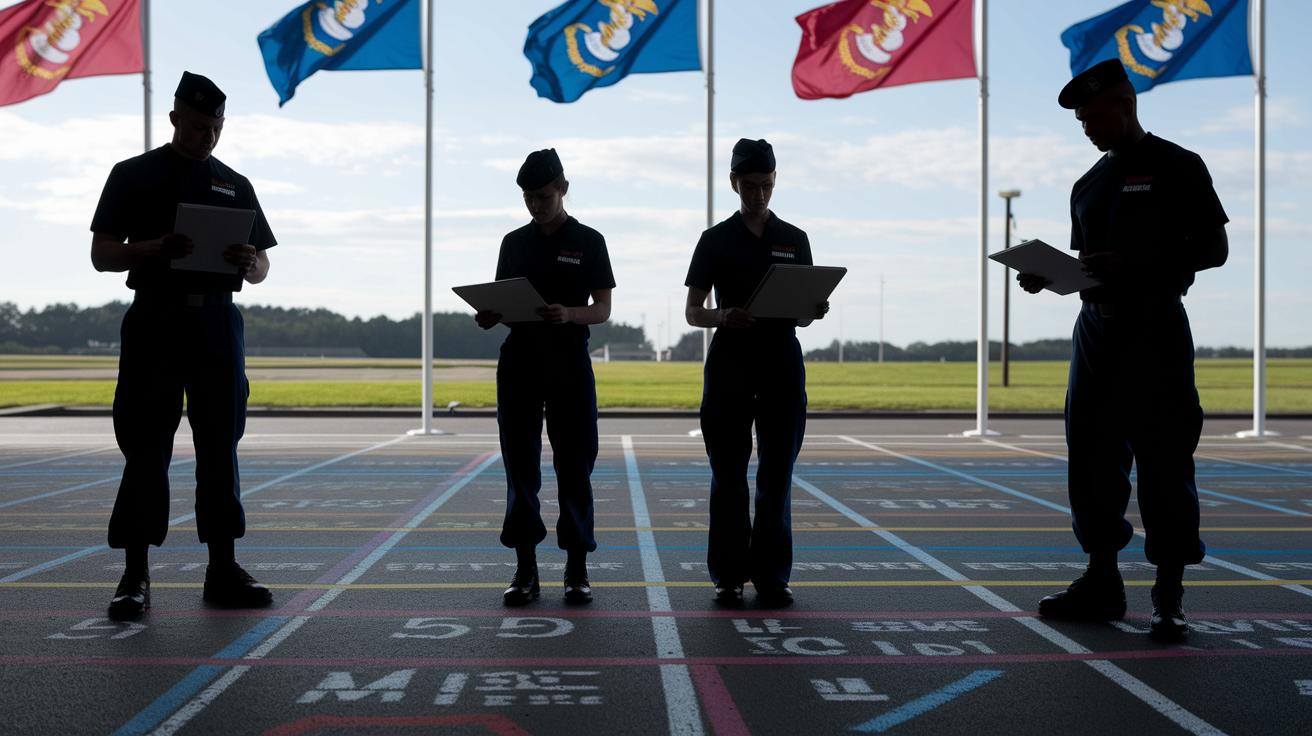
The scoring system for the Marine Combat Fitness Test is designed to fairly measure a Marine’s work and readiness. Each part of the test has clear benchmarks that take into account both the effort used and proper technique. We use separate charts for male and female Marines to account for natural differences, making sure that everyone gets evaluated in a consistent way. These charts are refreshed regularly to match the latest military physical standards.
Age is another key factor in scoring. The test divides Marines into five age groups: 17–20, 21–25, 26–30, 31–35, and 36+. Each group has its own minimum passing score and target for a perfect score. This setup helps provide a fair test for everyone, reflecting the normal changes in physical abilities with age. These benchmarks work alongside scores from the Physical Fitness Test (which also checks things like body composition) to give a full picture of each Marine’s readiness for challenging tasks.
| Age Group | Male Min Score | Female Min Score | Max Score |
|---|---|---|---|
| 17–20 | 150 | 120 | 300 |
| 21–25 | 140 | 110 | 290 |
| 26–30 | 135 | 105 | 280 |
| 31–35 | 130 | 100 | 275 |
| 36+ | 125 | 95 | 265 |
These scores are more than just numbers. They are a clear sign of a Marine’s overall combat readiness and ability to perform under pressure. A strong performance here means you’re well prepared to take on tough, mission-critical challenges out in the field.
Marine Combat Fitness Test Standards: Ultimate Strength
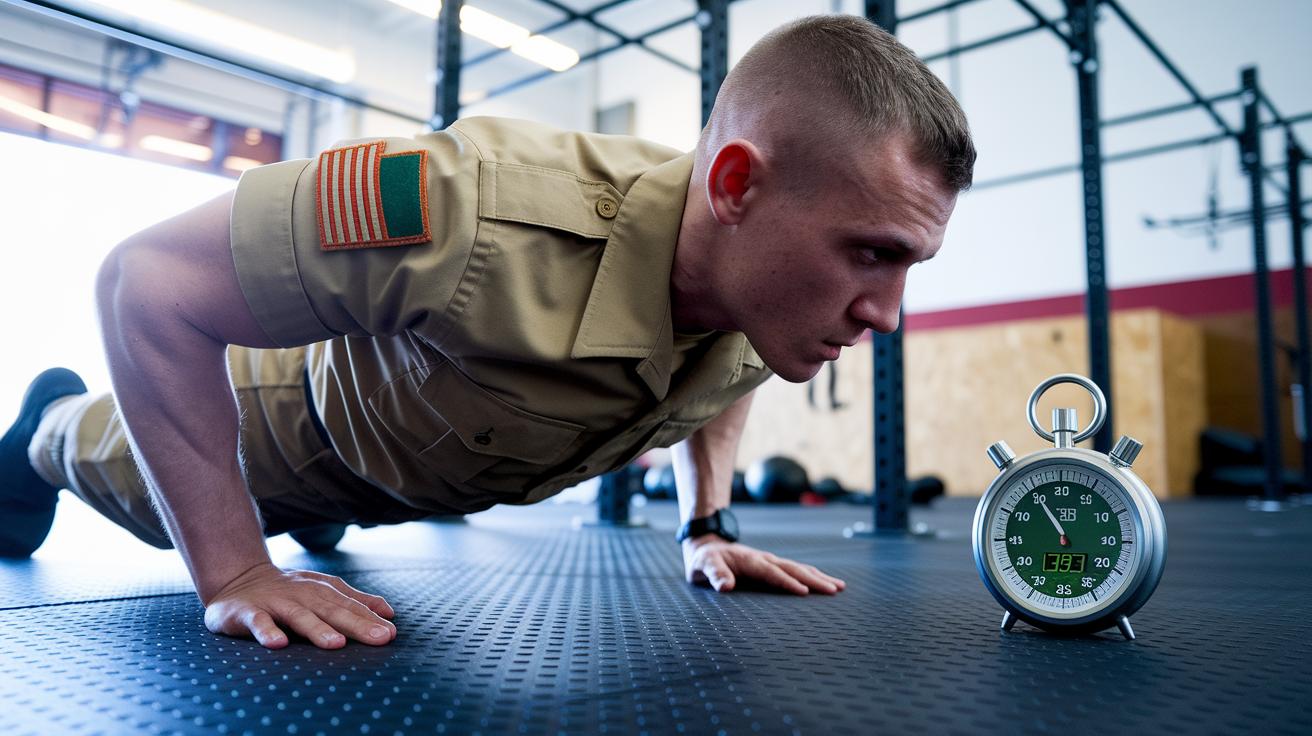
Every six months, every Marine must take the Combat Fitness Test to prove they're ready for active duty. This exam checks your strength and endurance, making sure you stay sharp and ready, just like a quick gear check before a mission.
If your score falls below the required level, there's a chance to retest. You can retake the test within 30 days after not making the mark. Here’s the lowdown:
- Retest Eligibility: Only Marines who didn’t hit the minimum score can try again.
- Waiting Period: You need to wait 30 days before your next attempt.
- Attempt Limit: There’s a set limit on how many retakes you can have during each testing cycle.
Organizing a retest means working hand-in-hand with your unit's leadership. With proper scheduling, accurate paperwork, and clear communication with your command, you'll be set up for your next shot at success. This team effort keeps everything on track and ensures every step is well documented.
Marine Combat Fitness Test Standards: Ultimate Strength
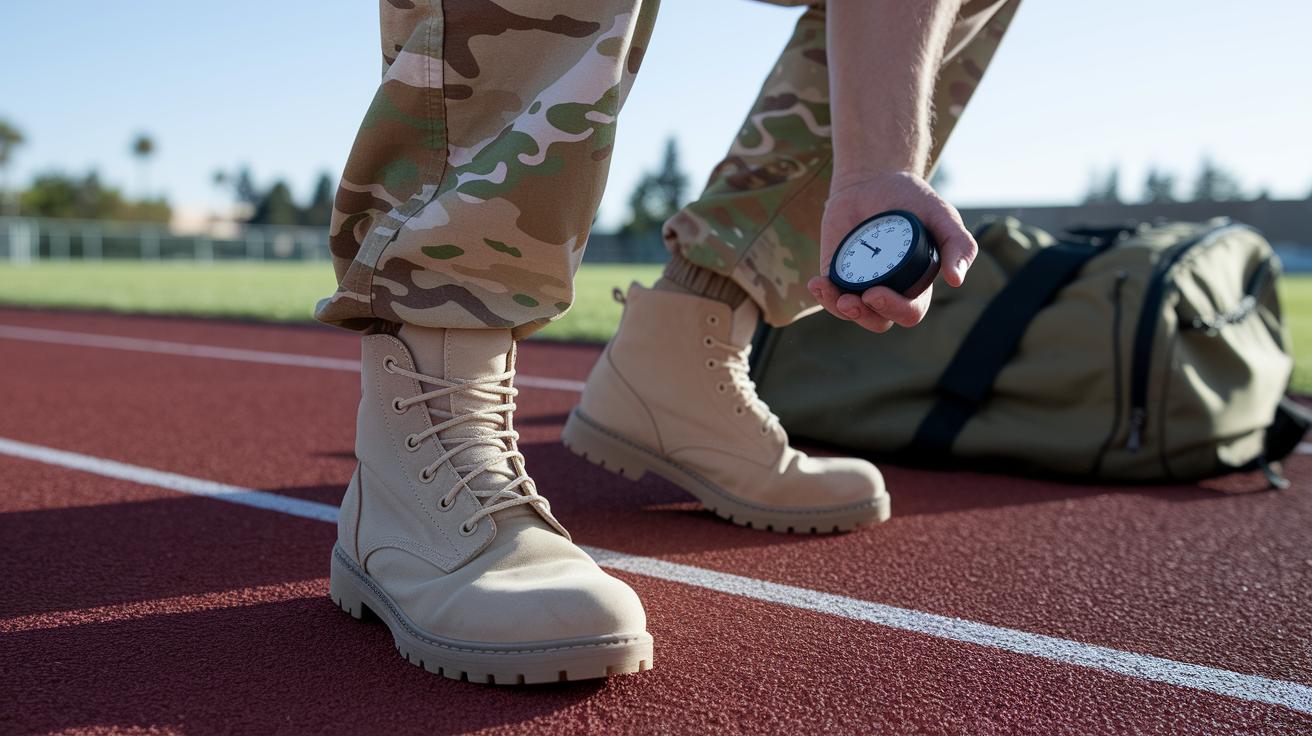
When preparing for the Combat Fitness Test, drilling with events that match field challenges is crucial. Focusing on these drills builds both your body and your confidence. By honing your speed, strength, and agility, every drill feels like a step toward the real mission.
- Boot-sprint intervals
- Weighted ammo-can lift progressions
- Shuttle-run circuits with obstacles
- High-intensity interval training sessions
- Core and stability exercises
- Agility ladder and plyometrics
It’s key to track your progress and tweak your workouts as needed. Compare your drill times and lift counts each week to spot gains and find areas that might need extra attention. Use a workout log or simple system, just like you’d check your gear before heading out. Adjusting the intensity based on how you feel helps build strength and readiness for what’s ahead. Regularly reviewing your progress not only keeps you motivated but also makes sure your training evolves along with your goals.
Essential Physical Metrics and Performance Benchmarks in Marine Combat Fitness Test Standards

Numeric targets are key to checking if you're ready for combat. They show your physical performance clearly and set a standard every Marine aims to hit. For example, clocking an 880-yard run in less than 3:30, nailing over 90 ammo can lifts in two minutes, and wrapping up the Maneuver Under Fire in under 2:20 all signal that you're strong and enduring. These numbers help you track your progress, fuel your training, and tell you exactly where you stand for mission-critical tasks.
| Metric | Benchmark |
|---|---|
| 880-yd Run Time | Under 3:30 |
| Ammo Can Lifts | 90+ lifts in 2 minutes |
| Maneuver Under Fire Time | Under 2:20 |
| Overall CFT Score Required | Top-tier performance |
These benchmarks tie directly into what you do every day. Meeting these goals shows you can handle the tough physical challenges out there, making your drills count for real missions. Every number highlights your ability to perform under pressure, reflecting both your own strength and how well your unit can handle critical operations.
Final Words
In the action, this post explored the key elements behind marine combat fitness test standards, from event details to scoring and retesting procedures. We broke down each physical challenge, shared targeted preparation advice, and highlighted the importance of clear metrics. Each section was designed to help you see what’s needed to meet the standards. Keep training smart, stay focused, and build your abilities step by step. Every effort today brings you closer to success in the marine combat fitness test standards.
FAQ
What are the Marine Combat Fitness Test scoring standards and are calculators or charts available?
The Marine Combat Fitness Test scoring standards assign scores based on age and gender with defined minimums and maximums. Online calculators and score charts help you compare your performance to official benchmarks.
What is the standard fitness test for the Marines and what does it include?
The standard fitness test for Marines is the Marine Combat Fitness Test. It features an 880-yard run, a two-minute ammo-can lift, and a shuttle-run event to gauge combat readiness.
What is the 5-mile standard for Marsoc?
The 5-mile standard for Marsoc tests endurance and requires completing the distance under a set time. Current guidelines detail the specific time limits, so check updated Marsoc requirements for exact figures.
How fast do Marines have to run 1.5 miles?
For Marines, the 1.5-mile run pace is determined by age and gender. Official scoring tables outline the required times to ensure each Marine meets the necessary physical readiness criteria.
levitra generic
levitra generic
mobic meloxicam for back pain
mobic meloxicam for back pain
zmax
zmax
viagra appointment
viagra appointment
tadalafil cialis pictures
tadalafil cialis pictures
stendra 100
stendra 100
semaglutid tabletten
semaglutid tabletten
liraglutide brand name in us
liraglutide brand name in us
terbinafine pharmacology
terbinafine pharmacology
toradol migraine onset
toradol migraine onset
vardenafil pharmacodynamics
vardenafil pharmacodynamics
vardenafil safety profile
vardenafil safety profile
otitis media educational overview
otitis media educational overview
sinusitis in children
sinusitis in children
Duration Variability Reference
Duration Variability Reference
Viagra vs sildenafil research summary
Viagra vs sildenafil research summary
Sildenafil vs Avanafil Peak Time
Sildenafil vs Avanafil Peak Time