
Have you ever wondered if your language skills are up to the task for military missions? This guide lays out what you need to know to ace your language exam for service. Think of your test as a mission where clear words can make all the difference.
We walk you through the exam steps and show how doing well can open up career doors in both military and federal jobs. Plus, you'll pick up real, practical tips to boost your confidence. Ready to get started?
Comprehensive Military Language Proficiency Exam Overview
The DLPT is a multiple-choice test that gauges your ability to read, listen, and speak. It follows the ILR scale (a common way to rate language skills), giving you a clear picture of your skills from basic to advanced levels. Think of it like the precision needed when you’re on a mission, every command matters, and so does clear communication.
The exam is taken online through the Defense Language Institute, which means you get a secure and consistent testing setup. This digital format meets the strict requirements of the Department of Defense and other federal agencies. It’s a trusted method used to check language skills in key languages like Urdu, Cantonese, and Kurdish, making sure everyone gets a fair shot.
| Exam Feature | Description |
|---|---|
| Format | Timed multiple-choice, much like a drill |
| Skills Tested | Reading, listening, and speaking |
| Languages | High-demand ones such as Urdu, Cantonese, and Kurdish |
| Users | Federal and defense agencies |
| Validation | Scientifically validated for consistent results |
Doing well on the DLPT goes beyond a good score, it’s a vital credential that can really shape your career. When you show high proficiency, you open doors to specialized roles and more opportunities in both the military and federal services. This exam is a key step in proving you have the language skills needed to handle today’s challenging operational missions.
Military Language Proficiency Exam Registration and Eligibility Requirements

Before you sign up for the exam, you must finish DLI language training or a similar course. This makes sure everyone has the basic skills needed for the test and is ready to face what comes next.
All exam registration and scheduling happen on the official DLI testing portal. You have to use this online system to lock in your exam appointment, so be sure you’ve got your documents handy and a steady internet connection when you register.
- Make sure you meet the language training requirement.
- Go to the official DLI testing portal.
- Pick your preferred exam date (remember, you need to schedule at least 30 days ahead).
- Fill out the registration form accurately.
- Submit your request and wait for your confirmation email.
When you register, be ready to show proof of your MOS-related language need along with any other required documents. Scheduling deadlines are strict, so double-check everything before finalizing your registration.
Military Language Proficiency Exam Format and Scoring Criteria
The DLPT is a timed, multiple-choice test that checks your reading, listening, and optional speaking skills. Each part has its own time limit, kind of like following timed orders during a drill. You take the exam on a computer, and the system adjusts the difficulty of each question based on your answers. If you answer correctly, you'll face tougher questions; if you struggle, it eases up a bit so that your true ability is measured.
Below is a quick overview of how the exam is set up:
| Section | Questions | Time Allotment |
|---|---|---|
| Reading | Varies | About 60 minutes |
| Listening | Varies | About 40 minutes |
| Speaking | Varies based on your responses | Time varies by candidate |
Scoring is done using the ILR scale, which runs from 0+ up to 3+ in the DLPT5. This scale is a clear way to show your language skills, with each area, like reading or listening, getting its own rating. The adaptive design of the exam makes sure you’re challenged at the right level, just like getting feedback that tells you where you shine and where you might need a bit more practice. Official score reports break down your performance by each area and give you an overall rating, helping you see exactly where you stand.
Structured Study Plan and Timeline for Military Language Proficiency Exam
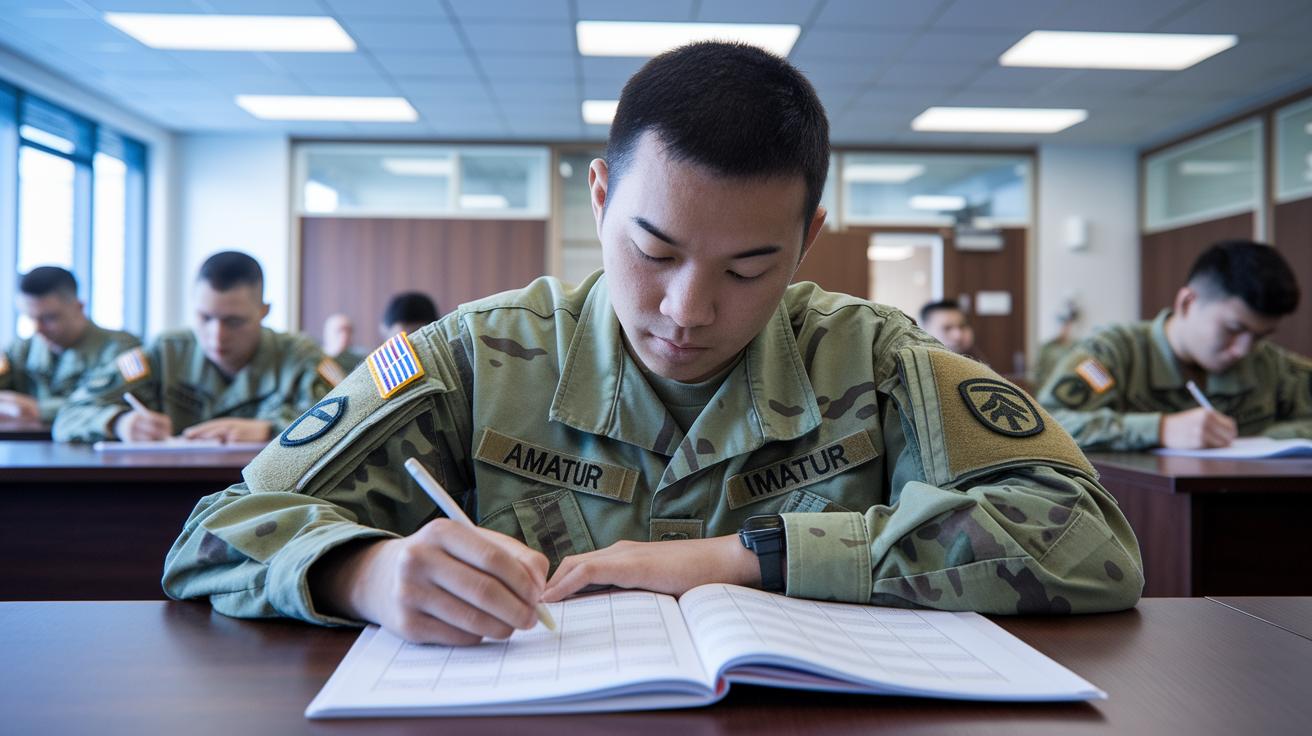
A good plan helps you stay focused and on track, just like a clear mission briefing. Preparing for this exam isn’t a random process. You need a balanced routine that mixes vocabulary drills, grammar reviews, reading, and listening tasks throughout the week. Building a solid plan not only helps you remember what you study but also makes your progress steady. Timed study sessions with planned breaks keep you alert and ready.
Start by making a clear timetable for daily practice.
- Pick set times for vocabulary drills, grammar check-ups, and exercises.
- Break study time into short, focused blocks with regular short breaks in between.
- Follow a step-by-step military test preparation guide (cognitive evaluation, a test of how well you think) to sharpen your skills in each language area.
- Set milestones every two weeks to see how you're doing and tweak your routine if needed.
- Make room for review sessions every two weeks to go over earlier topics.
Balancing new material with review is key for learning well. It might feel good to move on to the next topic, but going over what you learned before helps strengthen your skills. Mixing what you know with fresh challenges makes your study time both interesting and effective. Think of it like a balanced mission – combining new tactics with solid defense to cover all angles.
Keeping track of your progress is super important. With a milestone system, you can see your improvements and spot the areas that need more work. Check your schedule regularly and adjust the pace as you master each section. This way, you steadily move forward and put yourself in a great position to ace your military language proficiency exam.
Mastering Core Competencies in the Military Language Proficiency Exam
This part lays out the basic skills you need to ace the test. The exam checks your reading, listening, speaking, and writing. Practice tests are a great way to see what you’re good at and what you need to work on. Keep at it with regular drills using vocabulary lists and grammar guides to build your language skills.
Listening Comprehension Techniques
Try focused drills, audio transcripts, and shadowing exercises to boost your listening. Listen to real military briefings and mimic the tone and pace like you’re right there with the team. These exercises train you to pick up on small details and keep your skills sharp.
Reading Skills Practice
Build your reading skills with timed passages, articles in a military context, and quick-skimming methods. Read a short military report under time pressure to boost your confidence and get used to the style you’ll see on test day. The aim is to understand and quickly process the text.
Oral Proficiency and Communication Drills
Practice speaking by role-playing, doing pronunciation exercises, and simulating command-level dialogs. For example, imagine giving clear, direct orders and answering questions on the fly. This kind of drill makes sure you’re ready for any speaking challenge on the test.
Writing Skill Development and Grammar Review
Improve your writing by analyzing mistakes and drafting structured essay outlines. Work on grammar drills where you spot and fix errors in sentences. This not only sharpens your writing but also strengthens your overall control of the language.
Finally, mix in insights about culture and dual-language resources. Learn idioms and military terms in other languages. This extra step ties everything together, so you’re well-prepared to handle any language challenge on exam day.
Simulation Exercises and Practice Question Bank for Military Language Proficiency

Simulation exercises are like hands-on drills that get you ready for the real exam. They mimic the test's timing and style, so you can feel what it's like when you’re sitting for the actual exam. These practice sessions help boost your confidence as you work through reading quizzes, listening tasks, and grammar challenges. They show you what you’re doing well and point out areas that need more work, thanks to quick feedback and clear score details. It’s like a practice mission that helps you get used to the pressure and speed of the real test.
Next, building a practice question bank is a key part of your study plan. This means gathering a mix of questions to check your progress over time and spot any gaps in your language skills. A good question bank lets you go through questions again and again, breaking each one down step-by-step, and then fine-tuning your answers with regular self-checks. This flexible routine lets you track your improvement clearly, because every mistake becomes a chance to learn and get stronger.
| Tool | Key Features | Cost |
|---|---|---|
| SimTest Pro | Real-time adaptive questions, immediate feedback | Free trial, subscription-based thereafter |
| LangMaster | Mixed-skill modules, detailed score reports | Affordable monthly plan |
| ExamTrainer | Practice tests with diagnostic tools | One-time purchase option |
Resource Compilation and Interactive Learning Tools for Military Language Proficiency Exam
Finding the right materials is crucial when you’re gearing up for your language exam. Stick with official DLI guides and trusted language-learning sites because they offer clear content that fits what you’ll see on the test. It’s like planning a mission, the details need to be spot on. Check out tools that have been proven through reviews from fellow recruits and expert opinions.
When it comes to hands-on learning, mixing up your study options can really boost your skills. Flashcard apps help you drill new words fast, while video tutorials break down tricky grammar into small, easy-to-digest lessons. Digital coaching programs let you practice in real test-like scenarios, and professional tutoring offers personal one-on-one help. These methods together create a learning experience that fits the disciplined routine of military training.
- Flashcard apps that speed up vocabulary review
- Video tutorials that explain grammar and syntax in clear steps
- Digital coaching programs that simulate exam conditions
- One-on-one tutoring to give you personalized feedback
- Interactive grammar guides that match exam topics
- Vocabulary lists that follow your course material
- Workshop materials for valuable group study
Make sure the resources you pick match the exam format and come from users with real experience. Listening to feedback from other recruits and veterans can help you see if these tools really cover the language skills you need, like reading, listening, and speaking. Also, check that the materials stay current with the latest DLPT formats and standards. This way, you can focus on what matters most and study with the confidence of a well-prepared briefing before a mission.
Performance Tracking and Confidence-Building for Military Language Proficiency Exam

Keeping an eye on your progress is like checking your gear before heading out on a mission. Regular self-assessments and practice logs show you what’s working and where you might need to make a few adjustments in your language skills. Compare your scores with the ILR benchmarks (a test tool that sets the standard for language skills) and you’ll see exactly what you’re doing well and what could use some more focus. This ongoing review helps you set clear goals and builds a steady momentum, which eases the pressure and boosts your confidence for test day.
Here are some simple tools you can use:
| Tool | Description |
|---|---|
| Progress charts | Show your improvement over time |
| Benchmark comparisons | See how your scores match up to ILR standards |
| Practice-test logs | Record each drill you complete |
| Review checklists | Ensure every part of the exam is covered |
| Confidence drills | Engage in role-playing or speaking exercises |
| Relaxation exercises | Practice deep breathing to manage any anxiety |
Using these tools, you can build a complete system to track your progress and boost your exam performance. Make sure to add the review checklists to your final study sessions so that every language area gets a look before test day. Regularly checking your progress reinforces your readiness and shows exactly where more practice is needed. This steady build-up of confidence helps you stay calm and mission-ready when the exam day arrives.
Final Words
In the action, we've gone over the exam overview, registration steps, format and scoring details, and study plans that cover core skills like listening, reading, and writing. We looked at simulation exercises, interactive tools, and progress tracking to help boost readiness and confidence. This military language proficiency exam guide wraps up the essentials in a clear, manageable way, arming you with the practical info you need to succeed. Keep pushing forward and stay focused on your goals.
FAQ
Military language proficiency exam guide pdf
The military language proficiency exam guide pdf provides detailed information on exam content, structure, study tips, eligibility, and registration steps, all designed to help you understand and prepare for the DLPT.
Military language proficiency exam guide free
The military language proficiency exam guide free offers accessible preparation details and registration steps without cost, giving you essential exam insights and study tips without a financial burden.
Defense Language Proficiency Test
The Defense Language Proficiency Test assesses your reading, listening, and sometimes speaking skills in target languages, aligning your results to the ILR scale to confirm your language readiness for military tasks.
Defense Language Proficiency Test practice
The Defense Language Proficiency Test practice includes sample questions, online modules, and simulation exercises that familiarize you with the exam structure and boost your confidence before the actual test.
DLPT test online
The DLPT test online refers to the computer-based format offered through the official DLI portal, enabling you to complete the language assessment conveniently through an electronic, multiple-choice system.
Defense language Proficiency Test Air Force
The Defense Language Proficiency Test Air Force version evaluates language skills specific to Air Force communication needs by assessing your reading, listening, and sometimes speaking abilities according to service standards.
Army DLPT Language List
The Army DLPT Language List outlines the languages prioritized for testing within the Army, helping guide which languages you need to study to meet operational and communication requirements in your military role.
DLPT Army test
The DLPT Army test is a language exam designed for Army personnel, using a computerized, multiple-choice format to measure language skills and deliver ILR-aligned scores critical for career progression.
How do I prepare for a language proficiency test?
Preparing for a language proficiency test involves setting up a structured study plan with daily vocabulary drills, grammar review, timed reading and listening exercises, and practice tests to build both skill and confidence.
What is a 2+ on the DLPT?
A 2+ on the DLPT indicates an intermediate level of proficiency, meaning you can handle everyday military communications in the language with acceptable skill and accuracy for practical tasks.
What is the hardest language proficiency test?
The hardest language proficiency test depends on the language and your background, but tests like the DLPT can be challenging due to their thorough assessment of advanced reading, listening, and comprehension skills.
What will be asked in a language proficiency test?
A language proficiency test typically asks questions that assess reading comprehension, listening skills, and sometimes speaking or writing, with content reflecting military vocabulary and cultural context for accurate ILR evaluation.