
Have you ever wondered if your study routine is truly ready for a real challenge? Think of advanced exam tactics like spotting small clues in every question, almost like catching a secret signal just before a key move. In this piece, we're going to share some down-to-earth study tips. You can set up a quiet spot to review your notes or check your study gear like you would prepare for a mission.
These ideas will help you build solid skills and boost your confidence. So, get ready to tackle exam day with determination and turn those tough tests into clear wins.
Strategic Foundations for Advanced Military Exam Tactics

Find a quiet spot to study, maybe your home, dorm, or local library, where distractions stay out of sight. This calm setting is like your personal safe house for planning, helping you stay focused without extra noise. Start your study routine at least three months before test day. Waiting until the last minute is like trekking into battle without proper gear. Instead, work steadily and build your confidence piece by piece.
Get all your supplies ready in advance, whether it’s your ID, pencils, or calculator. Think of it as checking your gear before a mission. Take the time to read every test instruction carefully before you get started. If you finish early, go back and review your answers, kind of like giving your maps one last look before moving out.
Time management is crucial. Know the time limits for each section and use a watch during practice to train your mind to work quickly and accurately. Full-length practice exams help you spot the common question types, such as basic grammar rules or algebra problems. And remember, since there’s no penalty for guessing, it’s better to answer every question than to leave any blank.
Keep your focus on your own progress and ignore what others might be doing. Sure, retakes are always an option, but building a solid study routine with expert guidance sets you up for success on the first try.
Advanced Military Exam Tactics: Bold Prep for Success
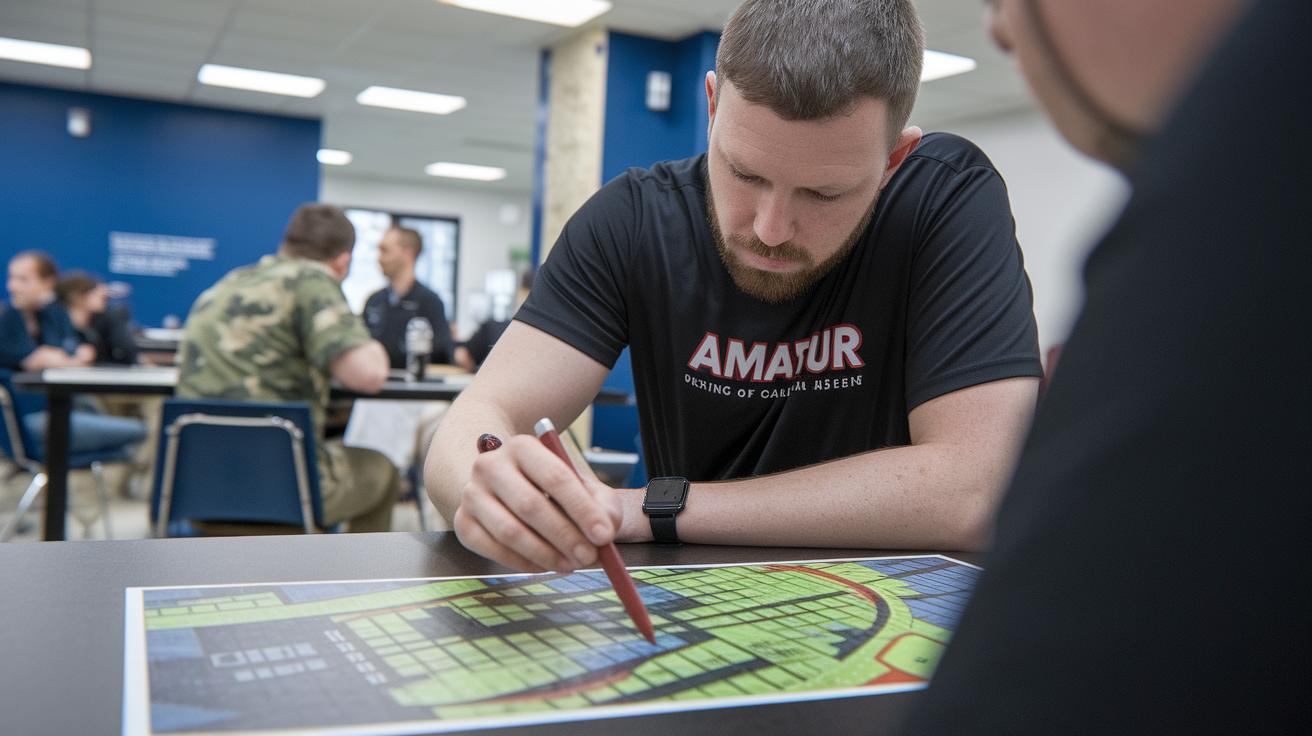
Advanced exams rely on covert assessment tools designed to uncover hidden skills. They push you to spot tiny hints in every question and go beyond simply answering quickly. Picture a question that subtly hints at a recurring pattern, almost like piecing together a secret code.
Detailed pattern recognition trains you to catch small differences that regular drills might miss. Notice slight wording changes in similar questions because those variations are often a deliberate way to target your weak spots. One simple tip is to look for wording differences that could signal the correct answer.
Working with a coach gives you a personal plan that targets gaps standard practice might ignore. In one-on-one sessions, an expert might explain that you tend to overlook small changes in formula-based queries and offer tips to catch those nuances on the fly.
Stress management techniques are another key part of your preparation. Instead of relying only on routine drills, try exercises that mix controlled pressure with quick thinking. This method gets you ready for unexpected twists during the test, like handling rapid-fire questions while managing a minor distraction.
- Covert assessment tools uncover hidden skills.
- Pattern recognition sharpens the detection of subtle cues.
- Personal coaching targets gaps standard drills miss.
- Stress management techniques build mental endurance.
Combat Strategy Review for Advanced Military Exam Tactics
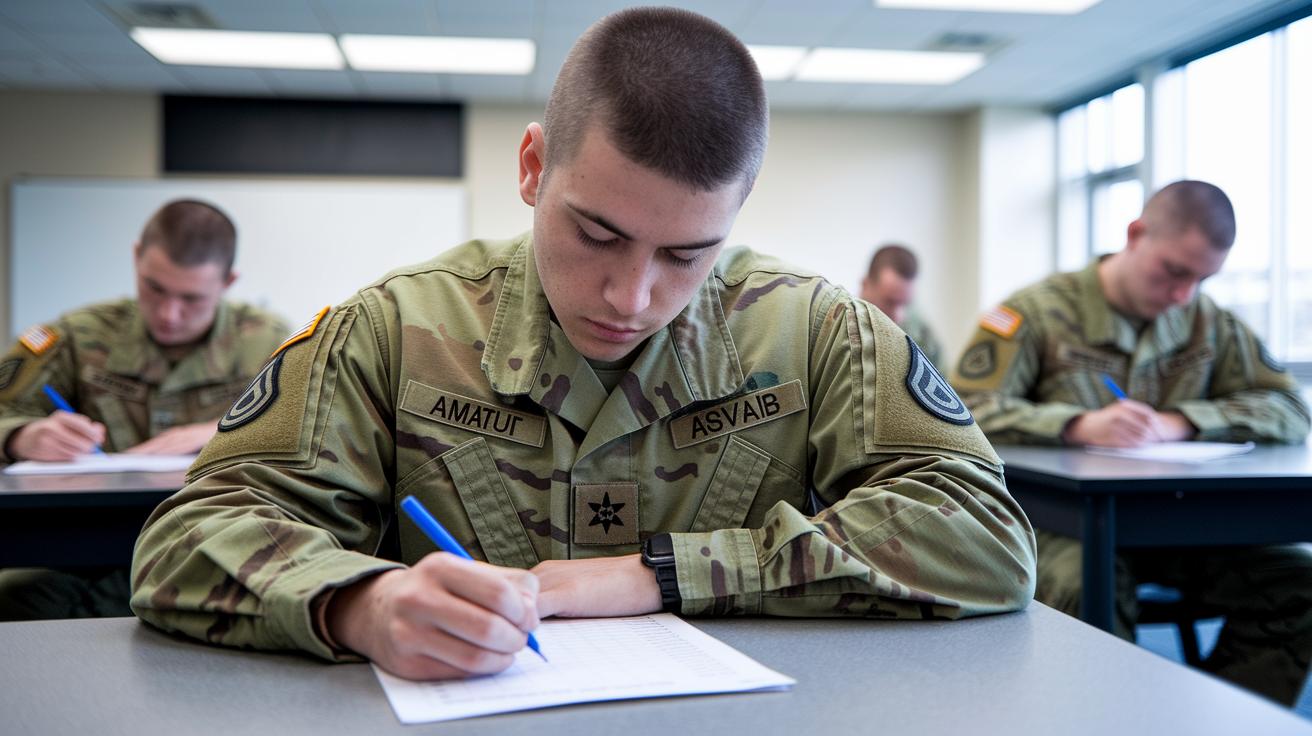
When you sit down for a multi-subtest exam like the ASVAB, you're taking on a range of skills, from General Science to Arithmetic Reasoning, Word Knowledge, and more. Knowing how the test is set up is your first mission. You'll tackle ten different sections, and each one calls for its own approach. For paper tests, if one question gives you a hard time, skip it and mark it to review later. This keeps you moving without getting stuck. But if you’re on a computer-adaptive test, every answer matters, once you choose, there's no going back.
A smart tactic to use is the elimination method. When you see a multiple-choice question, get rid of options that are clearly off. For example, in an algebra problem, if two answers just don’t fit, cross them off and trust that process to help you decide. It’s a solid way to boost your confidence and improve your shot at the right answer. For more on pacing and elimination techniques, check out our military test strategies guide (it breaks things down simply).
Arriving early on test day is another key step. It gives you extra time to handle surprises like traffic or confusing directions. You can settle in, take a deep breath, and get ready. Make sure you grab at least eight hours of sleep the night before to prepare your mind for the challenge. Keep a watch nearby to stay on pace, and if any instructions seem unclear, don’t hesitate to ask the proctor for help.
These combat-style strategies, from knowing your exam format to using smart elimination techniques, are your blueprint for doing well on high-stakes military tests. Stay focused, trust your training, and follow your plan with confidence.
Battlefield Exam Simulations: Real-World Scenario Drills

Imagine stepping into exam simulations that feel just like real battlefield missions. You’re in a study room that looks and sounds like a busy operations center, where every call matters. Full-length mock exams let you practice under actual test conditions, much like running a planned mission. These drills force you to make snap decisions, like choosing the right path on a mission map.
Try using war-gaming strategies during your study sessions. Set up short, timed exercises that push you to decide quickly, similar to spotting hidden signs in a song. These drills help build both your speed and your accuracy.
Mix pencil-and-paper drills with computer-based simulations to boost your flexibility. Every format offers different tactics, making sure you’re ready for any style a test might throw at you. And don’t forget to seek feedback from expert classes or coaching sessions, quick advice can really hone your skills.
This real-world approach helps you manage time and pressure with ease. By adding these battlefield-style simulations to your study routine, you sharpen your timing, decision-making, and overall readiness. Keep practicing regularly and soon you’ll see how consistency builds resilience and confidence before test day. Push yourself, stay sharp, and overcome every challenge.
Precision in Tactical Analysis for Advanced Military Exam Tactics

The first step to sharpening your tactical analysis is noticing recurring patterns in your exam questions. Take a close look at math word problems and mechanical diagrams to spot those subtle hints. When you come across a tough algebra problem, break it down into bite-sized steps by listing what you know and what you’re trying to find. This method helps you see how the pieces fit together. Next, mark up any diagrams you encounter; if several parts interact, jot down quick notes by each section, much like planning out a mission.
Daily reasoning drills are key to keeping your logic sharp. Try puzzles like syllogisms and exercises that involve reading data closely. These drills teach you to tackle complex problems piece by piece and find the right answer. Doing them regularly builds mental speed and readies you for high-pressure situations. Consider these practice sessions your routine check on tactical readiness.
Use targeted study materials to pinpoint where your analysis might need an extra boost. Focus on specific areas, such as basic electronics or mechanical details, by working through focused problem sets. Here’s a quick checklist to guide you:
- Spot recurring patterns easily.
- Break problems into clear, manageable steps.
- Highlight and mark important connections.
- Practice reasoning drills to polish your logic.
By putting these steps into practice, you’re building a solid toolkit for tactical analysis. Tough questions turn into manageable tasks, and your exam performance gets a serious boost. Stick to your plan, stay sharp, and keep training like you would for any important mission.
Integrating Cognitive Resilience and High-Stakes Decision Exercises

Build up your mental toughness by running through decision drills while keeping an eye on the clock. Try setting a 30-second timer for each question and then taking a quick 2-minute walk to shake off the pressure. This routine helps develop endurance and sharpens your ability to decide quickly, just like training for a tough mission.
Mix these timed challenges with short physical breaks. After a round of rapid questions, take a moment to do a few stretches or a brief walk. This pause gives you a chance to reset and stay agile when the pressure ramps up.
Remember, you can always try again, so use these drills to boost your confidence. With regular practice, you'll find yourself approaching each question with a steady and clear mindset, ready to tackle whatever comes next.
Final Words
In the action, this guide walked you through creating a distraction-free study zone, pacing your prep, and practicing full-length exams. It covered stealth assessment modules, combat review methods, and simulation drills that build both mental clarity and physical readiness.
Each strategy, from timed reasoning drills to cognitive resilience exercises, brings you closer to exam success. Using advanced military exam tactics helps you stay focused and confident on mission day. Stay sharp and keep moving forward.
FAQ
What is an ASVAB practice test and can it be taken online?
An ASVAB practice test simulates the actual exam environment to help you pinpoint your strengths and weaknesses. Online tests offer the convenience of instant feedback and allow you to practice anywhere.
How can I study for the ASVAB in a week and what’s the easiest way to pass it?
Studying for the ASVAB in a week means focusing on high-yield topics and using timed practice tests. The easiest way to pass is by targeting your weak areas, managing your time well, and sticking to a tight revision plan.
What does an ASVAB prep book offer?
An ASVAB prep book delivers clear lessons, practice questions, and review drills that help you build a strong foundation. It breaks down exam topics and builds your confidence to face the test.
What should I study for the Air Force ASVAB test?
Studying for the Air Force ASVAB means covering subjects like math, reading comprehension, and technical skills relevant to aviation. Focusing on these areas and taking practice tests can sharpen your skills and boost your score.
How do I schedule the ASVAB test?
Scheduling the ASVAB involves registering through a recruiter and selecting a convenient test date and location. This ensures you secure your exam slot and have enough time to prepare properly.
What is the Army Entrance Exam?
The Army Entrance Exam usually refers to the ASVAB, which measures your skills across multiple subjects. Your score helps determine your eligibility for different military roles, making thorough preparation essential.
What do ASVAB test scores mean?
ASVAB test scores reveal your strengths in various areas like arithmetic, vocabulary, and technical knowledge. They play a key role in determining your qualification for specific military roles based on your performance.
How rare is a 99 on the ASVAB?
A 99 on the ASVAB is extremely rare, reflecting top-tier performance across the test. It opens up more career options in the military and shows that you have an exceptionally strong aptitude in multiple subjects.
Is a 70 on the ASVAB hard?
A score of 70 on the ASVAB shows a solid performance, though some may find certain sections challenging. It usually means a bit more effort is needed in your weaker subjects, which practice and review can fix.
Is a 21 a bad ASVAB score?
A score of 21 on the ASVAB is considered low and typically falls below the minimum requirement for most roles. It signals that extra study and preparation are needed before retaking the exam.