
Ever noticed that our tests now seem to mirror real-life challenges? Changes in test rules mean your readiness is measured against the obstacles you'll face on duty. Imagine training that mimics the tough scenes you'll experience, with questions that make you think on your feet. With a new focus on practical skills and flexible testing options, these updates are meant to better match today’s military needs. In this briefing, we'll break down the new approach and show how each change helps you perform better on the field.
Comprehensive Overview of Policy Revisions in Military Aptitude Testing

• The old physical training routines are out. Now, candidates face events that mimic real combat scenes. Think of it like tackling an obstacle course that mirrors the challenges you might face on a real mission. It’s all about matching training to what you experience in the field.
• The ASVAB has shifted its focus. Instead of outdated tests, the exam now zeroes in on reasoning, arithmetic, and reading. These skills are exactly what you need in today's operations. Picture a math question that pushes you to solve problems quickly and clearly, much like making fast decisions under pressure.
• There’s a new remote PiCAT option available. Now, you can start parts of your exam at home, then finish the score confirmation at MEPS. It’s a bit like launching a simulation remotely and wrapping it up at a central command point. This change offers a mix of flexibility and accountability.
• The AFQT score requirements have been updated. Now, the Army looks for a minimum score of 31, the Navy 35, the Air Force 36, and the Marine Corps sets its bar at 32. These clear, number-based standards are meant to align more closely with the skills needed in various military roles.
• Retake rules have also been revised. If you don’t pass on your first try, you’ll need to wait 30 days before attempting again. After a second try, it’s a 6-month wait. This gives recruits time to regroup, learn from their experience, and come back stronger next time.
• Overall, these updates make the testing process smoother and more in tune with today’s combat environment. Both your physical and mental abilities now have a fair shot at being measured accurately, ensuring the best possible match between a candidate and the demands of modern military service.
Historical Evolution of Military Aptitude Test Policies
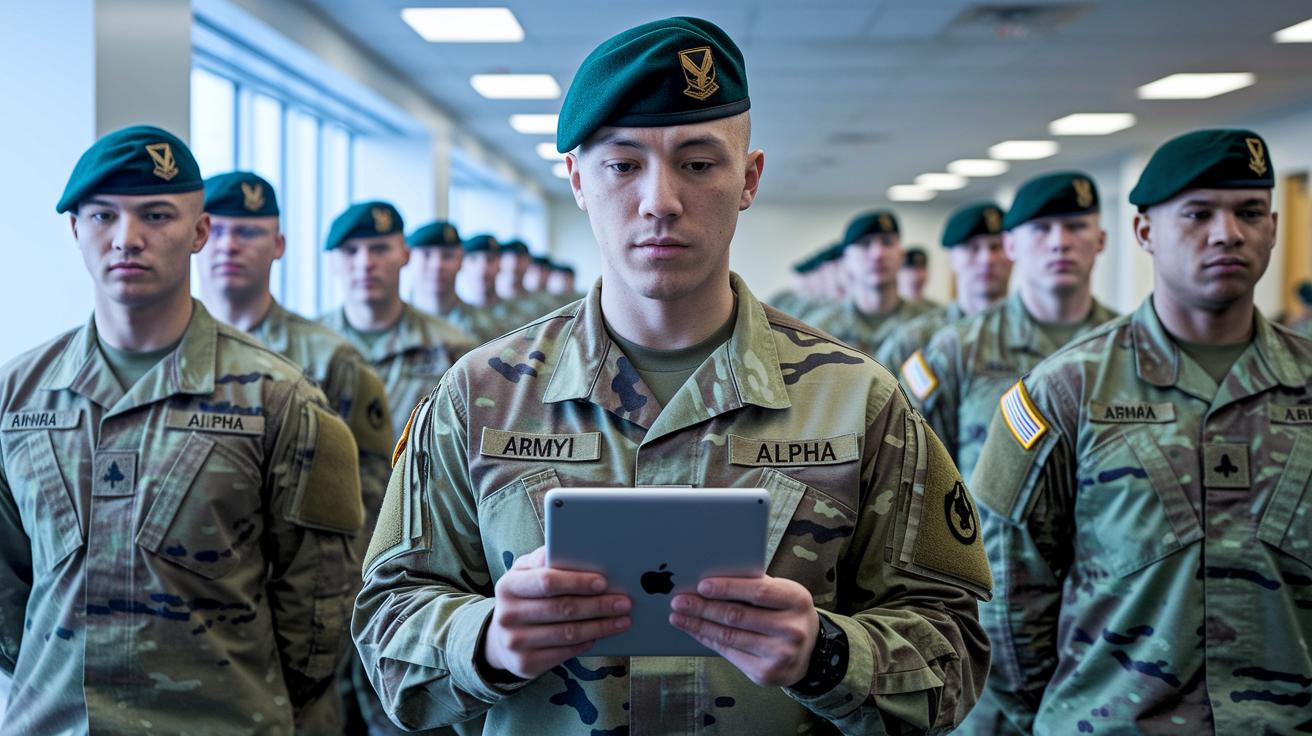
Military aptitude tests have come a long way, changing to meet the needs of real missions. It all started during World War I with the Army Alpha and Army Beta tests. These early tests checked basic reading and math skills, even helping recruits who didn’t speak much English. They set the stage for a more organized way to pick the right people for service.
In 1968, the ASVAB came into play as a paper-and-pencil test with nine different parts. This new setup could check a wide range of skills, like arithmetic and reading, making sure every recruit was well-matched to a role.
Then, in the early 2000s, things took a digital turn with the CAT-ASVAB at MEPS and MET sites. This adaptive test changes on the fly based on your answers, reflecting the quick and unexpected nature of today's missions.
| Era | Key Feature |
|---|---|
| World War I | Introduction of Army Alpha and Army Beta tests |
| 1968 | Paper-and-pencil ASVAB with nine subtests |
| Early 2000s | Digital CAT-ASVAB at MEPS/MET sites |
| 2010-Present | Modern updates matching tests to real combat scenarios |
This timeline clearly shows how each update built on the last, ensuring our testing methods keep up with today's military needs.
Branch-Specific Changes in Military Aptitude Test Policies

| Branch | New AFQT Score | Key Scoring Updates |
|---|---|---|
| Army | 31 | Greater focus on mechanical and electronic sub-scores |
| Navy | 35 | Emphasis on the VE+AR composite for technical ratings |
| Air Force | 36 | Increased standards in general science and verbal comprehension |
| Marine Corps | 32 | Adjusted scoring metrics to better reflect combat readiness |
The Army’s update zeroes in on recruits with solid technical skills. They’ve dropped the minimum AFQT score to 31 and put more weight on mechanical and electronic tests. Think of it as fine-tuning your equipment to run smoothly under pressure.
For the Navy, the focus shifts to the VE+AR composite. In simpler terms, solving visual puzzles and arithmetic problems now carries almost as much weight as overall ability. It’s like spotting a small error in a critical blueprint, every detail counts.
The Air Force has raised its standards with a minimum score of 36. Higher marks in general science and verbal tasks mean you need to be ready to explain ideas clearly and quickly. This change is built for high-speed operations where a clear head is crucial.
Over in the Marine Corps, the cut-off is set at 32, with scoring tweaks that better mirror real combat readiness. It’s not just about the numbers; it’s about proving you can act fast and stay agile in tough situations.
Each branch has tailored these changes to ensure your skills line up perfectly with what’s needed on the ground. Now, every recruit gets a chance to shine exactly where it counts.
Assessment Procedure Adjustments and Scoring Metric Updates

We’ve updated the exam process to bring together remote testing and a smarter scoring method. Here’s the lowdown:
- Remote PiCAT with MEPS score verification: You start part of the test at home and then verify your scores in person. Think of it like beginning your drill from afar and then checking in to confirm your progress.
- CAT-ASVAB now adjusts on the fly based on your answers. Each question changes to fit your skill level, much like ramping up training intensity as you improve.
- The new scoring system gives extra weight to Mathematics Knowledge, which is a boost for those going into technical fields.
- Waiting periods still apply: a 30-day break after your first attempt and a 6-month break after your second, just like a necessary cooldown before the next mission.
Candidate Testing Pathway:
- Contact your recruiter and set up your exam.
- Choose between remote PiCAT testing or in-person testing at MEPS/MET.
- Take the adaptive CAT-ASVAB.
- Get your revised score, with a stronger focus on math.
- Stick to the waiting rules if you need another try.
Impact on Recruits and Enhanced Preparation Strategies

Our testing rules have been updated, and it's making a real difference in how candidates prepare for the ASVAB and similar exams. Now, many service members tell us that the adaptive CAT-ASVAB feels just like a real-life field training exercise. This new format pushes you to work on your physical readiness and mental sharpness at the same time. Plus, with remote PiCAT testing available, even those far from testing centers can join in without the burden of long commutes.
A focused study plan of about two months has become a go-to strategy. It gives you ample time to cover all the essentials and hit key milestones along the way. Whether you're using online courses, mobile apps, or attending in-person classes, creating a solid routine is the name of the game.
Here are five simple tactics to boost your preparation:
- Set up a two-month study calendar with clear daily or weekly targets.
- Take practice tests regularly to build confidence and spot areas that need work.
- Use flashcards to memorize important terms and concepts.
- Check out digital learning tools for flexible study options.
- Consider getting expert tutoring for personalized help on tougher subjects.
| Training Method | Key Benefit |
|---|---|
| Digital | Offers flexible scheduling and year-round access to interactive study materials. |
| In-person | Provides direct feedback from instructors and real-time group discussions. |
| Hybrid | Combines digital flexibility with the support of classroom-based learning. |
Future Innovations and Trends in Military Aptitude Testing Policies

We're moving into a new phase of improvements aimed at meeting today's mission challenges. One exciting upgrade is happening at Ranger School with the RPA. Here, candidates take part in real, hands-on tasks that feel a lot like real combat. Picture yourself running through drills under pressure, much like that live exercise that pushed you to your limits.
Another change in the field is refining OPAT. These updates tweak physical tests to mirror the actual challenges you’d face on the ground, making sure everyone is genuinely ready for action.
Plus, there's talk about using AI-driven adaptive simulations for cognitive tests. Imagine a simulation that adjusts its difficulty in real time as you improve, similar to a commander fine-tuning a drill course to suit your progress.
Ongoing updates to test content also keep the evaluations sharp and current with evolving mission needs. This steady calibration is paving the way for smarter recruitment and training standards in today’s fast-changing combat environment.
Final Words
In the action, we covered significant policy revisions in military aptitude assessments. The blog outlined changes in test content, format, and procedures while mapping these updates to branch-specific scoring adjustments. It also touched on evolving strategies for better physical and cognitive readiness and gave tips to stay updated with changes in military aptitude test policies. The new testing details paint a clear picture of what today's assessments demand, leaving us all more informed and ready for the challenges ahead. Stay motivated and aim high.
FAQ
What do military IQ test scores indicate?
Military IQ test scores show how well a service member can think, solve problems, and handle information. They help decide which jobs may best fit a candidate’s abilities.
What do U.S. Army aptitude test scores from 1970 tell us?
U.S. Army aptitude test scores from 1970 reflect older testing methods that used paper tests and specific subtests to match soldiers with available roles at that time.
What is the benefit of taking an ASVAB practice test?
Taking an ASVAB practice test lets you get a feel for the exam’s structure and timing. It helps build confidence and improves your skills before the real test.
How do Army aptitude tests from 1966 and Army Alpha test questions compare?
Army aptitude tests from 1966 and Army Alpha test questions were designed to check basic skills and thinking abilities using questions that fit the testing styles of their eras.
What was the old ASVAB score range like?
The old ASVAB score range was set up differently than today’s standards. It gave a snapshot of past scoring methods and recruitment benchmarks in military testing.
How did ASVAB scores in the 1980s and 1990 change over time?
ASVAB scores in the 1980s and 1990 changed as test content and scoring methods evolved, reflecting adjustments in job requirements and overall military recruitment needs.
Did the ASVAB test change over the years?
Yes, the ASVAB test changed to better match current military duties. Updates were made to question content and scoring methods so that tests correctly assess modern skills.
Are calculators allowed on the ASVAB?
Calculators are not allowed on the ASVAB. The test is meant to check your mental math skills and problem-solving abilities without extra tools.
What does the Army aptitude score regulation cover?
The Army aptitude score regulation sets the minimum scores needed, like AFQT thresholds, to help decide if a candidate qualifies for certain roles and training programs.
What are the different versions of the ASVAB test?
The ASVAB test comes in different versions, including a paper-and-pencil format, a computerized CAT-ASVAB, and a remote PiCAT test, each suited to different testing environments.