
Have you ever thought that a sharper mind might be your secret weapon for exam success? In military tests, quick and clear thinking makes a big difference on the field and off duty.
This guide gives you simple tips to boost your mental speed (how quickly you think) and help you decide under pressure. It's like practicing early morning drills that clear your head for the day ahead.
With easy exercises and real-life examples, you’ll learn how to break down tough problems and take on challenges with confidence. Build the mental skills you need to nail exams and prepare for any mission that comes your way.
Key Strategies to Develop Critical Thinking Skills for Military Exams
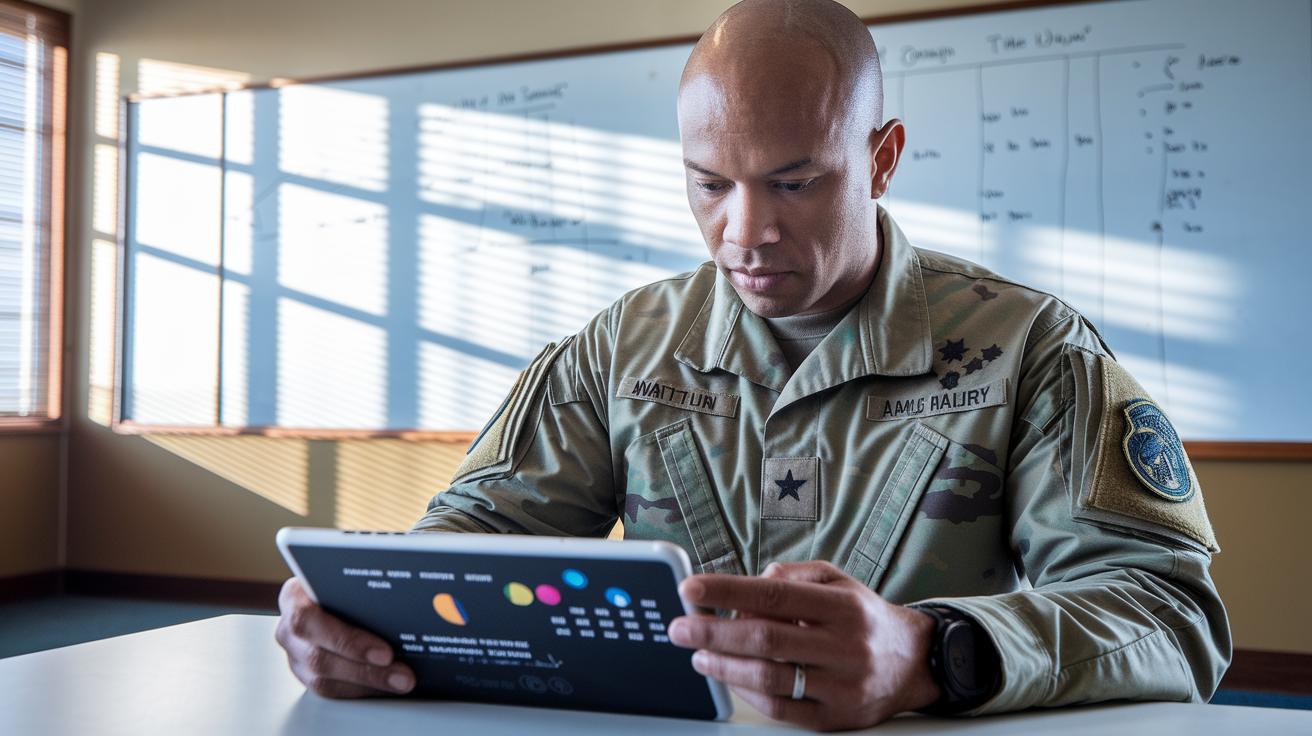
Critical thinking is a must for doing well on military exams. Officers rely on these skills to process information fast and make smart choices in the heat of action. Programs like Critical Thinking for Military Leaders mix leadership training with simple reasoning drills (exercises to boost how you think) to help both you and your team perform better. When you prepare by breaking down problems and analyzing them, you set yourself up to make good decisions when it counts. This mental quickness lets you look at facts and choose the best option, just like when you're out in the field.
- Practice evidence-based reasoning: Review sources and data carefully.
- Do scenario analysis exercises: Use clear logic to solve simulated problems.
- Try timed decision drills: Speed up your ability to think on your feet.
- Hold reflective review sessions: Spot and fix any gaps in your reasoning.
- Join group discussions: Work together to solve problems and learn from others.
These simple strategies build a strong base that not only helps you ace exams but also prepares you for leadership roles on active duty. When you focus your study time on clear evidence and smart analysis, you're ready for any challenge, both in the test room and on the field.
Cognitive Aptitude Training Methods for Military Exam Preparation

The NATO Innovation Hub kicked off a critical thinking course in late spring 2021 for both military and civilian personnel. A pilot study ran from June 1 to July 1, 2022, with 156 participants, including active service members. The course used 25 Selected Response Questions from the Collegiate Learning Assessment (a college-level test tool) that scored from 400 to 1600 with a reliability of 0.79. This program shows that hands-on, interactive methods can really boost your brainpower for military exams.
The online modules work step-by-step to build your quantitative reasoning skills. They break down problems into stages, letting you work through each challenge at your own pace. For instance, you might start with simple sequences and gradually tackle tougher ones until everything clicks.
Adaptive drills add a personal touch by tweaking the difficulty based on how you do. They push you to think on your feet while keeping the exercises engaging and just challenging enough.
Group case studies let you work with your peers on real-life military scenarios. In these sessions, you and your team analyze detailed situations that require clear, strategic thinking. This collaborative approach mirrors real-world challenges and helps sharpen your decision-making under pressure.
Logical Problem-Solving Exercises to Sharpen Analytical Skills

Numerical Logic Drills
In these drills, you face puzzles, number sequences, and swift mental math challenges. You have only moments to decide on the next step – just like quickly planning your next move on a mission. It’s all about building solid number skills and learning to think fast and clear under pressure.
Abstract Reasoning Scenarios
Here, you work on pattern tasks with shapes and symbols. Think of it as looking at different shapes and trying to find the best match. It’s similar to piecing together clues in a real-life operation. These exercises sharpen your knack for spotting hidden connections and forming ideas from bits of info when you need to adapt quickly.
Scenario-Based Challenge Resolution
This drill throws realistic military-style scenarios your way. Picture a situation where a key radio line is down, and you must juggle various factors to restore security. The goal is to break tough problems into small steps and make a clear, ordered plan. This method trains you to double-check assumptions and avoid rush decisions, much like you’d do on the field.
| Exercise Type | Targeted Skill |
|---|---|
| Numerical Logic Drills | Quick Math, Fast Problem Solving |
| Abstract Reasoning Scenarios | Pattern Spotting, Connecting Ideas |
| Scenario-Based Challenge Resolution | Step-by-Step Analysis, Effective Decision Making |
Time Management and Pressure Handling Practice Techniques

Managing your study time well for exams means breaking your sessions into small, doable parts. A smart move is to divide a multi-section exam into timed blocks. For example, set a specific time for each section so that your practice feels like the actual test day. This setup not only trains you but also lowers your anxiety over time. Studies show even modest practice boosts your approach, and many military folks in North America have shown great results by embracing a well-planned routine.
When it comes to handling pressure, try adding breathing breaks and short mental resets into your drills. After finishing a tough part, take a moment to breathe deep and slow, just like a quick break on the field. This mini-reset helps you refocus and keep your composure during the exam. With regular practice, you'll build the strength needed to tackle even the most intense testing situations.
Analytical Reasoning and Argument Evaluation for Selection Tests

Critical thinking tests push you to examine arguments carefully, much like reviewing a mission plan. Research has shown that focused practice helps sharpen this skill. For instance, one study used a paired t-test (a way to compare two groups' scores) and found a big improvement (t(84)=–6.02, p<.001). In military selection tests, using clear and straightforward strategies helps you break down tough evidence and make smart, quick decisions when it counts.
Evidence-Based Reasoning Practice
Focus on ways to verify if a source is reliable. Learn to read data correctly and spot errors in reasoning (logical fallacies are mistakes in how ideas are connected). Practice by examining different pieces of evidence, much like you would check a mission report for important details. This builds a strong foundation for analyzing facts and making solid conclusions.
Argument Construction and Critique
Work on developing strong, clear arguments while also learning to question other views. Try exercises where you build a solid case using good evidence and then look for any weak links. This step-by-step practice trains you to think critically and challenge assumptions, skills that are essential, especially under pressure. With continued practice, military candidates learn to express their thoughts clearly and adjust their approach based on careful, thoughtful review.
Mock Exam Simulations and Rapid Cognition Drills

Simulation training helps you get used to the exam's style while boosting your brain's quick-thinking skills. It gives you a safe place to handle different types of questions and practice managing your time. Regular mock exams condition your mind to the test's pace, easing tension and sharpening your focus. Think of it like running drills with your team, each session prepares you and boosts your confidence.
One smart tip is to switch up the question types so you challenge every part of your thinking. Stick to strict timing to mirror the real exam stress. Setting up your practice like the actual test, from quiet spots to timed sections, teaches you to stay calm when it matters.
After each practice, take a moment to review your work. Look over your answers to spot any patterns or mistakes. For instance, if you notice you lose focus on math problems during a rapid cognition drill, jot that down. This steady self-review builds on your strengths and corrects your weak spots, ensuring you improve with every mock exam.
Structured Decision Making Practice Sessions for Service Candidates

In our busy military world, quick and smart decisions are a must. In these sessions, you train using simple steps like the OODA loop (observe, orient, decide, act) that help you act fast under pressure. You tackle real-life scenarios that call for speedy choices and solid teamwork.
There are four main steps in this process:
-
Situation Assessment: Start by quickly scanning your surroundings to spot key details and any risks. Picture yourself on a field drill, noticing even the smallest change in a shifting landscape.
-
Options Generation: Next, come up with several ways to act without locking onto one option too early. It’s like planning different patrol routes and weighing what each one brings to the table.
-
Consequence Analysis: Then, look at what might happen with each choice. Imagine comparing different tactics in a simulated mission to decide which one lowers risk and boosts success.
-
Decisive Action with Peer-Led Debrief: Finally, choose the best plan and move quickly. After taking action, gather with your team to review what went well and what could be better. This teamwork helps perfect your ability to make decisions when it counts.
Monitoring Performance: Feedback, Error Analysis, and Exam Debriefing

Keeping a careful record of your performance is key to getting better on exams, much like reviewing a mission after action. Start by noting your answer patterns and any mistakes that keep coming back. After a timed practice session, write down each time you make a calculation slip or misread a question. Whether you use a notebook or a simple digital log, this habit lets you spot clear trends in how you make decisions. It’s like doing an after-action report where every misstep is looked at to help you improve next time.
Once you know your common mistakes, focus on fixing them directly. Set aside time to practice the sections where you often stumble, such as quick math problems or tricky puzzles under pressure. Consider getting together with a few peers after a practice test to compare notes and talk about where things went wrong. In these sessions, you might hear someone say, "I lost track of my pace on the math section, so I adjusted my timing on later drills." Watching your progress from one mock exam to the next helps you build confidence and sharpen smart strategies under pressure.
Final Words
In the action, we reviewed core tactics like evidence-based reasoning, scenario analysis, and timed drills. We also explored cognitive training and decision-making frameworks to sharpen mental clarity and fitness. We focused on building critical thinking skills for military exams while tackling realistic exam simulations and performance reviews. These strategies help boost confidence and preparedness for your next test. Keep practicing and refining your skills, each drill brings you closer to success. Stay determined and ready for the challenges ahead.
FAQ
Frequently Asked Questions
Q: What are examples, tests, regulations, and courses for Army critical thinking?
A: Army critical thinking examples, tests, regulations, and courses refer to structured exercises and evaluation methods used to build decision-making skills and practical reasoning during military training.
Q: What is critical thinking in the military, including Air Force practices?
A: Critical thinking in the military, including Air Force practices, means actively assessing information, questioning assumptions, and using logic to solve challenges during operations and training.
Q: What is ADP 6-22 and its significance in military leadership?
A: ADP 6-22 is the Army Doctrine Publication that outlines leadership qualities and critical thinking practices, helping military leaders make sound, timely decisions under pressure.
Q: How does the Army define metacognition in its training?
A: The Army defines metacognition as the process of reflecting on and monitoring one’s own thinking to continuously improve decision-making and problem-solving during missions.
Q: What are the 4 C’s of critical thinking?
A: The 4 C’s of critical thinking include clarity, context, creativity, and control, guiding troops to break down complex problems and develop effective, well-thought-out solutions.
Q: What are the 3 C’s of the Army?
A: The 3 C’s of the Army—command, control, and communication—serve to structure clear leadership and coordinated operations, helping soldiers execute orders efficiently.
Q: What are the 7 steps to problem-solving in the Army?
A: The 7 steps to problem-solving in the Army involve identifying the issue, compiling information, analyzing options, planning a course of action, implementing decisions, monitoring outcomes, and reviewing results.