
Ever wondered why a basic gym workout doesn’t cut it when compared to the toughness you need on the field? Military training isn’t just about building muscle; it focuses on sharpening your mind and pushing your limits.
Each phase of the program is designed to make your body adapt and overcome obstacles, just like in real missions. Every drill is set up to boost your strength and keep you ready for any assignment.
Take a look to see how these well-planned workouts get you physically and mentally prepped for the demands of service.
Military Physical Training: Building Elite Strength

Military physical training isn’t just a basic workout plan. It’s a well-organized program that pushes your body through tough routines so you’re ready for any challenge. This training builds muscle, boosts stamina, and sharpens your mental toughness. For instance, U.S. Army basic training lasts 10 weeks and splits into three clear phases. Each phase zeroes in on different skills, from handling weapons and learning combat techniques to daily physical workouts and an official fitness test, ensuring you’re mentally and physically fit for service.
The Army’s 10-week plan ramps up the challenges gradually. Think of it like a neatly planned drill; each phase warms up your muscles and tests your heart, much like a brisk morning run before a long day. The exercises focus on targeted bodyweight and resistance moves to build strength, long runs to boost endurance, and tough drills to sharpen your mental resolve.
This method works by stressing the body with hard work so it adapts and grows stronger. It’s simple: push yourself hard, then let your body recover and improve. Every drill aims to copy the tough conditions you might face on duty, preparing you for the physical demands of service life.
Strength-Focused Military Physical Training Regimens

These workouts focus on building strength and resilience with clear set and rep plans using heavy weights. For example, the Canadian Special Forces workout uses a Dumbbell Bench Press with 11 reps followed by 9 reps in two sets. This routine pushes your muscles to the edge, much like tackling a tough mission where every rep truly counts. Imagine grinding through each rep until your arms feel like they're shouldering the weight of your duty.
The Australian Special Forces routine begins with a 5-minute warm-up on an Assault Bike that gets your heart pumping, much like the buzz before a real mission. Next, soldiers work up to a heavy two-rep max over 6 to 8 sets with adjustable rest periods. This approach mirrors a disciplined soldier strength and conditioning program, slowly turning short bursts of power into lasting strength.
Then there’s the Ugly Operator Workout, which ups the ante by combining bench presses, front squats, deadlifts, strict pull-ups, and get-ups, all performed at a steady 70 kg load for as many reps as possible. This drill not only builds raw muscle but also mirrors the challenges of a real operation, ensuring each movement sharpens the strength and endurance needed in high-stress situations.
Tactical Combat Conditioning Program Drills

These drills are built to simulate the tough situations you might face out in the field. They mix quick, explosive moves with short breaks to help boost your stamina and sharpen your decision-making when the pressure’s on. Each exercise combines strength, speed, and a bit of a mental challenge to get you mission-ready.
This program is all about pushing you physically and mentally. It’s designed so you can adjust weights and durations as you move up in fitness. Not only will you build muscle and endurance, but you'll also toughen up your mind for duty.
• SAS "Mind Game" three-move drill
• British Army six-station AMRAP circuit
• Canadian JTF 2 pre-selection strength/speed series
Adding these drills to your routine gives you a well-rounded combat conditioning program while letting you perfect every move. For example, the British Army circuit lets you tweak the load and time to match your current strength and endurance. The SAS drill tests your mental toughness under physical stress, and the Canadian series mixes aerobic and anaerobic work for a complete workout. For more specific routines, check out the link to combat fitness training for soldiers and see how adjusting these exercises can prepare you for real-life operations.
Endurance and Aerobic Combat Conditioning Sessions

For those in special operations or law enforcement, endurance drills are like mission prep, they boost your stamina and fine-tune your heart work. Take the "Murph" Navy SEAL Workout, for example. You start with a 2-mile run and then knock out 600 bodyweight moves (pull-ups, press-ups, air squats) while wearing a 10 kg vest. Picture yourself pounding the pavement, each weighted step pushing your body to new limits.
Then there’s the French GIGN Routine. Imagine doing 1,700 bodyweight reps paired with a 4 km run split over five rounds. Each round is like a small tactical mission, testing both your speed and your muscle endurance even as fatigue sets in.
And don’t forget the FBI Fitness Test, which checks your cardio and strength at five different stations. This training is all about long, sustained effort, kind of like continuously charging on a mission, making sure your body is ready for extended, high-intensity operations.
Obstacle Course Conditioning and Agility Exercise Circuits

These obstacle-style circuits push your body with quick, varied moves that boost agility, grip strength, and explosive power. They work like the Royal Marines Bodyweight Workout (a routine using minimal equipment) by simulating how you’d navigate real obstacles. Picture yourself moving from a balance drill to a low hurdle, quickly adjusting your body and sharpening the fast reflexes you need day to day.
Agility circuits test your balance, coordination, and speed through fast-changing drills. Imagine jumping over a hurdle and then pivoting on the spot, a move that challenges your coordination and speed on a makeshift course. This type of workout mirrors the physical challenges you may face during duty, preparing you for anything that comes your way.
The approach is straightforward: push your body with high-intensity moves and then rebuild your strength with focused drills. For example, switching from a rapid agility run to a precision balance drill builds both power and stability. This method helps you handle sudden obstacles and unpredictable challenges, getting you ready for tough environments where every move counts.
Performance Standard Benchmarks in Military Physical Training

When it comes to military physical training, the targets are laid out plain and clear. These performance benchmarks tell you what the basic standards are and show what peak performance looks like. For example, the Navy SEAL Fitness Test asks for at least 50 push-ups in 2 minutes, but hitting 75 or more shows extra strength and endurance.
The Marine Corps Fitness Test mixes timed runs with bodyweight events, pushing each recruit to prove their overall fitness. Then there’s the Ugly Operator Workout, which uses a formula based on total repetitions at a fixed 70 kg load to check your strength. These clear numbers help you track progress and fine-tune your training as you push your physical limits.
| Test | Minimum Standard | Perfect/Calculation |
|---|---|---|
| SEAL Push-Ups | 50 in 2 min | 75+ |
| Marine Corps Composite | Varies by events | Divisional peak |
| Ugly Operator Rep Formula | Baseline rep count | Calculated score |
Standards like these, and even the updated US Army Combat Fitness Test from 2020 with six events covering strength, power, agility, and endurance, give you a clear roadmap. They help you focus your efforts and build the resilience needed for tough duty. Each drill is a step toward getting better and ready for the mission ahead.
Adapting Military Physical Training Techniques for Civilian Fitness
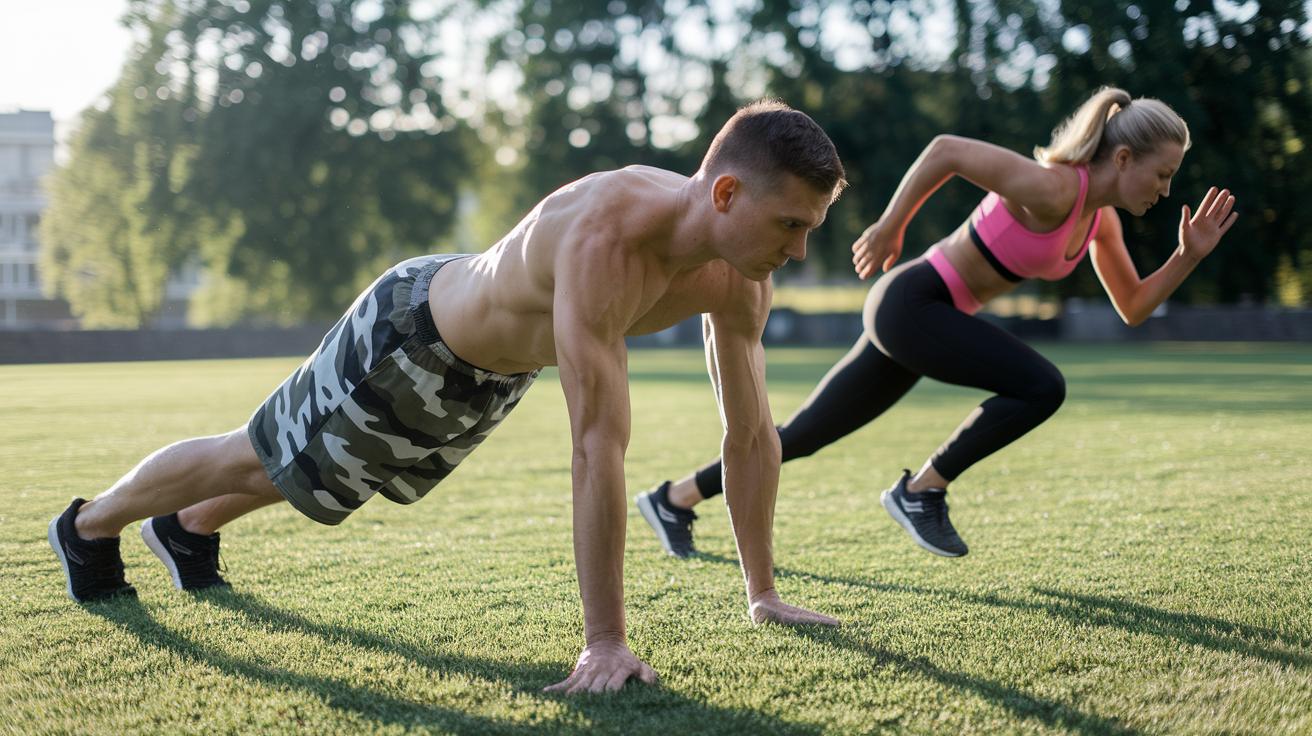
Military workouts can easily be tweaked for everyday fitness. For instance, the Royal Marines Bodyweight Workout is a perfect example. It uses very little equipment and can be done almost anywhere, whether you’re hitting the gym or working out at home. It’s a neat way to give your routine a military twist without having to invest in a bunch of gear.
Take the "Murph" challenge. It’s a tough drill that service members swear by. But no worries, if you’re just starting out, you can cut down the number of repetitions or even skip the extra weight. This approach still builds strength and endurance without overwhelming you. The same goes for the Ugly Operator Workout. It’s simply a matter of lowering the standard 70 kg load so you can focus on nailing your form and steadily progressing.
Even non-military athletes can benefit from these structured drills. There are monthly subscription plans, around $35 a month, that break down these routines for you. They adjust the load and intensity safely, so you can build strength and stamina while fitting your workouts neatly into your day.
Final Words
In the action, this post broke down military physical training fundamentals and detailed combat conditioning drills, strength routines, and performance benchmarks.
We touched on endurance sessions and obstacle circuits while showing how to adapt these methods for everyday fitness.
Military physical training is a clear roadmap to building strength, stamina, and mental toughness. Keep pushing forward with steady determination, you’re on the right path to success.
FAQ
What does the military physical training program pdf provide?
The military physical training program pdf provides an official guide detailing structured routines that build strength, endurance, and mental toughness, inspired by proven military training methods.
What does military physical training near me mean?
The question about military physical training near me suggests checking local gyms, community centers, or veteran support organizations that offer programs modeled after military discipline and fitness routines.
What are the physical requirements for Army male and female service members?
The physical requirements for Army service members set clear standards for strength, endurance, and overall fitness, and differ slightly between males and females to account for physiological diversity while ensuring readiness.
What does a military physical exercises list include?
The military physical exercises list includes drills such as push-ups, sit-ups, running, and other bodyweight and resistance exercises designed to improve muscular strength, cardiovascular endurance, and agility.
What are the Army physical fitness test standards?
The Army physical fitness test standards include a combination of timed runs, strength-based drills, and bodyweight exercises, serving to objectively assess a soldier’s readiness and overall physical performance.
What does military physical training consist of?
The military physical training consists of various routines aimed at enhancing strength, endurance, and mental resilience, including structured drills, cardio sessions, and tactical exercises that simulate real-life combat demands.
What is the Army 2 mile run time?
The Army 2 mile run time is a benchmark that varies by age and gender, with competitive times aiming around 15 minutes or less, serving as an indicator of cardiovascular conditioning and overall fitness.
What is the 3-3-3 rule for workout?
The 3-3-3 rule for workout is a structured training method that prescribes three sets of three core movements, ensuring balanced development and efficient progression through strength and conditioning exercises.
What is the 6 12 25 rule?
The 6 12 25 rule is a rep scheme that divides exercises into segments of six, twelve, and twenty-five repetitions, designed to challenge different aspects of muscular strength and endurance within a single training session.