
Ever felt that test day tension like you’re about to enter a high-stakes mission? Many service members get anxious when each question seems like a tough barrier on the way to success.
In this guide, we cover simple steps to turn your exam prep into a clear, focused briefing. Set clear study goals, practice with drills, and lean on your team for support. Step by step, you can learn to calm your nerves and keep your focus sharp, just like a true professional on the field.
Top Military Test Anxiety Management Strategies for Service Members
Think of exam prep like planning an important mission. Create a study plan that sets clear goals with firm deadlines and timely breaks. It’s like mapping out a patrol route, every step matters.
Stay disciplined to avoid delays. A small setback can feel like missing an order on the field. Use practice tests and timed quizzes as training drills to build confidence and resilience. Tackle each test scenario step by step and notice how you improve as you go.
Work with your teammates in study groups. It’s just like coordinating with your unit to ensure everyone is ready for the challenge. If one method doesn’t work, switch tactics, sometimes a new approach is all it takes.
Keep your study materials neat and easy to find. Start by mastering the basics, just as you would secure your base before moving on to advanced maneuvers.
After the exam, take a good look at your performance. Think of it as a debriefing: review what went well, figure out what needs work, and discuss your insights with a trusted mentor. And if the pressure ever feels overwhelming, don’t hesitate to ask for support, just like calling for backup when you need it.
Lastly, keep your body mission-ready. Eat balanced meals, get 7–8 hours of sleep, and stay active. Use simple mindfulness exercises like deep breathing or meditation and visualize positive outcomes to boost your spirit. Manage your time well during both study sessions and exam day so you can stay calm and focused throughout your mission.
Exam Anxiety Symptoms and Triggers in Military Tests
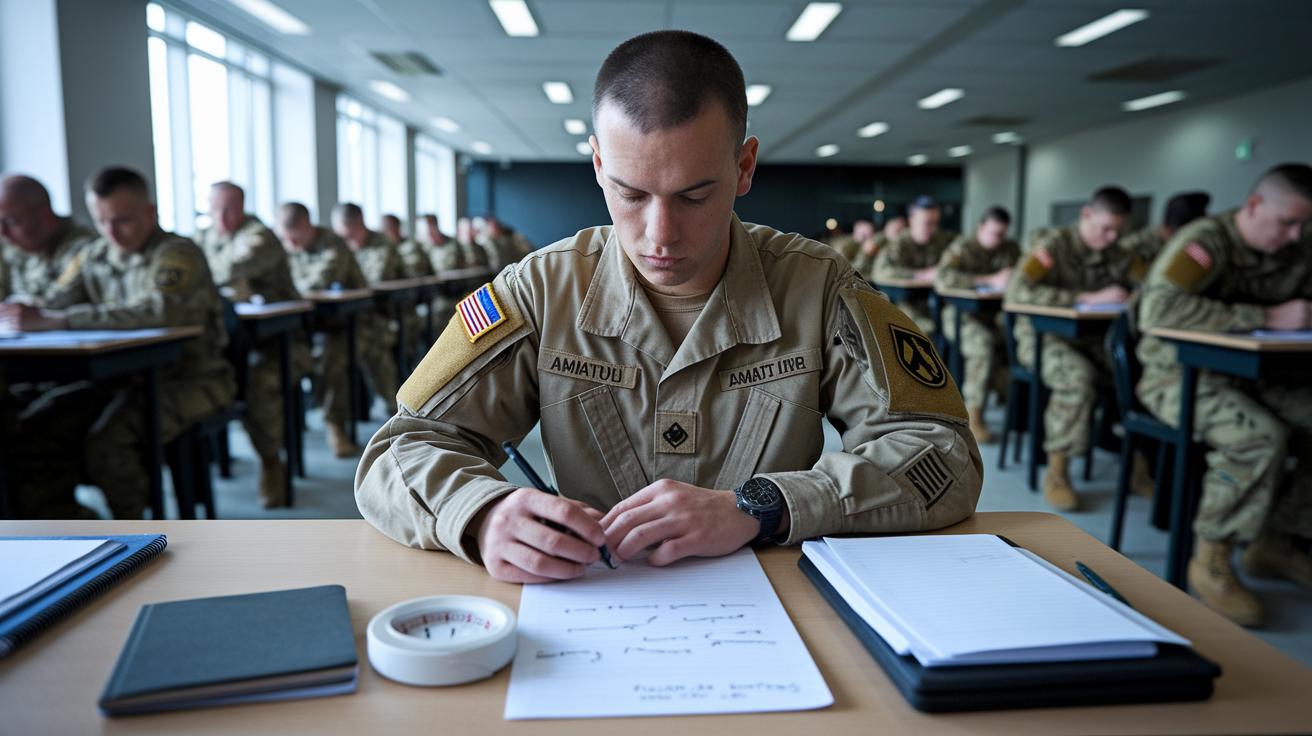
Test anxiety in military tests can show up in many ways, physically, emotionally, and even in your thinking. Physically, you might feel your heart beat fast and sweat more than usual. Picture your pulse pounding like the steady beat of boots on parade ground before you even sit down for the exam.
Emotionally, negative thoughts can creep in. You might find yourself doubting your skills and feeling low about your past mistakes, much like the pressure you feel during a high-stakes mission. When it comes to thinking, your mind might focus on what you think you lack instead of all the good work you’ve done. It’s like repeatedly wondering if you’re fully ready for the drill.
There are several factors that can make these feelings worse. If you’re already one to stress easily, similar to being on alert during unexpected orders, you might be more prone to anxiety. The drive for perfection can turn into a fear of failure, making you question yourself just like you would after a tough after-action review. Past bad test experiences, similar to a failed operation, can also bring back those old worries. And if your study routine is like a jumbled mess or you’re dealing with constant background noise, think heavy chatter in the barracks, then the anxiety can really pile on.
Spotting these signs is the first step toward handling your exam fears. When you notice them, consider it a signal to change your approach, refocus, and build your confidence for the challenge ahead.
Cognitive Behavioral Strategies for Military Test Anxiety Management
Feeling those nerves before a big test? One solid method to battle that anxiety is cognitive restructuring. Basically, you challenge any negative talk in your head. Say you catch yourself thinking, "I’m not ready." Instead, remind yourself, "I’ve trained hard and I’m ready for this challenge." It’s like going over your mission plan before setting out.
Another helpful step is systematic exposure. This means you practice with test simulations that slowly get tougher, much like progressing through training drills. Over time, these practice tests ease you into handling real exam pressure.
Mental toughness drills add another important tool to your kit. These exercises mimic the stress of an actual operation. Start with a timed quiz in a quiet room, then gradually add distractions as you improve. It’s a way to build up your resilience, preparing you to perform when it counts most.
Finally, performance reframing is key. Instead of beating yourself up over mistakes, view them as learning opportunities. Picture it like a debrief after a mission, each error helps you see what to fix and what you did well. Every small misstep becomes a stepping stone toward better performance.
| Technique | What It Does |
|---|---|
| Cognitive restructuring | Turns negative self-talk into a confidence booster |
| Systematic exposure | Eases you into tougher tests step by step |
| Mental toughness drills | Trains you to handle stress like real mission pressure |
| Performance reframing | Turns mistakes into learning moments |
Relaxation Techniques for Managing Military Test Anxiety

When test pressure rises and things get intense, try some simple breathing techniques to stay focused. Box breathing, for example, is straightforward: breathe in for four seconds, hold for four, exhale for four, and then pause for four. It really helps steady your heart and clear your mind. Another method is diaphragmatic breathing, where you take slow, deep breaths that fill your belly. This can slow a rapid heartbeat and ease those nerves.
Progressive muscle relaxation is another solid strategy. Start with your feet, tighten the muscles for a few seconds, then slowly release the tension. Gradually work your way up from your legs to your shoulders, letting each group relax. It’s like shedding extra weight and stress with every step.
Mindfulness meditation is great too. Find a quiet spot, focus on your breath, and let any distracting thoughts drift away, kind of like clearing the fog before a mission. It helps you stay in the moment and ready for anything.
Finally, try guided visualization. Picture yourself nailing a test performance, with every step executed calmly and precisely. Imagine a smooth debrief where nothing goes wrong. This mental rehearsal can boost your confidence and prepare you for high-pressure situations.
Effective Study Tactics to Reduce Military Test Anxiety
First, lock in the exam format. Knowing what to expect can really ease that uncertainty. For example, run through a practice ASVAB section just like the real test layout. Picture yourself moving at a calm, steady pace as you get a feel for the timing and the types of questions ahead.
Tackle each section one bit at a time, think of it like planning your mission step by step. Start with areas like verbal reasoning, and then shift your focus to math skills when you’re ready. Each week you dedicate to one subject builds your base slowly and steadily, boosting your confidence with every small win.
Next, add timed practice drills to your routine. Working against the clock is a bit like managing a timed mission, where every tick counts. Set a timer while you handle a set of multiple-choice questions, and feel how each second conditions you for the real exam.
If you hit a tough question, don’t let it bog you down. Instead, mark it, move on, and return when you're ready. This keeps your momentum strong and ensures one tricky problem doesn’t hold you back.
And here’s a reality check: almost 8 out of 10 candidates don’t pass the ASVAB on their first try. That’s why a consistent, targeted review is key. Stick to a routine that mirrors the real test’s pace, arrange your study sessions carefully, and give yourself the time to build mastery. This strategy not only strengthens your skills but also eases that overwhelming pressure.
Physical Conditioning and Mental Resilience for Test Anxiety Relief

Staying mission-ready starts with eating balanced meals that give your brain the fuel it needs. For instance, try a breakfast of whole grains and fruit to get you moving, just like making sure your gear is set before a drill.
Getting 7 to 8 hours of sleep each night lets your brain record memories and recharge for the day ahead. Think of sleep as a quick debrief after a busy mission, it helps clear your mind and get you ready for what's next.
Regular exercise is like running a well-practiced drill. Mix in cardio and strength training to keep stress low and energy high. You might want to take a look at the Military Fitness Plan for routines that boost both your body and mind. Imagine it as building the stamina you need for a long patrol.
Positive visualization and mindfulness act like rehearsals before an important mission. Picture yourself saying, "I handled today’s challenge like a pro," much like picturing a successful completion of a critical task. This simple practice can ease your anxiety and boost your confidence.
After each test, take a moment to review what went well and what could be improved. Use that feedback to adjust your approach and gear up for the next challenge.
Final Words
In the action, we've tackled key methods to push past test anxiety. We reviewed a battle plan for study, smart mood resets through cognitive techniques, and practical relaxation tips. We also highlighted solid study routines and the role of physical fitness in sharpening both body and mind. Each tactic builds on the next, fueling readiness and self-assurance. Keep practicing these military test anxiety management strategies, and move forward with confidence knowing every step gets you closer to your goal. Stay focused and ready for success.