
Have you heard the new military test guidelines? Now, if you’re far from a testing site, you can take the exam from home. The test starts with easier questions to help build your confidence before moving on to tougher ones.
Plus, if you don’t get the score you want, you can retake it quickly to improve. These updates make it simpler to prepare for service and clear the way for success. Let’s dive in and see how these changes can boost your confidence on test day.
new military aptitude test guidelines Boost Confidence
The new guidelines show that the ASVAB remains a multiple-choice test used by the Department of Defense in over 14,000 schools and MEPS centers. If you check the latest military test updates 2023, you'll see that a PiCAT option is now available. This means you can take the exam without a proctor because recruiters manage it, so if you can’t get to a testing site right away, you can still complete your test at home and then have your scores confirmed at MEPS within a set time.
The updated policy also makes it easier to improve your score. You can retake the test a month after your first try, and if needed, take it again six months later. For many, this clear schedule offers a real chance to get better without extra stress. Plus, about 70% of candidates are picking the CAT-ASVAB because its adaptive format adjusts the question difficulty based on your answers, which can shorten your overall test time. Imagine starting out with easier questions that gradually become tougher, giving you confidence each time you answer correctly.
One thing that stays the same is that calculators are not allowed in any math section. This rule makes sure everyone relies on their own mental math skills, even when the problems get tricky. All in all, these changes aim to create a fairer and more accessible testing process. They help each recruit build steady confidence as they gear up for military service.
Eligibility Criteria Modifications in Military Aptitude Testing

New guidelines have updated the AFQT scores while keeping the percentile system the same. The AFQT still shows scores as percentiles from 1 to 99 based on a 1997 group. This means your score is compared with how others did back then. Each branch now has its own minimum score: Army needs at least 31, Navy requires 35, Air Force sets the bar at 36, and the Marine Corps expects 32.
You also need to meet new age, education, and citizenship standards when you take the test. These changes are meant to match today’s recruitment needs while checking your basic skills the same way. Think of it like planning a drill: every step is carefully timed and measured.
On top of that, the PiCAT test now becomes part of your official record. Whether you take it remotely or at a Military Entrance Processing Station, it’s all counted equally and fits into the new timeline for meeting eligibility.
| Branch | Minimum AFQT Score |
|---|---|
| Army | 31 |
| Navy | 35 |
| Air Force | 36 |
| Marine Corps | 32 |
For further details, see "minimum asvab score for army."
Revised Exam Protocols and Administration Procedures
Candidates arrange their exam by reaching out to their recruiter. You can take the exam at MEPS in a self-paced computer-adaptive test (CAT, which means the questions adjust based on your answers) or at MET sites using the traditional format.
If you decide on the remote PiCAT, you'll need to verify your scores at MEPS within a specific time frame. Many candidates take the PiCAT from home and later confirm their scores at MEPS, just like finalizing preparations for a field drill.
New security measures are in place to keep the exam fair. Calculators aren’t allowed, strict ID checks ensure your identity, and the training for proctors using the CAT adaptive system has been updated. Plus, with over 14,000 testing sites available, you can easily find a location near you.
Updated Scoring Methods and Evaluation Metrics in Military Aptitude Tests
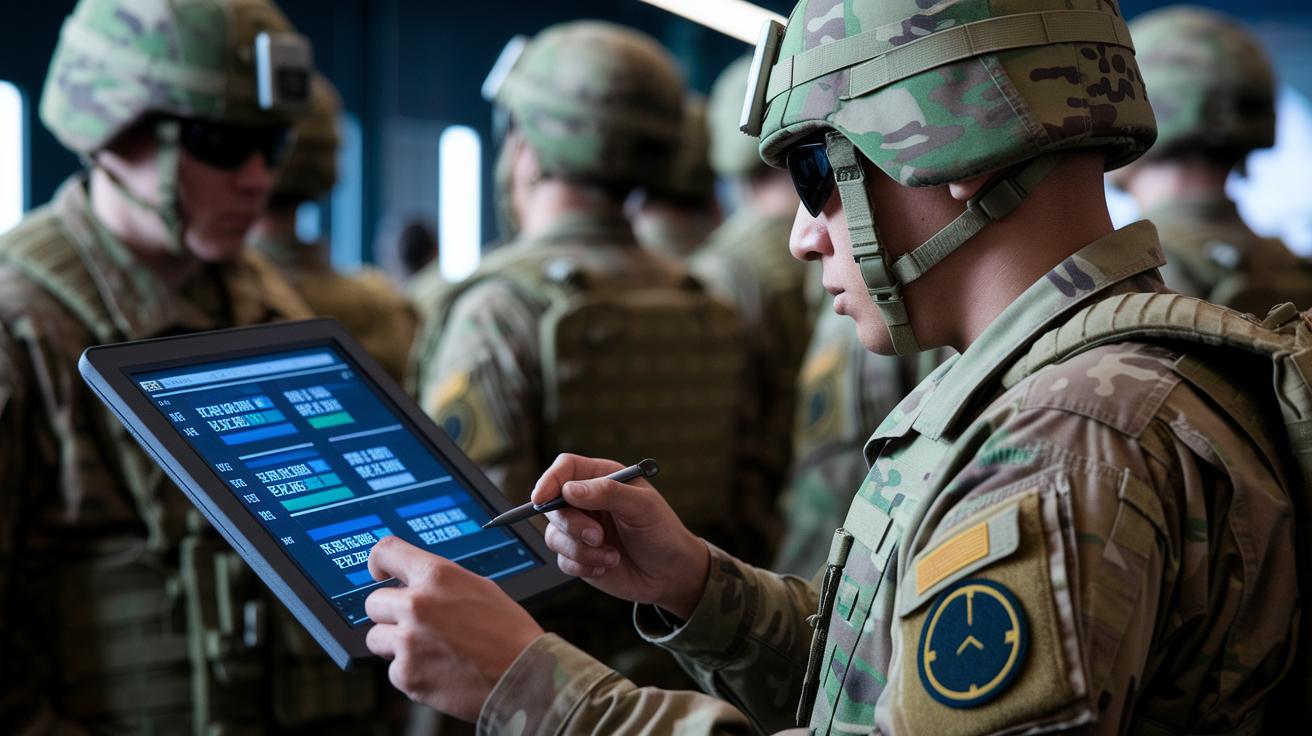
We’re now using composite line-scores to decide if you fit a certain military role. In simple terms, we assign different weights to parts of the test based on the skills needed. For example, a job that needs strong math skills gives extra credit to Mathematics Knowledge (a measure of how comfortable you are with numbers). Think of it as planning a drill, each math problem and word puzzle works together to give a clear picture of where you stand.
Here's an interesting fact: When these weighted scores add up just right, it can mean the difference between being cleared for an electronics technician role or needing extra training.
We also look at how you perform under pressure. New evaluation measures check how steady you are on timed tasks, showing how quickly and accurately you can make decisions, just like handling a high-pressure mission.
Key elements include:
- Composite line-scores that mix weighted parts of the test.
- Calculation methods that spotlight your job-related strengths.
- New metrics that focus on how consistently you perform under pressure.
| Feature | Description |
|---|---|
| Composite Scores | Different test sections are combined with specific weights to show your overall performance. |
| Job Match | Calculations help determine which military roles suit your skills best. |
| Performance Under Pressure | Timed tasks show how fast and accurately you can make decisions. |
Branch-Specific Military Aptitude Test Guidelines
Army Guidelines
The Army has updated its scores for mechanical and electronic jobs. In simple terms, if you spot changes in scores for certain Military Occupational Specialties (MOS, which are job roles), it means the band for skills like equipment repair or electronics work was adjusted. The basic AFQT score (a quick test of aptitude) still stands at 31. Fun fact: Some soldiers even improved their MOS qualifications just by zeroing in on targeted study after hearing about these changes.
Navy Guidelines
The Navy has shifted its focus to new VE + AR line scores. This means they now need sharper visual and arithmetic reasoning (the ability to quickly solve number puzzles) when assessing technical ratings. It’s all about making sure the test reflects the right skills for life aboard modern ships.
Air Force Guidelines
The Air Force has raised the AFQT minimum score to 36 and revamped its requirements for general science and verbal comprehension. What does that mean? Candidates now face tougher criteria, making sure those who enlist have the strong scientific and reading skills needed for their roles.
Marine Corps Guidelines
The Marine Corps has also tweaked its testing. Now, combat readiness includes updated criteria that mirror real battle challenges. In other words, the performance metrics better capture the physical and mental demands of actual combat operations.
Modern Assessment Techniques and New Testing Formats

The new guidelines show how the CAT-ASVAB adjusts its questions based on your answers, unlike the old paper test that always asks the same set. Imagine starting off with easier questions that slowly ramp up in difficulty as you answer correctly. In fact, when soldiers first used the CAT-ASVAB, 70% said it felt like a drill that instantly recognized their strengths.
Below is a quick side-by-side look at the two formats:
| Test Section | CAT-ASVAB (Questions/Time) | Paper-and-Pencil (Questions/Time) |
|---|---|---|
| Mathematics Knowledge | 15 questions in 31 minutes | 25 questions in 24 minutes |
| Arithmetic Reasoning | 15 questions in 55 minutes | 30 questions in 36 minutes |
| Paragraph Comprehension | 10 questions in 27 minutes | 15 questions in 13 minutes |
| Word Knowledge | 15 questions in 9 minutes | 35 questions in 11 minutes |
This flexible testing method is quickly becoming the favorite. It cuts down on downtime and sets up a test environment that changes with every answer, helping you feel the boost of improvement with each step you take.
Candidate Timeline Under New Military Aptitude Test Guidelines
We've combined these updates with our revised exam protocols so you have one complete guide. This guide covers everything you need, recruiter contact info, how to schedule exams at MEPS or MET sites, test day instructions including self-paced CAT (computerized test) tips, details on remote PiCAT validation timing, and rules for retakes (a 30-day wait after the first try and a 6-month wait after the second).
For instance, if you took your unproctored PiCAT from home, remember to finish your MEPS validation within the proper timeframe to have your scores officially recorded.
Preparation Strategies for Updated Military Aptitude Tests

Experts say you should focus on studying for about two months to get familiar with the new guidelines. Try free practice tests, study guides, and online courses to sharpen your skills in every part of the ASVAB (Armed Services Vocational Aptitude Battery, which tests your abilities). Picture yourself doing a practice test that feels just like the real exam, much like a soldier training under strict time limits while getting better with each run.
The ASVAB Career Exploration Program (CEP) offers free assessments and career tools to match your strengths with military job options. Think of these resources as a reliable map that helps you navigate every section of the test.
Good time-management is key, too. The new exam sections are timed differently, so you need to work fast and be precise. It’s like planning a drill where every second is important. Building a study schedule that mimics the exam’s conditions can really boost your confidence when test day comes around.
Mix in some interactive lessons and online quizzes to get comfortable with both the adaptive test format (one that adjusts to your answers) and the old paper-and-pencil style. Tweak your routine until the timing in each section just clicks. With solid planning and the right tools, you’ll be ready to take on the new standards and feel strong on test day.
FAQs on Revised Military Aptitude Test Guidelines
Let’s break down the key details for these updated test guidelines. First off, if you ever need to retake the test, wait 30 days after your first attempt and 6 months after your second. It’s important to stick to these waiting periods.
There are two formats available. The CAT-ASVAB adjusts the questions based on your responses, think of it like a drill that changes pace depending on how you perform. The P&P-ASVAB gives you a fixed set of questions, so you know exactly what to expect.
Then there’s the PiCAT option. You take this test without supervision, but later, you’ll need to validate your answers at a Military Entrance Processing Station, much like checking your equipment before a mission.
Your AFQT score comes from four sections: Arithmetic Reasoning, Mathematics Knowledge, Paragraph Comprehension, and Word Knowledge. Your score shows as a percentile from 1 to 99 using a 1997 reference, which helps compare your performance with others.
Different branches also set their own minimum scores. For instance, the Army requires a 31, the Navy 35, the Air Force 36, and the Marines 32.
| Aspect | Details |
|---|---|
| Retake Rules | Wait 30 days after first try; 6 months after second try |
| Test Formats | CAT-ASVAB (adaptive) vs P&P-ASVAB (fixed) |
| PiCAT | Unproctored test with later MEPS validation |
| AFQT Score | Based on four sections; percentiles from 1–99 (using a 1997 reference) |
| Branch Minimum Scores | Army: 31; Navy: 35; Air Force: 36; Marines: 32 |
Keep this info handy and feel free to ask questions if anything isn’t clear. Good luck with your mission!
Final Words
In the action, we broke down major shifts in the exam process, from the flexibility of PiCAT to updated retake rules and branch-specific thresholds. The post highlighted changes to eligibility, exam types, scoring, and the latest candidate timelines. You now have a clear view of how new policies can shape your prep and performance. Keep your study plan steady and use these insights to power through your military test challenges. Moving forward with new military aptitude test guidelines in hand, success is within reach.