
Ever thought about whether your study plan really puts you ahead? Imagine it like checking your gear before a mission, it’s that straightforward. Self-assessment techniques (simple methods to see how you're doing) show you exactly where you stand and highlight the spots that need a bit of work before the exam.
Try methods such as practice tests, timed drills, custom checklists, and progress logs. Each one helps you see your growth step by step. Ready to gain a clear edge on your exam prep?
Essential Self-Assessment Techniques to Gauge Military Exam Readiness

Getting ready for military exams like the ASVAB means knowing where you stand. A proper self-check tells you what needs extra work and boosts your confidence by showing your progress. This method mirrors the test’s nine sections, like arithmetic reasoning, word knowledge, general science, and mechanical comprehension, to give you a real sense of your standing.
-
Diagnostic tests – These tests measure your current skills. Think of them as a quick pre-mission gear check to see what tools you have before you head out.
-
Timed full-length practice exams – These mimic real test conditions. They help you practice staying calm and working fast, just like keeping a cool head in the field.
-
Personalized readiness checklists – A checklist helps you stay on track. It notes study goals and test-day items, so nothing important gets missed.
-
Performance tracking logs – Writing down your scores and timings can reveal trends over time. It’s like reviewing after-action reports to see what you did well and what needs more work.
By combining these methods, you can spot your strengths and fix any weaknesses early on. Diagnostic tests give you an honest look at where you are right now. Timed exams challenge you to work under pressure, while a checklist keeps your study plan organized. Meanwhile, tracking logs let you see your improvement step by step. Together, they build a clear, motivating picture of your progress and help you get ready with real confidence for any exam scenario.
Designing Diagnostic Trial Exams for Military Exam Readiness

Start by checking your basic skills like arithmetic, mechanical thinking, and word knowledge. It might help to use tests that change their difficulty based on your answers. For example, if you ace a mechanical question, the next one gets tougher, kind of like a training drill that speeds up when you’re ready.
Plan your practice tests with strict time limits so they feel like the real exam. Set aside specific weekly slots to work on full-length trials that test both your pacing and endurance. Each session can focus on one part of the exam. For instance, try a 90-minute test each week that targets word knowledge to boost your speed and accuracy.
After each test, review the detailed feedback to fine-tune your study plan. Look at any mistakes to see if you were rushing or if some ideas weren’t clear. For example, if you score low in arithmetic reasoning, it might mean you need extra practice with problem-solving drills.
Time Management Techniques and Monitoring Study Sessions for Military Exam Readiness
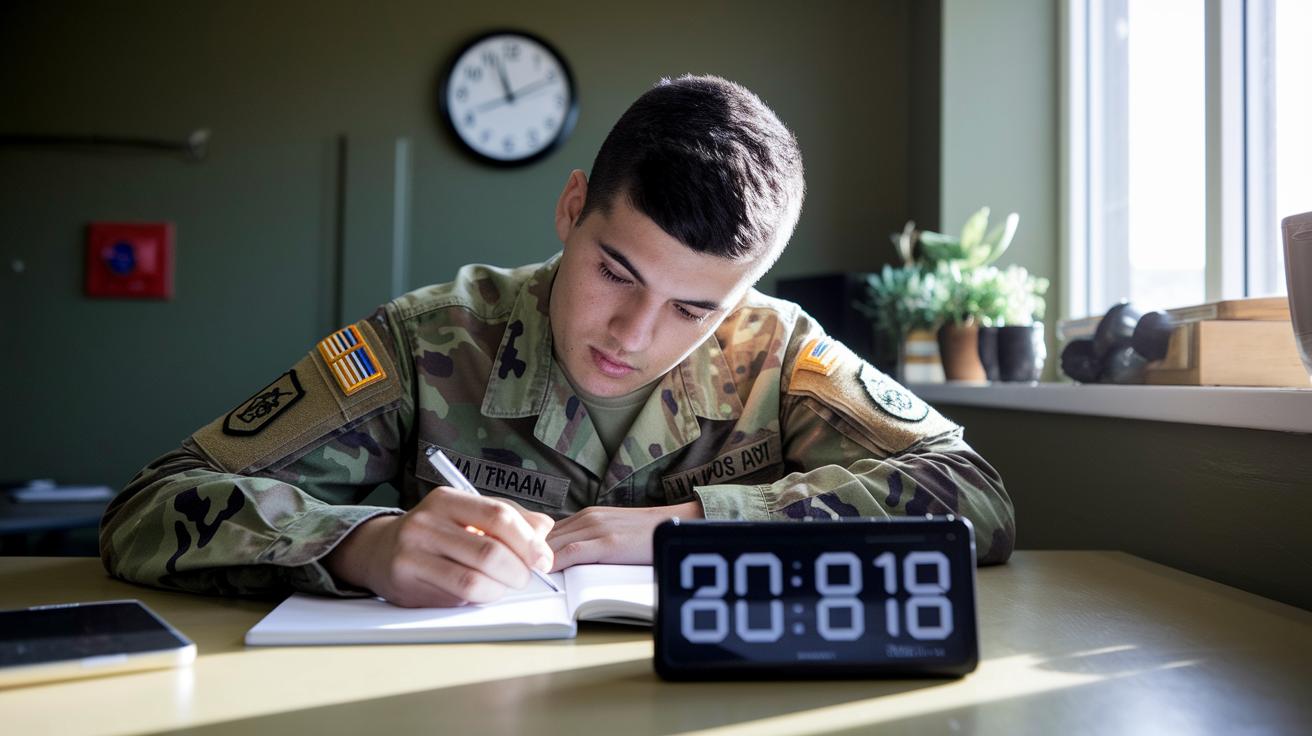
Managing your study time can really change the game when you're getting ready for military exams. By practicing with a timer in settings that feel like the real test, you condition your mind to stay focused. Using fixed intervals with short rests helps keep you sharp, it's like training your brain to stay in the zone during an important mission.
Tracking your study time and how well you perform in each session is just as important. Think of it as reviewing your mission status so you can see where improvements are needed. Creating a clear schedule with set time blocks keeps your day organized and helps you steadily build progress.
| Study Activity | Duration | Objective |
|---|---|---|
| Practice Drill | 25 min | Train focus under realistic pressure |
| Short Break | 5 min | Refresh for the next drill |
| Review Session | 15 min | Go over mistakes and adjust tactics |
Sticking to a schedule like this every day can seriously boost your overall performance. With regular focused drills, short breaks to reset, and time to review and learn, you'll gradually build confidence and skill. This steady approach helps you spot trends, fine-tune your tactics, and ultimately conquer those tough exam sections.
Developing a Structured Readiness Checklist for Military Exams
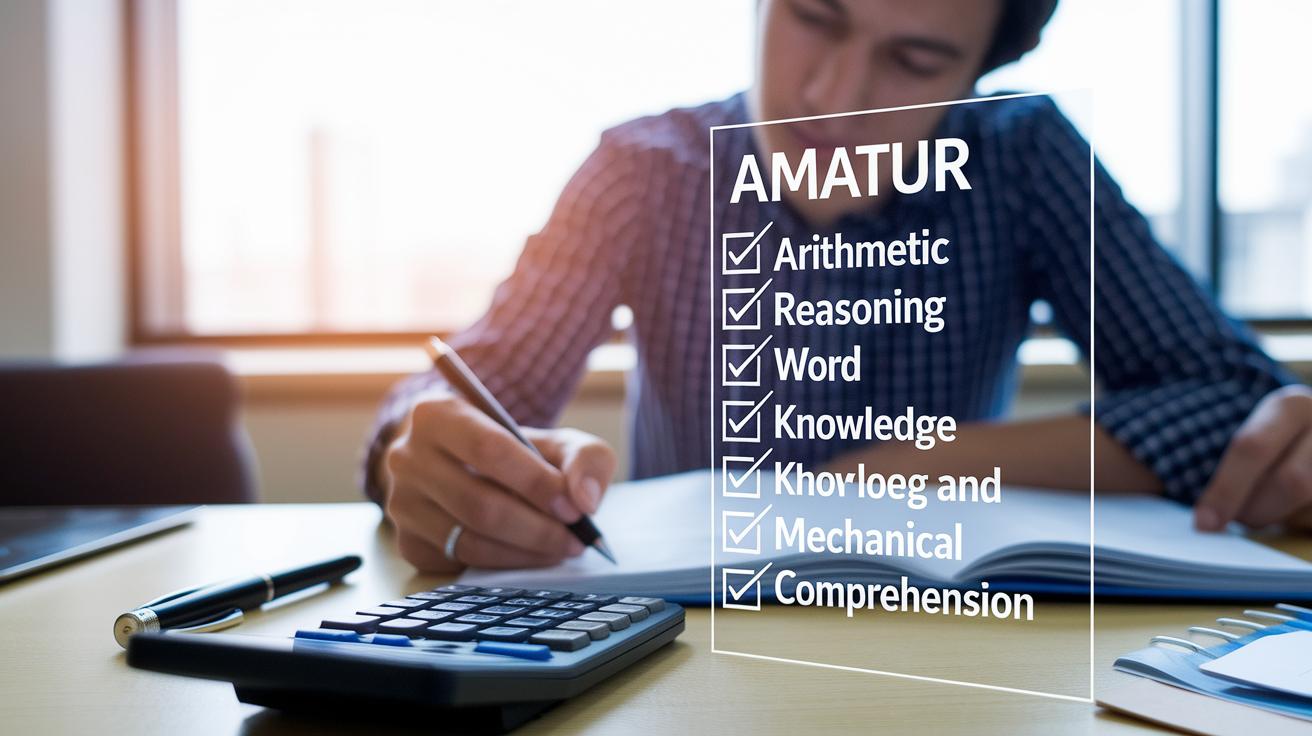
A checklist is a handy tool that keeps your exam day essentials in order. It helps you focus on your performance by making sure nothing important gets left behind. Think of it like a reliable buddy who’s got your back when the pressure is on.
Make sure your checklist covers every item and step you need for military exams. Start with the basics, a valid ID, your test admission ticket, any allowed calculators, and your core notes on subjects like arithmetic reasoning (how you work out numbers), word knowledge, and mechanical comprehension (understanding machines). Also, add a section for weekly goals that match your study sessions. This helps you see what you’ve already got sorted and spots the study checkpoints you need to hit before test day.
Don’t forget to add your weekly targets and final-week tasks too. Write down your last review sessions, do a quick check over all your items, and remind yourself to skip any last-minute cramming. Keeping it simple like this helps you stay calm and ready when exam day arrives.
Implementing an Analytical Feedback Loop for Military Exam Improvement

Begin by keeping an error log for every practice exam you take. Write down any question you answer wrong and mark which type it is (like arithmetic reasoning or mechanical comprehension). Think of this log as your after-action report. It helps you see which mistakes repeat over time.
Next, review your exam results by checking your error log. Count how many times you made a mistake in each section. This simple step shows you which topics, like word knowledge or general science, give you trouble. It’s a clear way to spot performance gaps without getting into heavy calculations.
Now, use what you've learned from your error log to set up focused practice drills. For every repeated error, create a mini drill that targets that area. If arithmetic reasoning is your weak spot, work on extra exercises that mimic real test questions and add a bit of time pressure. Make sure each drill feels like real exam conditions so you build both your knowledge and endurance. Update your drills using new test feedback and adjust your study plan as needed.
This steady cycle of review and practice not only boosts your strengths but also steadily improves your weaker areas. Stick with this routine until you start seeing real progress. Keep pushing forward.
Leveraging Simulation Drill Exercises for Military Exam Readiness

Simulation drills work like practice battles that mirror exam conditions, but they break things up into smaller pieces. You might split a session into parts like arithmetic and spatial reasoning, with each part acting like its own mini-mission.
When you set up your drills, plan separate sessions for each test type and use online tools with real-time stats (like resources found on military exam readiness platforms) to adjust the pace on the fly. Sometimes, a drill speeds up after you get a series of correct answers, kind of like a live exercise that builds momentum when you're on target.
After each drill, take a few moments to review your performance. If things were too easy or a bit too tough, tweak the pace or challenge level right away. Mix these drills with other study tactics to build a balanced routine. For instance, if the data shows you're excelling in one area, ramp up that drill to keep pushing your limits.
Fine-Tuning Your Military Exam Study Plan with a Practice Scheduling Approach

Plan your study time each week by splitting it into blocks for each exam subtest. Set aside sessions that cover one specific topic, whether it’s arithmetic or mechanical comprehension. Think of your schedule like a mission plan: assign a clear time slot for each objective, much like checking your gear before heading out.
Use spaced-repetition drills to review what you’ve learned. This means coming back to each topic at longer intervals to keep it fresh, just like tuning up an engine. For example, review a tough math concept today, then again in one day, a week, and two weeks. This steady routine helps build solid progress.
Keep a log of your study sessions and mark your achievements along the way. Check your progress against your goals, and if a subtest is lagging, adjust by tweaking your review intervals or adding extra practice. This approach keeps your plan flexible and ensures you stay on track.
Evaluating Military Exam Progress with Quantitative Performance Metrics

Using real numbers to track your exam skills gives you a clear snapshot of where you stand. Breaking down each part, say, 70% in mechanical comprehension and 90% in word knowledge, lets you see what you're good at and what needs more work. For instance, jot down each subtest’s percent score along with the time it took you to finish. This simple detail shows you exactly where to focus next.
Keep a log of your scores, timing, and mistakes over your practice sessions. When you note these in an easy table or notebook, patterns start to emerge. Imagine if your arithmetic reasoning has steadily improved from 60% to 70% over several tests. That steady climb means you can aim for a 10% boost in the next practice drill and set clear, achievable goals.
When your numbers dip or don’t meet your expectations, take a moment to regroup. A quick break or a deep breath can help you get back on track. After a test where your timing slowed, try a short walk or pause to reset. Then, review your records with fresh energy. This mix of metric insights and small recovery steps not only builds your skills but also boosts your confidence during high-pressure drills.
Final Words
In the action, this post broke down key self-assessment methods to gauge military exam readiness. We explored diagnostic trial exams, timed practice sessions, detailed readiness checklists, and simulation drills that track every key performance metric.
Segmenting your study sessions and using concise feedback helps spot gaps in your skills. Relying on self-assessment techniques for military exam readiness not only builds confidence but also sharpens your overall focus. Keep at it and stay positive as you prepare for success.
FAQ
What is an army azimuth check?
An army azimuth check is a method used to review a soldier’s ability to determine direction and bearings in the field, ensuring they can effectively find their way during missions or training.
How to study for the army exam?
Studying for the army exam means setting up a structured review plan with practice tests, clear study blocks, and tracking your progress to build confidence and address any skill gaps.
Is the military aptitude test hard?
The military aptitude test can feel challenging, but its difficulty varies based on preparation. Regular practice drills and focused self-assessments help make the test more manageable and boost confidence.
How to start preparation for the army?
Starting preparation for the army involves creating a study schedule with diagnostic tests, full-length practice exams, and checklists to systematically build your strengths and address any weak areas.