
Ever wonder if rushing through a test might hurt your accuracy? Military tests push you to act fast but still keep your aim steady.
In these tense moments, every quick decision counts, yet you have to stay precise. This guide offers handy tips to help you balance speed with care on tests like the CFAT (a test of quick thinking).
Stick with us as we go over simple training drills and smart techniques that help you hit your targets on time and right on point.
Optimizing Speed Versus Precision: Foundational Approaches in Military Testing
When you're out in the field, speed and precision work together like a good team. Speed means quickly firing your weapon and getting right into your next shot. Precision is about hitting the mark within an acceptable zone (the area considered a successful hit), which depends on factors like target size, distance, and what the weather's doing. Every soldier needs to fine-tune these techniques, whether it's managing a weapon or answering tough test questions under pressure.
It’s important to know that going for speed can sometimes throw off your aim. Imagine a shooter who nails a fast first shot but then loses control of recoil (the kick or flip of the weapon) on follow-up shots. In tests such as the CFAT (a cognitive evaluation of how well you can process information), candidates also face similar challenges, like needing to type faster while keeping errors to a minimum. One surprising fact: a recruit once boosted his test speed by 20% with daily practice, but real accuracy only came when he slowed down a bit for a smooth, steady finish.
To strike the right balance, try these tactics:
- Do drills that help you stay calm yet alert, even when the pace picks up.
- Practice technical shooting and mental exercises regularly to build muscle memory and keep your focus sharp.
- Use your study and drill time wisely by splitting it between speed and accuracy tasks in realistic conditions.
This approach works not just in marksmanship but also during tests where time pressure can affect your decisions. Focusing on these key ideas will help you combine quick action with dependable results, making you an even tougher competitor on the range and in any other challenge you face.
Time Management Techniques for Speed and Accuracy in Military Assessments

Block scheduling can really boost your performance on the CFAT. Try planning fixed time slots for each part of the test so you can switch your focus easily, just like moving from a fast sprint to a steady march during field drills. For example, set aside 20 minutes for verbal skills, and then shift to practicing spatial awareness.
A common hiccup in shooting drills is the time it takes to draw your firearm. With over 100 repetitions, you build the muscle memory needed to speed up your draw. I remember one day saying, “I practiced my draw 150 times, and it definitely cut down my delay, letting me focus better on the next shot.”
Timed shooting sets are another great trick. By tracking your split times while keeping a close eye on recoil control and the trigger reset, you can slowly lower your time without losing accuracy. Set a timer and push yourself to beat your previous round.
Decision matrices can help you balance fast action with careful precision. These tools guide you in choosing the right pace based on what the mission really calls for. Use a simple list to decide if you need a quick approach or a more measured, methodical one.
- Block scheduling
- Repetition drills for firearm draw
- Timed shooting sets
- Decision matrices
Practice these techniques, and you’ll be geared up to make quick, smart decisions every time you train.
Technological and Methodological Tools for Augmenting Speed and Accuracy in Military Tests
Digital shooting simulators now lead the way in modern training. They record split times and mark hit zones, giving instant feedback after each shot. One recruit even shaved 0.15 seconds off his time in a focused session. Every millisecond really matters.
Automated timing and error-analysis software shows immediate feedback on shot rhythm and grouping. It quickly points out when muzzle flip (the upward bounce of a gun after a shot) reduces accuracy. A soldier might see a readout that shows his hit ratio dropping when he rushes a trigger reset. This live update lets him adjust in real time for faster reactions and sharper aim.
Computerized cognitive platforms are becoming key in military tests. During simulation drills, these systems track response times and count errors. They provide clear metrics like split time, hit ratio, and error rate. Knowing these numbers helps service members plan their next move. For instance, one recruit discovered that slowing down slightly improved his hit ratio from 78% to 90%.
Regular data collection and performance reviews tie all these methods together. With automated feedback on both physical drills and mental challenges, soldiers can check their progress and set clear goals. Every training session counts when you use fast, smart tools that boost reaction speed and accuracy.
Training Drills and Adaptive Assessment Strategies for Speed-Accuracy Harmony in Field Tests
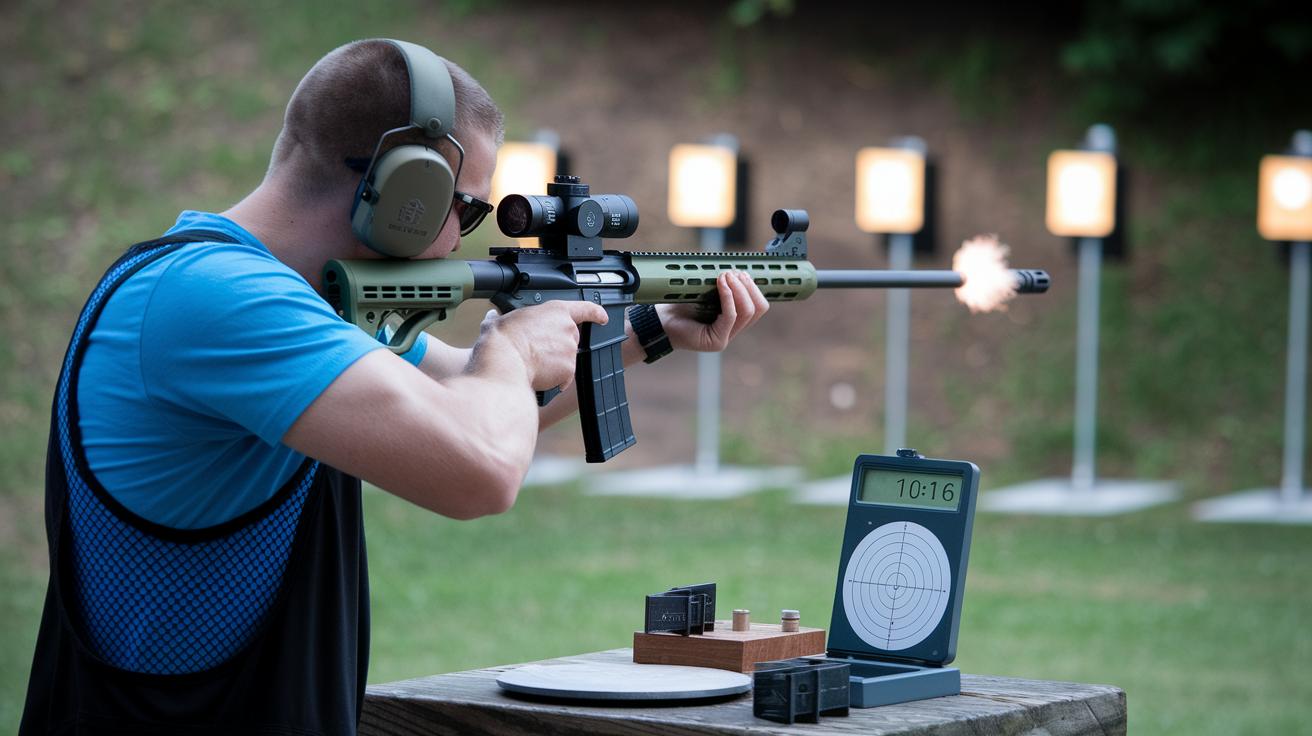
When you need to blend quick moves with careful precision, practice is your best friend. One exercise to try is the 3-yard target drill. In it, you fire rounds at targets that get smaller with each set. You start three yards away, blast five rounds at a large circle, and then shift to a smaller one. It’s a solid way to sharpen your speed and accuracy at the same time.
Another great drill is the split-interval reduction exercise. Using a shot-timer, you track the pause between resetting the trigger and firing the next shot. The goal is to cut this gap down without letting recoil ruin your aim. Just imagine each millisecond shaved off means a faster, more efficient response on the field.
Then there’s the flash sight-picture timing drill. This one trains you to grab a “good-enough” view of the target in mere seconds. It forces you to scan quickly while keeping your focus locked, much like a quick briefing before a mission. One soldier even mentioned that this drill helped him secure his sight picture fast without overthinking each shot.
Adaptive strategies work not only for physical drills but also when preparing your mind. Try rapid question-chunk scanning exercises to process key details in your study modules swiftly. Think of it like running a quick mission plan: spot the important intel and move on.
Stress-inducing timed simulations with planned misses offer another useful approach. By intentionally missing a few rounds, you can map out where your limits are in a low-risk setting. This helps you adjust your technique to fit real-life pressure. Finally, micro-tasks that demand focused attention work like quick spot-check exercises that simulate intense field conditions with strict time limits.
- Progressive target-size shooting drill
- Muzzle-flip control split-reduction exercise
- Flash sight-picture timing drill
- Rapid question-chunk scanning in cognitive tests
- Stress-induced timed simulation with intentional misses
- Focused attention-to-detail micro-tasks
These practical drills build the skills you need to keep speed and precision in balance during field tests. They train both your body and mind, preparing you for real-world challenges every step of the way.
Quality Control and Validation Protocols for Fast-Paced Military Evaluations
When you’re running fast military tests, it’s important to make sure every tool works like it should. We regularly check timing devices and electronic targets to catch any issues early. For example, a soldier might jot down device data, compare it to set standards (like a double-check), and then adjust settings if needed.
One solid method is to run the same drill twice to be sure it works consistently. It’s just like doing a practice run and then a follow-up drill to flag any odd results. This extra step helps lower mistakes, say a sudden error pattern during a quick drill might mean it’s time to recalibrate the sensor.
We also use simple statistical checks to fine-tune our performance. This means looking at numbers like average split times and error rates to keep everything sharp. Think of it as reviewing your mission stats to get even better each time.
| Metric | Desired Range |
|---|---|
| Split Time (sec) | Under 0.50 |
| Error Rate (%) | Below 5 |
Advanced steps take quality checks further in fast-thinking tests (cognitive evaluation). Some platforms, like those used in military test strategies, offer instant feedback to catch error patterns right away. This approach keeps our drills fast yet precise, ensuring we’re always mission-ready.
Case Studies of Successful Speed-Accuracy Integration in Military Testing Programs

The US Army Marksmanship Unit managed to reduce their split times by 30% while still keeping their shots on target. They used electronic target analytics that showed the exact time between shots, so soldiers could quickly adjust without giving up precision. One soldier mentioned how handy it was to see every split second displayed on the screen, helping them find the perfect balance between speed and accuracy.
The Canadian Forces improved their CFAT preparation by using timed modules along with regular reviews of error logs. Over six weeks, this approach pushed average scores up by 15%. One recruit shared, "I could see my mistakes right away and work on them during each drill." This method really helped service members learn how to mix fast reactions with careful checks.
The Navy also found success in field-readiness scenarios by proving that quick responses and careful aim can work together. In these drills, they shrank evaluation time by half and kept accuracy variations under five percent. Repeated practice sessions paired with constant feedback allowed them to sharpen their skills without losing focus. One training officer noted that each drill brought clear feedback, which helped boost reaction times while keeping aim steady.
| Program | Improvement |
|---|---|
| US Army Marksmanship Unit | 30% reduction in split times, maintained accuracy |
| Canadian Forces CFAT Prep | 15% score improvement with regular error revisions |
| Navy Readiness Drills | 50% reduction in test time, <5% accuracy variance |
These examples show that when you mix modern tech tools with consistent reviews, you can create a testing setting where quick decisions and careful aim work side by side like a well-coordinated team.
Final Words
In the action, we broke down key methods designed to sharpen both pace and precision during military tests. We examined training drills, time management techniques, and tech tools that boost shooting drills, cognitive tests, and overall performance. These strategies for balancing speed and accuracy in military tests drive success by merging rapid decisions with reliable results. Each step is built to strengthen readiness and form a practical framework that supports both physical and mental growth. Keep moving forward with determination and confidence.
FAQ
What does optimizing speed versus precision in military testing involve?
Optimizing speed versus precision means matching quick actions, like rapid shot splits, with steady, accurate outcomes in drills. It focuses on achieving fast performance while ensuring hits land within acceptable target zones.
What time management techniques boost military test performance?
Time management techniques boost performance by using block scheduling, pinpointing delay points, and following decision matrices. These methods help service members quickly allocate time without sacrificing careful accuracy during tests.
How do technology and methods enhance speed and accuracy in military tests?
Technology and approach improvements enhance performance through digital simulators, automated timing software, and computerized feedback. This integrated setup tracks reaction times and error rates, allowing for targeted adjustments that maintain both pace and precision.
What training drills build a smooth speed-accuracy balance in field tests?
Training drills build a speed-accuracy balance by using progressive target shooting, flash sight-picture timing, and stress-induced simulations. These exercises help develop rapid responses while keeping shot placement and overall accuracy in check.
How are quality control and validation maintained during brisk military evaluations?
Quality control and validation are maintained through regular device calibration, test-retest routines, and error pattern reviews. These structured checks ensure that even with fast-paced assessments, accuracy and reliability remain consistent.
What have case studies revealed about integrating speed and accuracy in military testing?
Case studies reveal that combining electronic target analytics, timed modules, and iterative feedback systems leads to notable improvements. Examples show that rapid execution and maintained precision can work together to raise overall test performance.