
Ever felt frustrated by study routines that just don't work? Imagine using revision tactics as clear and precise as an early-morning mission briefing. In this guide, we break down diagnostic tests (quick checks to see what you know and what you still need to learn) so you can spot your strong points and the areas that need extra work. Think of putting together your study plan like running a well-practiced drill where every step has a purpose. Ready to swap random studying for a focused approach that boosts your confidence and sharpens your skills for exam day? Let's jump in and explore targeted revision strategies together.
Diagnostic Foundations for Targeted Revision Strategies in Military Tests

Getting started on the right foot is crucial. Think of the Electronic Data Processing Test (EDPT) as your first mission briefing. It presents you with 120 multiple-choice questions in just 90 minutes, about 45 seconds per question. This test checks your skills in number work, reading, logic, word comparisons, arithmetic, data reading, and spotting patterns. It’s like a practice run that shows which areas you’re strong in and which ones need some extra training.
Picture a new recruit sitting down for the EDPT for the first time, thinking, “I answered every question since there’s no penalty for mistakes.” This relaxed approach helps you identify exactly where you need to improve. A full diagnostic test acts like an independent progress check that guides your next steps. With the strict time limits at Military Entrance Processing Stations (MEPS), training like you’re on a real mission is key.
Using this targeted review method lets you focus on the subjects that need the most work. By taking the complete diagnostic test, you build confidence and set out on a clear, step-by-step preparation plan. This approach helps you prioritize your studies for future drills, so you’re always mission-ready.
Streamlined Scheduling Routines for Military Test Revision Plans

Think of your study plan like a well-planned mission. Break down your daily routine so it follows the exam’s order, with each subject’s review acting like its own small operation. Whether it’s verbal, math, science, or tech, treat each area as a drill that needs focused time to fine-tune your skills.
Try this approach for your day:
- Set specific time slots for each subject.
- Pick checkpoints during your review to see how you’re doing.
- Plan daily tasks that match the way your test is set up.
Starting your day early and sticking to your schedule keeps you from scrambling at the last minute. When you commit to these focused study blocks, each session builds on the one before, reinforcing what you learned and highlighting spots that need extra work. This plan keeps you on track and helps you avoid getting overwhelmed, all while following the test’s format. Plus, a clear academic checklist makes it easy to adjust when unexpected tasks pop up, so you can steadily move toward exam success.
See your study schedule as a powerful tool that turns every minute into a step toward mastering each subject for the best test readiness.
Simulated Scenario Practices and Timed Drills for Armed Forces Assessments

You get to practice timed drills that mimic EDPT conditions, allowing you to work on answering 120 questions in just 90 minutes. These sessions bring the same pressure you’d face at MEPS, teaching you to move fast and think clearly. And with tools like Army SIFT, you get instant feedback, a real chance to learn on the fly.
The more you drill, the quicker your decisions become, and your accuracy sharpens under stress. Think of each session as a mini lab that boosts your mental speed (that’s how fast you process info). By working in exam-like conditions, you cut down on test nerves and train your mind to act fast, just like you would on an actual mission. Treat every drill like a mini exercise, gradually cranking up the intensity as you go.
Using sample questions and clear online explanations helps you get comfortable with the exam’s look and pace. Every drill improves your time management and builds confidence, turning practice into a smart, focused exercise. When you keep facing these tough setups, recalling key details becomes easier and stress doesn’t hit as hard.
For extra tips, check out military test strategic planning techniques and add these drills into your overall study routine. Regular, intense practice makes your decision-making quicker, eases your anxiety, and turns your study schedule into a well-planned operation. This steady practice not only boosts your speed but also keeps your mind agile when you need it most.
Memory Consolidation Sequences and Active Recall for Exam Readiness

Boosting your memory is crucial when you're getting ready for exams. Think of using memory drills to turn your study time into effective mental workouts. You can set up digital flashcards that change how often they pop up based on how well you know each formula or definition. For example, one card might say, "Remember the formula for calculating force," and then give you a full breakdown when you answer right or need a refresher.
Mix in quick, timed flashcard sessions with longer, more focused review periods. These short check-ins work like mini-briefings, helping you stay sharp on key ideas without just cramming by rote. Instead of merely memorizing, you build a solid understanding of the core principles needed to make quick decisions under pressure, kind of like planning a mission step by step.
Also, try using what I call retention vaults, which are methods that keep all your vital info neatly stored for exam day. When you review key material regularly at spaced-out intervals, it locks in those essential formulas and definitions so they're ready to access when the stakes are high. This approach turns your study sessions into a personal armory of knowledge, prepared to support you when the pressure is on.
Subject-Specific Tactical Performance Enhancements

When you’re getting ready for military exams, think of each test section as its own little mission. You can start with simple drills for things like word relationships and reading skills, pair a short passage with questions that slowly get more challenging. For arithmetic reasoning, begin with basic math and work your way up to problems that need several steps. Data tasks can start with easy charts before moving on to complex figures. And when it comes to pattern recognition, start with clear sequences and then challenge yourself with puzzles that need sharp focus.
Treat every test area like a mini-mission where the difficulty builds step by step. Build your practice sets so they start off simple and then grow tougher, kind of like training in the field where you start by checking your gear and then face tougher obstacles. For instance, imagine a drill that starts with a basic analogy, like "sun is to day as moon is to _____." Then, mix it up with less obvious connections that force you to think a bit deeper.
Break each subject into small, focused exercises with adaptive learning sessions. Try out concept mastery bootcamps that target your weak spots. Focused practice sets not only build precision but also boost your confidence. Track your progress by seeing how your speed and accuracy improve over time. Adding mini-timed quizzes for arithmetic problems can help point out areas where you might need more practice.
For more detailed tips on handling multiple-choice questions, check out strategies for acing multiple-choice military exams and weave those tactics into your practice drills.
Analytical Progress Monitoring and Feedback-Driven Improvement Loops

Start by keeping detailed records of your practice test scores. Track your accuracy for each topic and note the time you spend on each question. After every study session, take a quick moment to review what went well and what didn’t. For example, you might jot down, "I took longer on arithmetic today, need to work on quick shortcuts."
Using tools like spreadsheets or digital dashboards can make your progress easier to see. You can even set up a simple checklist to record your daily or weekly scores. Think of it like a routine drill where each exercise shows how much you’ve improved or signals that you need more practice.
Below is a table to help you keep an eye on your progress:
| Topic | Current Accuracy | Target Accuracy | Time Per Question |
|---|---|---|---|
| Arithmetic | 80% | 85% | 50 sec |
| Verbal Reasoning | 75% | 80% | 45 sec |
This regular check helps you adjust your study tactics just like tweaking a drill routine. You can focus more on the areas that need improvement and build up your strengths along the way.
Evaluation Stress Reduction Strategies for Optimal Test Performance
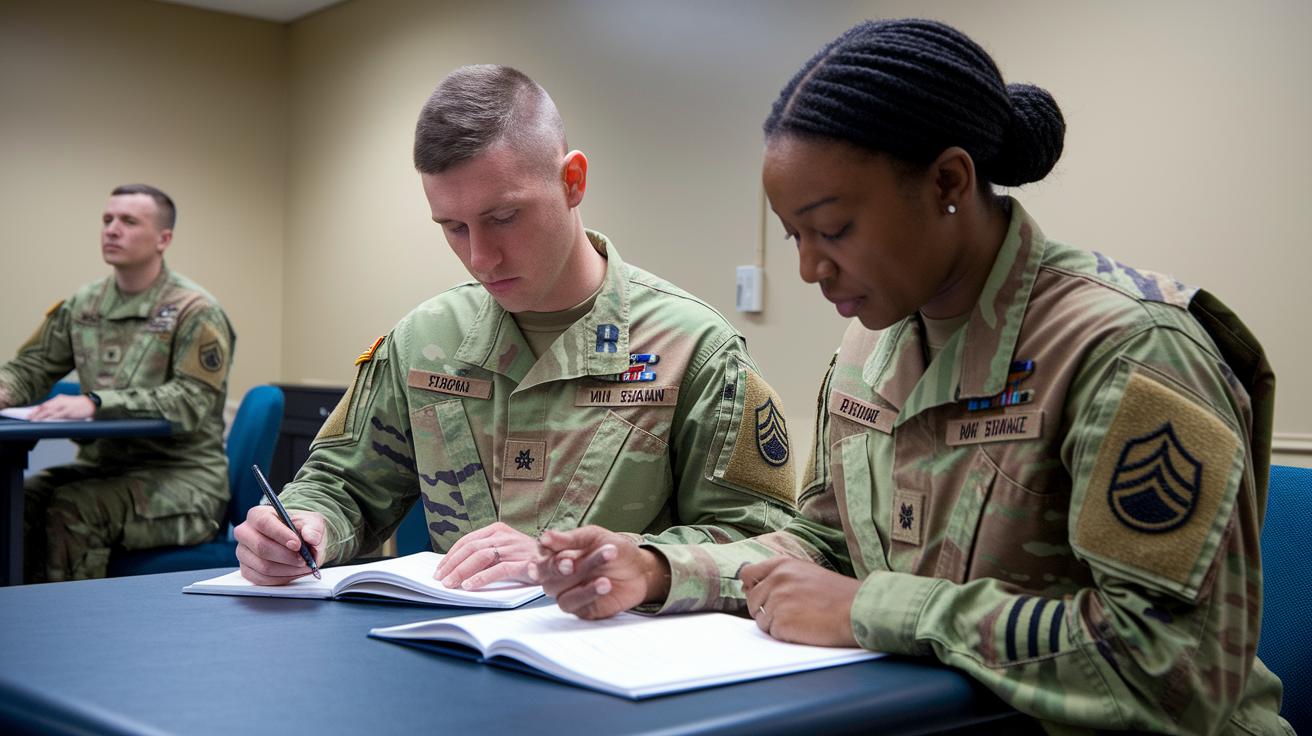
Test day nerves can be just as challenging as the study material itself. One smart trick is to practice under exam-like conditions so you can experience the pressure in a safe, controlled way. For example, when you're doing practice drills, take a slow, deep breath to clear your head. Picture yourself in the middle of a drill, pausing to say, "Breathe in calm, breathe out tension." It really works.
Getting together with a study group can also give your brain a quick warm-up. Chat with your fellow service members, exchange tips that boost your confidence, and enjoy a relaxed vibe that lets you take short mental breaks as needed. It’s like a quick reset that helps you stay focused.
And don't forget full-scale mock exams. Setting up these timed drills with short breaks in between builds up both endurance and mental clarity, so you’re ready when it counts. You might even explore ideas from trusted guides like military test anxiety management strategies to add extra tools to your routine. In truth, mixing these drills into your study plan turns managing stress into a daily habit that hones your focus and keeps exam jitters under control.
Integrating Personalized Re‐Learning Models into Revision Blueprints

When you notice that some topics still feel foggy, it’s time to change your study plan. Mix in different approaches: use visuals like charts and diagrams, listen to brief audio summaries, and get hands-on with group drills. For instance, try listening to a short recap of key ideas and then lay them out in a simple mind map. This way, you can build a clearer picture step-by-step.
Rotating among these methods really helps you grasp even the toughest subjects. Imagine working on arithmetic skills, first, you hear the explanation, then you see it mapped out, and finally, you practice it interactively. That blend makes the learning stick longer. And if you find that visuals help you more than audio, feel free to tweak your sessions accordingly. This flexible approach keeps your study routine fresh and ensures every drill boosts your exam readiness.
Final Words
In the action, we explored how diagnostic tests set the stage for effective revision, designed learning schedules, and honed skills with simulated drills. We looked at memory techniques, subject-specific tactics, and progress tracking methods that cut through test pressure.
Each section built on one another to create a complete plan using targeted revision strategies for military tests. With these practical methods, confidence builds and readiness rises. Keep practicing and refining your approach for a strong performance on test day.
FAQ
What are 5 strategies of revision?
The five revision strategies include diagnostic testing to pinpoint strengths and weaknesses, a structured study schedule mimicking exam format, timed simulation drills, active recall methods like flashcards, and techniques to reduce exam stress.
What is the most effective way when reviewing for an exam?
The most effective review method blends practice tests that mirror the exam’s pace with focused study sessions on noted weak areas, building both speed and accuracy under timed conditions.
How to revise effectively for GCSE?
Revising effectively for GCSE means breaking study sessions into focused, subject-specific tactics, using active recall tools such as flashcards, and practicing under timed conditions to boost confidence and performance.