
Ever wonder if the officer exam rules are shifting? Most of the standards stay the same, but a few simple changes are worth a closer look. Whether it’s meeting academic rules, acing physical tests, or passing background checks, these steps still guide your journey to becoming a military officer and building strong leadership skills. In this post, we break down every step, pointing out what stays constant and why these details matter. Stick around to see how these updates can steer your next move.
Latest Changes to Military Officer Exam Requirements
There aren’t any major changes to officer exam policies this year. Everything stays much the same. To be eligible for Officer Candidate School or Officer Training School, you still need to be a U.S. citizen with a bachelor’s degree, be between 19 and 32 years old, and pass physical exams, background checks, as well as moral, legal, and medical evaluations.
Training schedules across the branches haven't shifted. For example, the Army’s program at Fort Benning still follows a 12-week course. The first 6 weeks focus on leadership, physical training, and basic classroom lessons, while the next 6 weeks are devoted to field exercises. In a similar way, the Air Force and Space Force programs at Maxwell Air Force Base run between 9 and 17 weeks depending on the candidate’s chosen path. Meanwhile, the Navy holds a 12-week course that covers various warfare specialties, and both the Marine Corps at Quantico and the Coast Guard in New London stick to a 12-week regimen designed to build leadership skills and physical readiness.
Leaders in these programs are evaluated on their decision-making, teamwork, and ability to adapt quickly under pressure. Written tests cover military history, tactical knowledge (basic strategies and combat planning), and regulations. On top of that, practical challenges include leadership reaction courses and team exercises.
For more details, check out resources like the military entrance exam guide or the latest military test updates for 2023. These sources give you a full overview of the criteria and exam structure.
Every branch continues to focus on preparing you for command and developing essential leadership traits. There aren’t any new structural or scoring changes, which means the exam setup stays robust and familiar for those entering as officer candidates.
Updated Eligibility Criteria for Military Officer Candidates
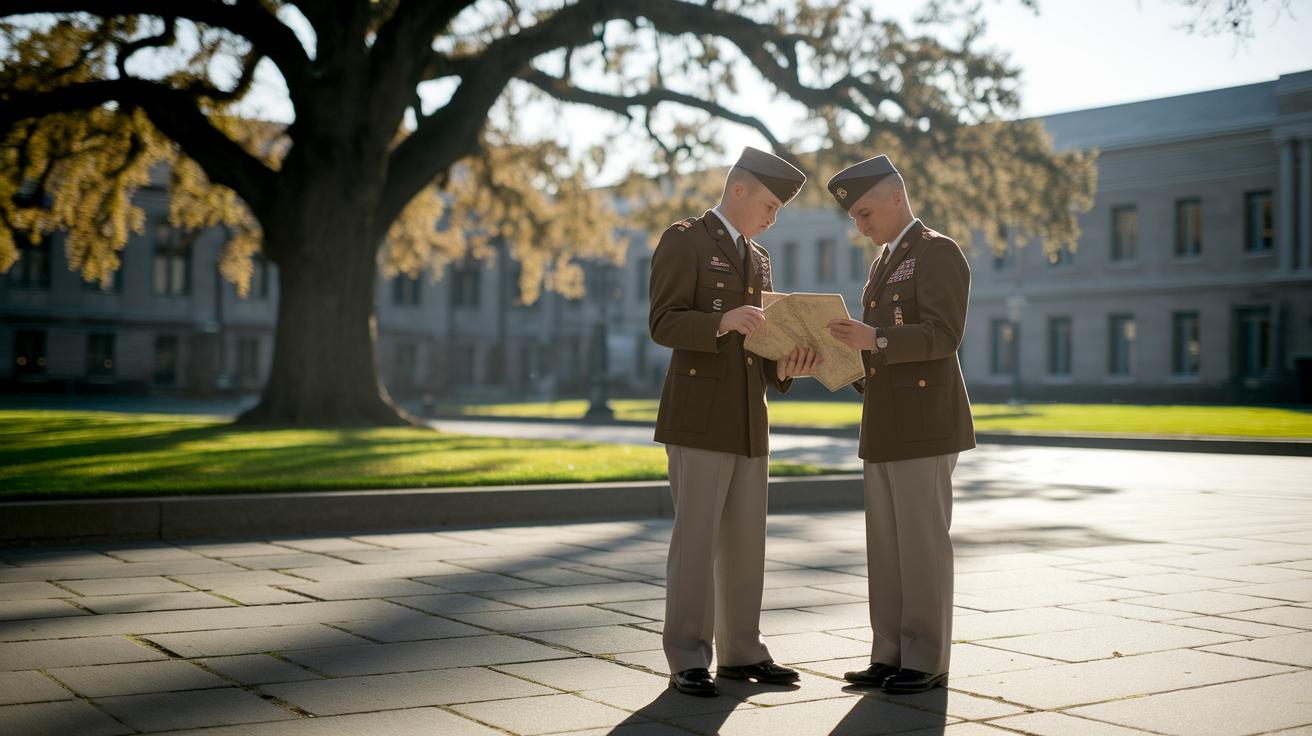
We’ve made some clear updates to the rules for folks who want to become military officers. Each route has its own set of standards to make sure you have the leadership qualities and commitment needed for service.
There are five main paths to commission:
• Military academies: You must be a U.S. citizen aged 17 to 23, have a high school diploma, and secure a congressional nomination. One candidate even said, “I had to study hard and network with community leaders to get that nomination.”
• ROTC: This option is for full-time college students who are U.S. citizens, hold a minimum 2.5 GPA, and are between 17 and 26 years old. Imagine juggling tough classes and military drills, it really tests your time management and dedication.
• OCS/OTS: If you’re a U.S. citizen with a bachelor’s degree and aged between 19 and 32, this might be your route. You’ll also need to pass physical exams and background checks. Think of it as the catch-all route if you have the academic credentials and the drive to serve.
• Direct commission: This path is for individuals who already have a professional degree, such as in medicine, law, engineering, or intelligence, and meet other branch-specific criteria.
• Non-scholarship programs: For this option, you need to have a bachelor’s degree along with meeting extra performance standards set by the service.
Every path includes a check on moral, legal, and medical fitness. These screenings ensure that the process is fair and thorough for everyone involved.
Revisions to Officer Testing Process and Exam Format
The test still comes in two parts, but now there's a fresh twist to each phase. In Phase 1, you’ll face leadership theory, physical training, and basic military principles. Now, right at the start, there's a spotlight on service-specific fitness tests to show just how ready you are. One candidate put it simply: "The initial fitness test set a high standard right from day one, pushing us to redefine our limits."
Phase 2 stays focused on real-world leadership and field exercises. You'll dive into written tests on military history, tactics, and regulations, and tackle dynamic leadership reaction drills and group challenges. A recruit mentioned, "Tackling real-time problems in the reaction course felt more like handling unexpected mission challenges."
These updates blend traditional methods with new, detailed evaluations, using fresh service-specific tests at both the start and midway through training. This approach provides clear insights while keeping the established pass/fail criteria and exam-section weights just as they were.
New Leadership and Situational Judgment Assessments for Officer Exams

We've refreshed the leadership assessments used in both OCS and OTS. They still check your decision-making, stress management, and team leadership skills, but now with a twist that makes them even more hands-on. Picture running simulation drills that feel as real as a field mission. One recruit even mentioned, "The drill felt like an actual test, pushing us to think on our feet."
The new situational judgment tasks set up real command scenarios to see how fast and clear-headed you are under pressure. Think about a timed situation where every second matters, much like a sudden challenge on the field. One officer said it felt like being caught in a real crisis, relying solely on training for each decision.
Our Leadership Reaction Courses also play a big role. These courses challenge you with timed tasks to check how well you take the lead and work with your team under pressure. We haven’t added new tests, just sharpened the current methods to give you a more practical and realistic evaluation.
Revised Physical Fitness and Endurance Benchmarks for Officer Candidates
Service-specific fitness tests keep checking how well a candidate can handle hard work and keep going strong. Every branch sets its own clear standards to measure strength and endurance.
• The Army's APFT (Army Physical Fitness Test, a test to see how fit you are) calls for at least 60 push-ups, 60 sit-ups, and a 2-mile run completed in 15 minutes and 54 seconds or less. One candidate said, "Getting those numbers right from the start really boosts my confidence for all the training ahead."
• The Air Force test mixes in one-minute rounds of push-ups and sit-ups along with a 1.5-mile run that must be done in 12 minutes and 36 seconds or under. These challenges are meant to push you to do your best every step of the way.
• For Marine Corps candidates, the Physical Fitness Test (PFT) includes 3 pull-ups, 70 crunches, and a 3-mile run within 28 minutes. Plus, the Combat Fitness Test (CFT), which checks your ability to handle tasks like an 880-yard run, ammo can lifts, and drills that mimic actions under fire, adds extra pressure to show what you're made of.
• The Coast Guard uses a format much like the CFT. It has a 1.5-mile run, push-ups, and a plank hold. There haven’t been any changes to this setup for 2023.
Across the board, these benchmarks stay the same, always focusing on building strong endurance and overall physical readiness.
Implementation Timeline and Official Resources for Officer Exam Updates

Right now, there aren’t any changes coming in 2023. The Department of Defense will announce any future updates around the third quarter, with new rules kicking in on October 1. One recruit mentioned, "Knowing the precise timeline helps me plan my study schedule with confidence."
Each military branch shares its own details. Army HR Command, Navy BUPERS, Air Force AFPC, Marine Corps P&R, and USCG official channels are where you can find accurate info on any changes to exam rules or training guidelines.
Every January, officer candidate handbooks get a refresh. This annual update gives you the latest standards and testing procedures, sort of like a briefing before you start a new mission.
If you’re getting ready for the exam, keep a close eye on these official releases. A fellow candidate once said, "I check the handbook each January, it’s like getting a briefing before the start of a new mission." Staying updated makes it easier to adjust your prep without any surprises.
By following the official schedules and guidance, you can be sure everyone is on the same page as policies evolve.
Final Words
In the action, the blog covered the exam requirements reform, updated eligibility standards, refined leadership assessments, and steady physical benchmarks. It highlighted details like the unchanged core criteria with an update on military officer exam requirements. The overview gave a clear breakdown of program durations and testing formats across branches. The content emphasizes that while scenarios and course structures have been fine-tuned, the rigorous standards remain intact. Stay confident, keep training smart, and be ready to tackle every phase with determination.
FAQ
Frequently Asked Questions
What are the requirements to join the military and become an officer?
The requirements to join the military include meeting age, education, physical, and background standards, while becoming an officer also requires a bachelor’s degree, U.S. citizenship, and additional leadership evaluations.
Can I join the military at advanced ages like 45 or 50?
Joining the military at 45 or 50 is generally not permitted, as age limits are lower for officer candidates and typically lower for enlisted roles, though special cases may exist in limited programs.
What are the military requirements for females, including weight standards?
Military requirements for females involve meeting the same physical fitness, medical, and background checks as males, with branch-specific weight standards set to support overall health and readiness.
How does the U.S. Army application work for foreigners?
The application process for foreigners seeking to join the U.S. Army requires meeting legal residency or visa criteria along with the usual physical, education, and background standards similar to those for U.S. citizens.
What is the military officer salary?
Military officer salary is based on rank, years of service, and branch, with starting base pay increasing through promotions and supplemented by various duty-related allowances.
What is the minimum ASVAB score for OCS?
The minimum ASVAB score for officer candidate school is determined by each branch and measures skills in areas like math and language, so candidates should check branch-specific standards for the exact score requirements.