
Ever wonder if you're really ready for the next rank? Think of promotion exams like practice drills, where each timed part tests a different set of skills you use every day.
These tests break your journey into clear checkpoints. For example, verbal reasoning (how well you understand and use words) and math checks (simple calculations you might do on the job) show you where you stand.
This guide walks you through each section of the exam. It tells you what to expect, why each part is important, and how they work together to help you climb the ladder.
Analyzing Promotion Exam Format Structures

These exams usually last between 2 and 4 hours and are split into 4 to 6 parts. Think of it like a drill with timed checkpoints, where each section mirrors real-world skills used on the field.
The exam covers a few key areas. Verbal reasoning checks how clearly you can express your thoughts, while the arithmetic part tests your number skills (like planning supplies). Technical sections look at how well you handle equipment and follow procedures. Plus, situational judgment questions put you in real scenarios, for example, picking the best action when a piece of equipment suddenly fails. It’s like facing a live drill where quick thinking counts.
Every module is connected to what’s needed for the next rank. Each part of the exam shows the specific skills required for higher positions. This isn’t just about knowing the basics, it’s a clear guide for professional growth, helping you understand exactly what to work on as you aim for that promotion.
Understanding Promotion Exam Question Formats

Multiple-choice questions are a mainstay in promotion exams. You’ll see two types: single-best-answer and matching formats. They’re clear and to the point, much like clear checkpoints on your training route. Each module usually offers around 20 to 30 questions. For instance, a question might ask, "Which procedure best addresses equipment failure?" with answer choices that mimic real field practices. This style tests how quickly you can recall facts and apply them in a decision-making moment.
Then, there are constructed-response items. These require you to write a short essay or solve a technical problem by explaining your steps in a real-life scenario. Imagine being asked how you’d secure equipment safety during an unexpected drill. This format checks your ability to think critically (to judge situations logically) and use technical skills, ensuring your response is clear, organized, and fits the higher rank responsibilities.
Scoring Methods in Military Promotion Exam Formats

Promotion exam scores come in two types: raw and scaled. The raw score simply counts your correct answers, while the scaled score adjusts for the difficulty of each module. The cut-score is the lowest scaled score you need to hit for promotion, kind of like passing a checkpoint during training.
Each exam section carries its own weight. For example, verbal reasoning might be 25%, technical skills 35%, and situational judgment 40% of your overall score. These percentages show how much value is placed on each skill, much like each station in a drill contributes to your final mark.
When two candidates score the same on the scaled score, tie-breaker rules step in. At that point, percentile ranks compare each candidate's score with everyone else to decide who meets the promotion standards.
Comparing Promotion Exam Formats Across Branches

Military promotion exam styles differ from one branch to another, each built to fit the unique needs of the service. For instance, the Army exam covers leadership, technical tasks, and decision making, setting up soldiers for real-life challenges. The Navy’s test leans more on tech knowledge and proper steps for operations at sea. Meanwhile, the Air Force exam focuses on cognitive reasoning, effective communication, and solving technical problems.
Each branch hands out its exam time uniquely. The Army tends to split time equally between theory and hands-on problem solving, while the Navy usually gives a little extra time for technical drills. The Air Force mixes analytical questions with scenarios that test situational judgment. This clear split helps candidates know what to expect, so every exam feels both challenging and directly tied to job duties.
| Branch | Exam Sections | Time Allocation |
|---|---|---|
| Army | 5-6 Sections | Evenly Split |
| Navy | 4-5 Sections | More for Technical Drills |
| Air Force | 4 Sections | Mixed Analytical & Situational |
Eligibility and Official Guidelines for Promotion Exam Formats
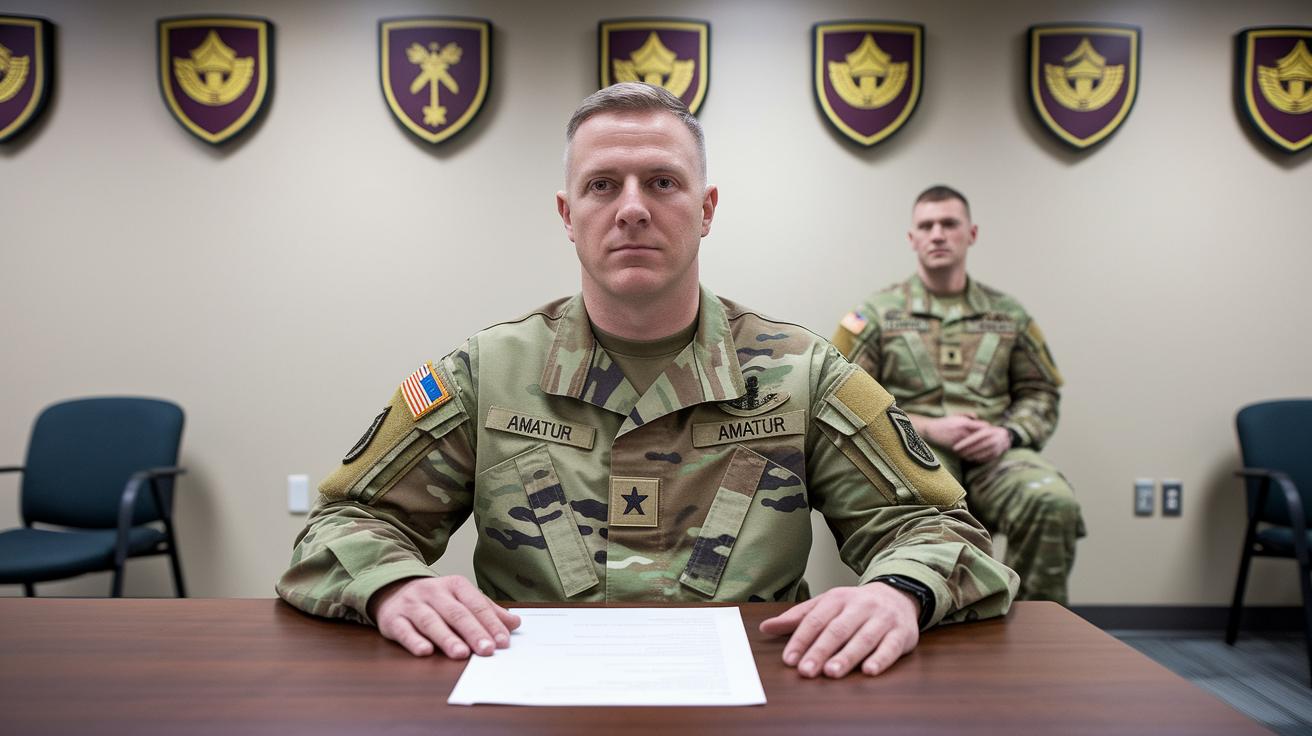
Before you step into a promotion exam, you need to hit a few simple requirements. You usually have to serve a specific time in your current rank, have solid performance reviews, and finish any training courses assigned. In plain language, this shows that you’ve built up the right experience and skills for extra responsibilities. For example, a soldier might have to serve several years in their current rank and consistently prove their ability before moving up.
Official policies back up these rules. Guidelines like Army AR 600-8-19 and Navy OPNAVINST 1420.1B clearly list what is needed for promotion and the trials for higher rank. They explain the documents required and the standards used during the testing process. This setup makes sure that every candidate is looked at fairly and that the same rules apply across all branches.
Sample Promotion Exam Format and Preparation Approaches

Picture a mid-level NCO exam that feels a lot like a real-life tactical drill. Each section is set up to make sure you’re ready for bigger responsibilities. In this exam example, you’ll work through parts that mirror everyday decisions and technical know-how. The format breaks into key modules: verbal reasoning, technical knowledge, and situational judgment. For instance, the verbal reasoning part might ask you to interpret radio chatter during a live drill. If you need more details, check out the NCO promotion exam study guide for a clearer idea of what to expect.
Getting ready for this exam should be as methodical as a well-rehearsed training session. The exam’s layout is linked directly to your study strategy, so it pays to build a game plan. Expert advice from sources like effective military test strategies suggests tailoring your practice to each exam section. Think of it like planning a mission: review your intel, run through your drills, and then execute confidently. Here are some tools to keep in mind:
- Time management
- Topic review (leadership, technical procedures)
- Practice tests
- Memory techniques
- Peer study groups
- Managing exam stress
| Section | Items | Time Allotted |
|---|---|---|
| Verbal Reasoning | 20 Q | 30 min |
| Technical Knowledge | 25 Q | 45 min |
| Situational Judgment | 15 scenarios | 40 min |
Final Words
In the action of breaking down exam structures, we covered everything from exam duration and module layouts to question types and scoring rules. Small details like branch-specific variations and official guidelines were also explored. We even looked at sample formats and targeted prep strategies that can boost your readiness. With a clear focus on understanding military promotion exam formats, you now have the insights needed to tackle these tests with determination. Keep pushing forward and stay confident as you work toward your goals.
FAQ
Frequently Asked Questions
What is the PDG Study Guide TSgt 2025?
The PDG Study Guide TSgt 2025 provides detailed exam formats and tailored content for TSgt candidates, offering essential practice sections and key topics for advancing through the Air Force promotion process.
What does PDG GOLD refer to?
PDG GOLD is a resource tool that offers military personnel a streamlined guide with focused review materials, practice questions, and tips to enhance preparation for promotion exams.
What does the TSgt rank represent?
The TSgt rank designates a seasoned noncommissioned officer role in the Air Force where leadership, technical skills, and mentoring responsibilities are critical for mission success.
What information does the Air Force Staff Sergeant Study Guide 2025 cover?
The Air Force Staff Sergeant Study Guide 2025 outlines critical exam sections, practical test questions, and essential leadership and technical competencies required for promotion to Staff Sergeant.
How do Air Force promotion board questions work?
Air Force promotion board questions evaluate leadership qualities, technical proficiency, and performance metrics by prompting clear, concise responses that align with official evaluation standards.
What does the 25E6 study guide include?
The 25E6 study guide comprises detailed test formats, sample questions, and technical subject reviews that support personnel aiming to progress in electronic systems roles.
What are Air Force Staff Sergeant Test questions?
Air Force Staff Sergeant Test questions focus on verbal reasoning and technical skills, structured to assess readiness for increased responsibility and leadership in the Air Force.
How does test compromise in the Air Force exam process work?
Test compromise in the Air Force exam process involves making necessary adjustments when irregularities occur, ensuring that scoring fairness and adherence to guidelines are maintained during evaluations.
How do Army promotion boards work?
Army promotion boards function by reviewing service records, performance reports, and exam scores through a structured panel, ensuring that eligibility and competency for advancement are fairly assessed.
How long does it take to go from E2 to E3?
Advancing from E2 to E3 depends on branch policies and individual performance; generally, it takes several months up to a year, influenced by routine promotion cycles and required training.
How many promotion points are needed to reach E6?
Reaching E6 requires accumulating a specific set of promotion points, which vary by branch and depend on service evaluations, exam results, and meeting established performance benchmarks.
What are the three types of promotions in the Army?
The Army features three promotion types: competitive promotions, position-based advancements, and promotion through a battalion-level review, each relying on distinct performance criteria and evaluation processes.