
Ever feel like your study plan just isn’t enough? You’re definitely not alone. This guide for military test preparation gives you clear, step-by-step instructions to build a plan that works as hard as you do.
Think of it as training for an important drill: a sequence of focused tasks that hone your skills and boost your confidence. Each practice session not only prepares you for exam day but also lays the solid foundation you need to succeed.
Comprehensive Overview of Military Advancement Test Preparation

Getting ready for your military advancement exams is all about smart, steady preparation. This guide gives you clear, step-by-step instructions to build a solid study plan for both your general written exams and rating knowledge tests (which assess your job skills). With fall cycle exams like Cycle 224 coming up, starting early and getting a strong foundation is key.
Every bit of practice counts. The guide suggests using techniques like spaced repetition (a method where you review tougher questions more often) and personalizing your study plan based on what you're good at and where you could use a bit more work. Think of it like training for a field exercise, each drill and practice session builds you up to be mission-ready. For example, a daily flashcard review is like a squad running maneuvers to stay sharp and prepared.
Another smart move is to focus on your study material, run timed drills, and track your progress. These drills not only help lock in the key concepts but also mimic real exam conditions, much like combat evaluation practices that gradually sharpen your skills. Picture each timed test as a mini-rehearsal for the big day, it boosts your confidence and makes you better prepared.
So, keep this guide handy as you organize your study sessions, monitor your progress, and adjust your methods based on your practice. Every minute you put in now helps set you up for success when exam day arrives. You've got this!
Branch-Specific Career Resources for Military Advancement Tests

Each branch has its own study guides that speak straight to your needs as a service member. When you use materials made just for your branch, you're working with info that matches the exact topics and exam formats you'll face. For instance, Navy resources bring you detailed outlines, bibliographies, and tools like the PMK Database, Occupational DataBase Pubs, and the Rate Roadmap. Army, Air Force, and Marine Corps guides work the same way by zeroing in on key areas and practical study tips. This focused plan boosts your practice sessions, sharpens your study routine, and offers extra insights whether you're aiming as an enlisted member or setting your sights on an officer exam.
Below is a quick breakdown:
| Branch | Resources |
|---|---|
| Navy | PMK Database, Occupational DataBase Pubs, Rate Roadmap, plus details on Achievement and Commendation Medals |
| Army | Professional Soldier Course materials with clear outlines and reference points |
| Air Force | The WAPS guide for solid content reviews and practice drills |
| Marine Corps | Manuals like M2T and M3T that break exam topics down with thorough outlines |
These resources are designed to help you study smart and stay ready for the tests that matter most.
Structured Study Plans for Military Advancement Examinations

Creating a study plan for advancement exams is crucial for success. A clear schedule helps you tackle one topic at a time and build your skills steadily, just like planning a mission with clear steps. NavyBMR’s study plans break subjects into weekly tasks and offer tools like 1,800 audio study guides and practice exams with 175 questions. Using spaced repetition means you spend extra time on tough topics while quickly reviewing those you grasp easily.
Follow these steps to set up your study plan:
- Look over the official exam syllabus and its subtopics so you know what to cover.
- Set aside specific times daily or weekly for your study sessions.
- Use spaced repetition to focus more on areas you find challenging.
- Take practice tests under timed conditions to get used to exam pressure.
- Check your test results after each session and adjust your plan as needed.
Here’s an interesting fact: before General Patton became a famous leader, he spent extra hours reviewing strategy sessions and gradually improved his tactics.
Sample Question Drills for Military Advancement Test Mastery

Practice drills can really boost your confidence when it comes time to take your advancement exam. With NavyBMR’s huge question bank of over 100,000 questions, each with its own detailed source page, you get to pick from three different ways to train. These methods mimic real exam conditions and help you focus on the topics you need to brush up on. For instance, Flashcards use a spaced repetition technique so the harder questions show up more often, making sure you spend extra time where you need it most. Simulated Tests copy the real exam feel with a bell-curve grading method to help you handle time pressure, while Survival Mode pushes you to go through error-free runs that build your overall mastery.
| Mode | Description | Benefit |
|---|---|---|
| Flashcards | Uses a spaced repetition approach to show tough questions more often | Strengthens memory and helps focus on weak spots |
| Simulated Tests | Recreates the exam experience with a bell-curve grading setup | Prepares you for real exam conditions and time limits |
| Survival Mode | Challenges you to complete the session without errors | Improves precision and deepens your understanding |
These drills give you an engaging way to build up your skills and confidence as you gear up for exam day.
Tactical Analysis Techniques for Military Advancement Exams

When you're about to hit your study session, take a moment to read each question and label it by type. For instance, if a question asks you to compare two procedures, mark it as a comparative analysis. This helps you quickly tell if it’s testing your memory or asking for a deeper look into the ideas (cognitive evaluation, which checks how well you think). Splitting questions into groups like definition, calculation, or comparison makes spotting clues and crossing off wrong answers much easier. So when you see words like "protocol" or "criteria," note them down to remind you to check your study materials.
Next, lean on your study tools that sort questions by difficulty. Easier ones need just a quick review, while the tougher ones deserve extra attention until you get them right. Keep track of which questions feel easy, medium, or hard, and adjust your study time accordingly. Give tough questions more sessions and ease off on the ones you consistently nail. This approach helps you stay sharp and ready, just like preparing for a real mission.
Simulated and Timed Drills in Military Advancement Test Preparation

Timed practice tests give you a taste of real exam conditions by using the same timing and order you’ll face on test day. They come with a clear dashboard that shows how long you take on each question while comparing your score with that of other service members. It’s a bit like getting an after-action report that points out where you might be taking too long, say, on a math problem. If you see a note like, "You spent 45 seconds on this question, which is longer than usual," that’s your cue to work on that area.
The offline mobile app is a neat feature that lets you keep practicing without Wi-Fi for up to 30 days. It’s perfect for when you’re in the field or during a deployment break. This way, you can stay on top of your skills without needing an internet connection.
Performance Monitoring and Strategy Adjustment for Advancement Success
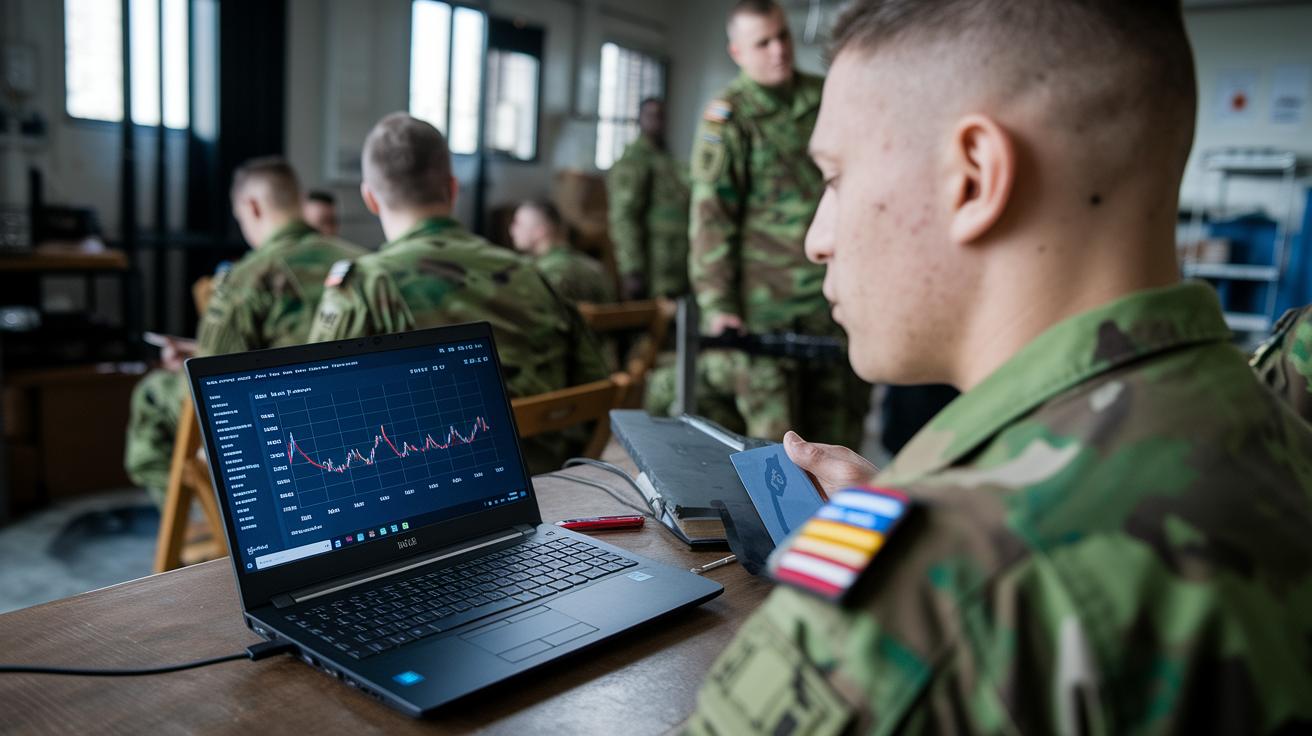
Your performance dashboard is like a real-time debrief from the field. It shows your accuracy rates, highlights which topics you’re strong in, and even ranks you against others. Think of each number as a brief field report telling you if you’re on target or need extra practice. For example, if you hit 80% in math, that’s your cue to sharpen up, just like a commander signaling for more drills.
Weekly summaries work like a mission report that gives you a quick look at your overall progress. They help you see clearly how your study sessions are paying off, making it easier to plan your next move.
Based on these insights, it’s the right time to adjust your study plan. Start by reviewing the dashboard to spot the topics where your scores are the lowest. Then, tweak your schedule by dedicating extra time to these areas and add in drills that mimic real test conditions. Follow up with another round of practice tests to see how much you’ve improved.
By tweaking your study plan using these clear metrics, you keep your strategy as sharp as a well-executed operation. Stick with it, and remember, it’s all about fine-tuning your approach step by step.
Stress Management and Confidence Building for Military Advancement Exams

Exams can feel like a tough mission, but a few simple steps can help calm the nerves. Try taking slow, deep breaths before you start studying. Setting small, clear goals for each session can keep you from feeling overwhelmed. And don’t forget to give yourself a boost by recalling past wins with a few encouraging words.
Mixing in different study tools can make a big difference too. Survival Mode quizzes act like training drills to build your resilience (they help you stay steady under pressure). Repeating tough topics in spaced intervals makes them easier to handle. Plus, audio study guides let you review on the go, keeping your study plan right on track. Remember, confidence is your best asset, it turns careful preparation into exam success.
Final Words
In the action of preparing for advancement exams, this guide reviewed everything from structured study plans and timed drills to detailed branch-specific resources and stress management tips. Each section provided practical methods to boost your fitness and mental clarity.
Our military advancement test preparation guide brings clear strategies and performance tracking into focus. The outlined steps help build confidence and readiness, ensuring you’re set to overcome any test challenge with determination. Keep moving forward and stay sharp.