
Ever think your workout could feel like a real mission? Military training workouts help you build strength, endurance, and balance using simple gear like kettlebells and battle ropes.
Each drill works your body as a team, much like soldiers preparing for a mission. It keeps you focused and powers you up even on tough days.
Ready to get mission ready and boost your overall fitness? This workout method might be just what you need.
Overview of Military Functional Training Exercises

These exercises are built to push you to your limits while boosting your strength, stamina, and core balance. You’ll use simple gear like your own body weight, kettlebells, battle ropes, Assault Bikes, and dumbbells to mirror the tough challenges soldiers face every day.
The drills mix high-intensity moves with a focus on getting your technique right. Imagine them as a series of readiness workouts that make you move your whole body quickly. One drill might have you doing push-ups, swinging a kettlebell, and slamming a battle rope, all done in rounds with short breaks. This helps build your heart health, muscle strength, and coordination when you’re under pressure.
These workouts are made to get you ready for hard physical tasks. They follow the same ideas as field training, yet the routines work for anyone, whether you're just starting out or already fit. A typical session might begin with a quick three-minute jog, some dynamic stretches to warm up, and then rounds of different exercises that work several muscle groups at once.
More than just building power, this type of training helps you learn to perform precise moves even when you’re really tired. Ready to push yourself, build lasting strength, and feel like you’re on a real mission? Give these functional training exercises a try in your routine and treat every workout like a mission you’re determined to complete.
Core Elements of Military Functional Training Exercises

Start your session with a proper warm-up to get both your body and mind ready. Begin with a light 3-minute jog paired with dynamic stretches, or consider a gentle 400–500 meter row. For instance, you might say, “I started with a brisk jog that quickened my heartbeat, setting the stage for the hard work ahead.”
Next, pick equipment that builds your strength and endurance. Here are some good choices:
- Bodyweight exercises (using your own weight to move naturally)
- Kettlebells for boosting explosive power
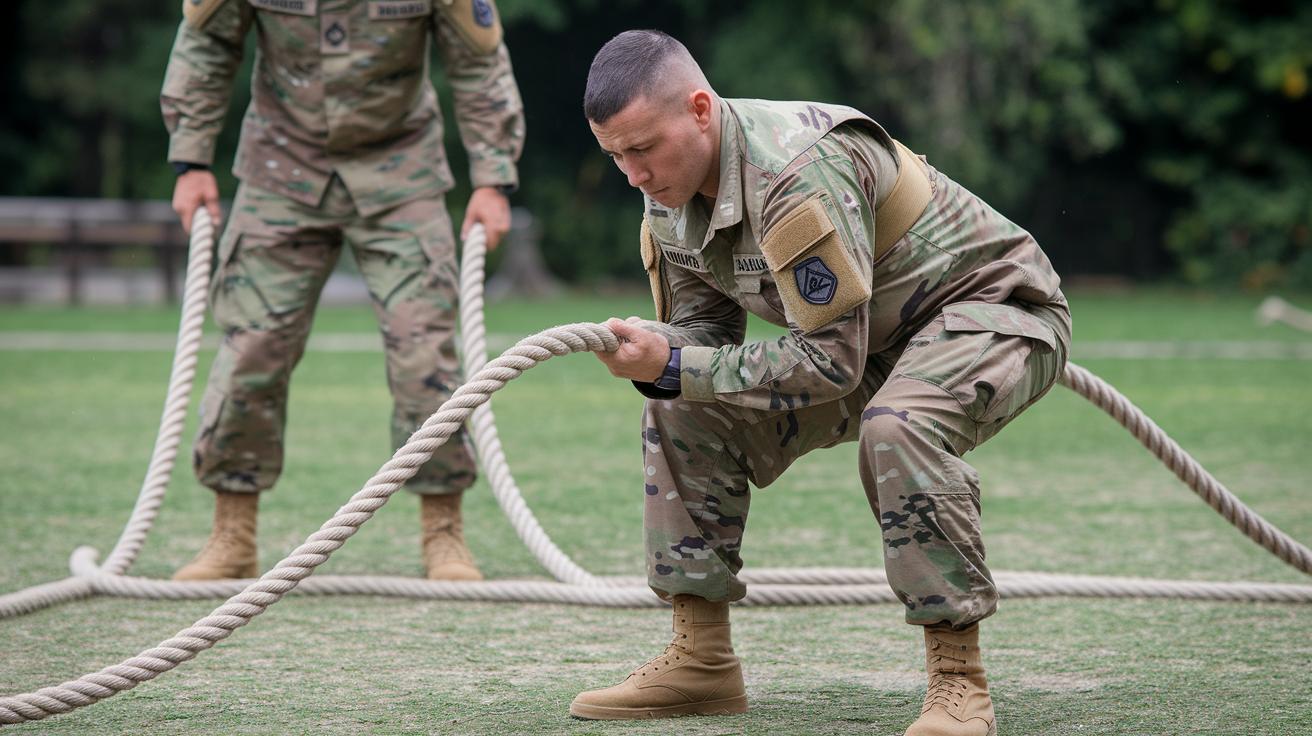
- Battle ropes to improve coordination and stamina
- Assault bikes and dumbbells for full-body strength
Then, complete 4 to 5 rounds where you push yourself and take a 30–60 second break after each round. This routine ties together your warm-up, chosen gear, and interval training, helping you build tactical strength, improve battlefield agility, and boost operational endurance.
Sample Military Functional Training Circuits

These training circuits are designed to help you build real strength and improve your mobility for the field. Each circuit targets specific areas, making your overall fitness routine feel like a well-planned mission.
First up is the Calisthenics Challenge. You’ll complete 5 rounds, each with 12 archer push-ups and 20 lateral lunges (10 per side). This drill works your upper body while keeping your balance steady. I remember finishing a set feeling like every muscle was perfectly in sync.
Next, try Jumping Jack Fury. Start with 25 jumping jacks and work up to 75, then switch straight to mountain climbers. This quick ramp-up tests your pace and endurance, much like a sudden change in mission tempo.
Then we have The Circuit Crusher. Begin by rowing 400 meters, then move into a mix of kettlebell swings, push-ups, and bicycle crunches. Do this routine for 5 rounds. It’s like a mini boot camp that builds your stamina and overall strength.
After that, give Rope Rampage a go. Perform 5 rounds of alternating 30-second battle rope intervals. These drills keep challenging your grip, coordination, and explosive power with every swing.
Moving on, try Bike Blast. Combine a 30-second maximum sprint on an Assault Bike with dumbbell step-ups. This circuit packs a punch by mixing cardio bursts with strength moves, like a double-quick mission that keeps you on your toes.
Now, focus on your midsection with Core Destruction. Execute 50 reverse crunches, hold a plank, and finish with Russian twists. Take a 1-minute rest between rounds to let your core muscles regroup and get ready for the next round.
Up next is Burpee Blitz. Do varying sets of burpees over 4 to 5 rounds with a 45-second break between each one. This drill pushes your heart rate and tests your endurance, so be ready for a serious cardio challenge.
Finally, there’s The Row Inferno. Row 500 meters at your maximum pace for 5 rounds. Focus on both power and endurance as you push through each round, feeling every stroke drive you forward.
Each of these circuits fits neatly into your overall training plan. They’re tailored to build the strength and agility you need for real-world challenges, making every drill a step towards readiness.
Structured Training Phases in Functional Combat Exercises

Phase 1: 6+ Months Out
At this early stage, start building a rock-solid foundation. Focus on your general strength and endurance by doing base circuits with moderate loads. Think of it like setting a steady pace, simple workouts that prep you for the tougher drills to come.
Phase 2: 3–6 Months Out
Now it’s time to add some weight. Increase the load with powerlifting moves and accessory lifts while mixing in interval running. This upgrade helps boost both your muscle strength and your heart's quick response. It’s like tuning your body to be both strong and fast, ready for rapid action.
Phase 3: 2–3 Months Out
In this stage, shift your focus to building an aerobic base, while keeping your strength sharp with drills that resemble real mission tasks. You’ll be running controlled, high-intensity sets that mimic the challenges you might face in the field. Every session helps improve your endurance and body control.
Phase 4: Final 8 Weeks
Now, it’s crunch time. Keep up your lifting volume and fine-tune your pace with goal-setting runs. Aim for a 5-mile run in 37 minutes, complete a 12-mile ruck at a 13-minute pace, and hit all your calisthenics benchmarks. This final push is all about precision and readiness.
Templates to follow are:
| Workout Focus | Template |
|---|---|
| Strength-focused | 4 lifts, 2 runs, 1 ruck |
| Endurance-focused | 2 lifts, 1 calisthenics session, 3 runs, 1 non-impact cardio/ruck |
Performance Benefits of Military Functional Training Exercises
This is a handy guide to the perks of military functional training. It lets you quickly check your progress without going over everything again.
When you tackle these drills, you'll boost your strength, endurance, and agility. For example, after completing battle rope drills, you might feel your coordination sharpen and your power build, ready to take on the next challenge.
Taking proper rest breaks not only helps you avoid injuries but also keeps your movements precise. Think of this summary as your on-the-spot report during combat support fitness training.
| Benefit | Training Effect |
|---|---|
| Strength | Develops force through multi-joint exercises |
| Endurance | Boosts heart and lung capacity with interval workouts |
| Agility | Improves coordination with multi-directional drills |
Military Functional Training vs Conventional Fitness Training

When you weigh military functional training against regular gym workouts, the differences quickly become clear. Military training focuses on full-body actions that mirror real-life situations, while most gym routines tend to isolate muscles just for appearance.
Take movement patterns, for example. Military exercises use mixed, multi-directional actions that feel a lot like what you’d do on a mission. In contrast, gym workouts usually involve repetitive, single-plane motions with machines.
The gear you use also sets them apart. Instead of relying on bulky gym equipment, military workouts use versatile tools like kettlebells, battle ropes, and bodyweight exercises. This variety prepares you for sudden changes, much like what you might face on the field.
Intensity is another key difference. Military drills push you with high-intensity rounds that call for quick shifts and maximum effort, compared to the steady pace typically found in a gym session.
This type of training isn’t just about building muscle – it’s about getting you ready for unpredictable challenges. By working multiple muscle groups at once, you boost your coordination, stamina, and overall resilience. In short, while conventional workouts may focus on looks, military functional training turns exercise into a mission, building both your physical readiness and tactical capability.
Building a Customized Military Functional Training Plan

First, set clear goals. Write down your target run times, ruck pace numbers, and calisthenics standards. Think of it like planning your mission before you head out on patrol. I once aimed for a 37-minute 5-mile run, and that clear goal helped me focus on the right circuits.
Next, choose specific circuits and decide how long each phase of your training will last. Pick workouts that stretch your endurance, strength, and agility. These exercises should challenge you and help you get better with each session.
Then, put together a weekly schedule that mixes strength, endurance, and agility training. A well-balanced plan makes sure you steadily build up for real duty. It’s like setting up a route that leads you step by step toward your mission’s objective.
Keep a simple training journal, too. Jot down the number of sets, reps, weights, heart rate, and recovery times. This record works like an after-action review, showing you exactly where you’re improving and where you might need to adjust.
Finally, plan steps to avoid injuries. Watch for signs like shin pain or knee discomfort, and don’t be afraid to ease off your load if something feels off.
| Step | Action |
|---|---|
| 1 | Set clear goals (target times, benchmarks) |
| 2 | Choose circuits and plan phase durations |
| 3 | Create a balanced weekly training schedule |
| 4 | Keep a detailed training journal |
| 5 | Include strategies to prevent injuries |
Final Words
In the action, the article broke down military functional training exercises into clear, manageable parts. It touched on defining these workouts, key warm-up and circuit components, phases of training, and performance benefits. The guide also shared tips to build your own plan tailored to real-world military challenges. Each section offered practical steps to boost your strength and endurance while keeping your training safe and effective. Keep pushing forward and stay ready, every drill counts when working toward your goals.
FAQ
What is included in a military functional training exercises PDF or military workout program PDF free download?
The military functional training exercises PDF outlines clear exercises, sample circuits, and guidelines that mirror military workout programs. It details equipment, rounds, and warm-up steps for full-body conditioning.
What are military functional training exercises for beginners and are free options available?
The military functional training exercises for beginners offer a step-by-step guide with basic circuits and accessible drills. Free options provide simplified routines to build strength, endurance, and mobility safely.
What are considered the best military functional training exercises?
The best military functional training exercises combine multi-joint moves and varied drills using tools like kettlebells and battle ropes. They boost strength, stamina, and coordination, resembling real-world physical tasks.
What are military functional training exercises with dumbbells?
Military exercises with dumbbells use compound moves that support core, arm, and leg strength. They balance stability and resistance work to mimic the rigors of field training while building overall power.
What are military functional training exercises at home?
Military functional training exercises at home emphasize bodyweight workouts and minimal equipment drills. They deliver effective strength and endurance routines that accommodate flexible schedules and home spaces.
What is the 3-3-3 rule for a workout?
The 3-3-3 rule organizes a session into three phases: a 3-minute warm-up, three primary exercises, and a 3-minute cool-down. It creates a balanced routine focused on building strength and endurance.
What is the 6 12 25 rule?
The 6 12 25 rule establishes a workout rhythm using 6 reps for one set, 12 for the next, and 25 for a final burst. This pattern helps manage intensity progressively, enhancing both strength and endurance.
What is the 5 4 3 2 1 workout method?
The 5 4 3 2 1 workout method counts down repetitions through a set, starting with 5 and decreasing to 1. This structured decline builds focus, gradually boosting workout intensity.
What is the 12 minute military workout?
The 12 minute military workout packs high-intensity drills into a brief period. It involves dynamic circuits that target strength, stamina, and metabolic boost, similar to fast-paced field training.