
Ever thought about whether your next move in military service is the right one? This guide breaks things down step by step. It shows you the different roles in the Army, Navy, and Coast Guard and explains how your ASVAB scores (a test of your abilities) match up with each job. Think of it like a friendly briefing that clearly explains base pay, housing allowances, and education benefits like the GI Bill. Ready to see how your skills can steer you toward success? This guide is your roadmap to a secure and rewarding military career.
Overview of Your Military Career Study Guide Roadmap
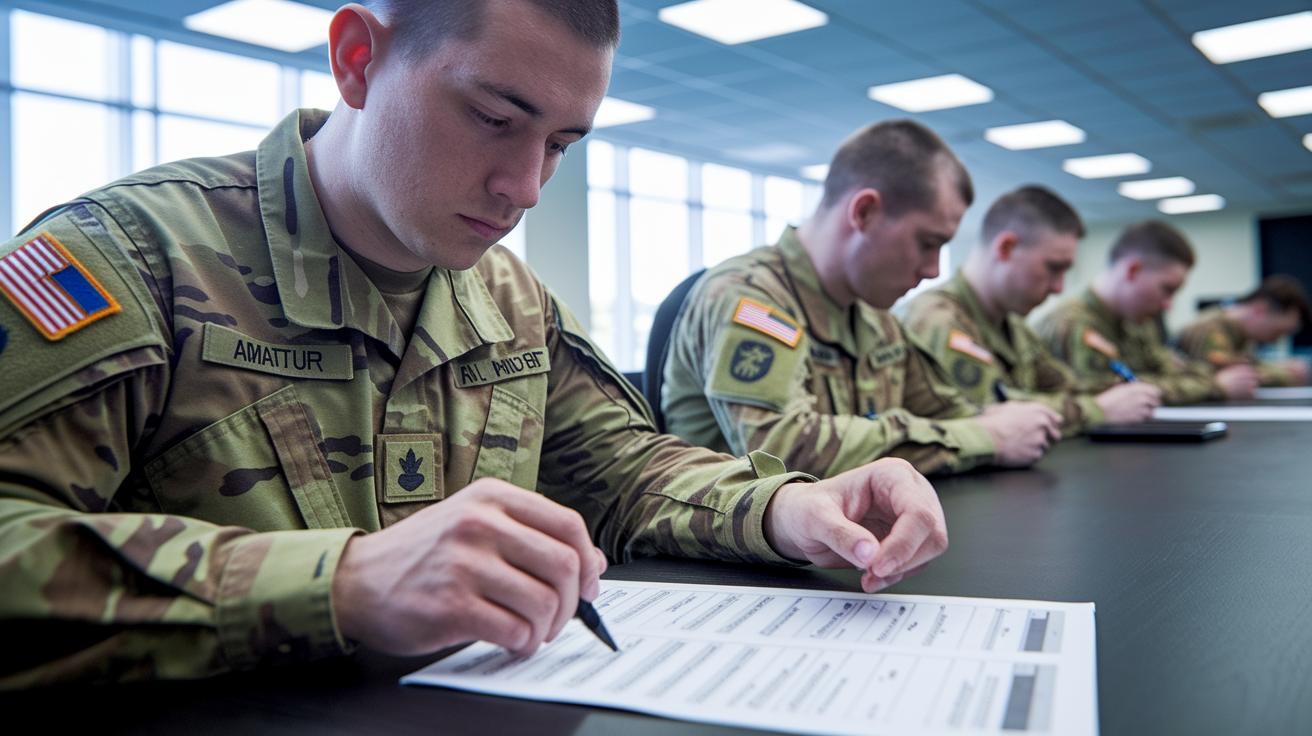
This guide kicks off your military career study plan by walking you through different service paths, from the Army to the Coast Guard. Each branch has its own roles, like Army Automobile Maintenance Warrant Officers or Navy Flight Support teams, and the guide shows how your ASVAB scores match up with these special jobs. Think of it like a friendly briefing where you get clear info on Base Pay, Basic Allowance for Housing, and other incentive pays. Ever imagine using your textbook know-how to keep military vehicles running smoothly?
Next, the guide spells out the education benefits you can grab through military service. As you move up, programs like Tuition Assistance, Tuition Top-Up, and the Post-9/11 GI Bill® can help you earn college credits or even finish your degree while serving. It’s like getting a step-by-step game plan for handling recruitment exams. The eligibility criteria and what each branch expects from you are broken down clearly, almost like getting solid prep tips before you step into the field.
This study guide doubles as a handbook for the enlistment process and a clear rundown of eligibility factors. It offers practical advice for tackling recruitment exams and shines a light on benefits that go way beyond basic military duty, from secure paychecks to lifelong learning opportunities. With clear details on each branch’s requirements and perks, you’ll be geared up with the confidence to tackle the challenging, yet truly rewarding, journey of military service.
Military Career Study Guide: Navigating ASVAB and Entrance Exams

The ASVAB is like a training mission for your brain. It’s a timed test available at more than 14,000 locations and comes in a few different versions to suit your study style. You can take it in a paper-based format, online with questions that adjust to your level, or even as the PiCAT, a prescreen test you can complete online. The AFQT score (a summary of your key test results) tells you if you meet the basic requirements for enlistment. Each branch of the military uses your scores a bit differently. For instance, the Army breaks your results into 10 line scores, the Marine Corps uses job-specific codes, and the Air Force assigns specialty codes (AFSCs) to match your skills with the right roles. Knowing these details can really help shape your study strategy and career planning.
| Test Version | Format | Approx Duration |
|---|---|---|
| Paper-Based ASVAB | Printed, multiple-choice exam | 3-4 hours |
| Computer-Adaptive ASVAB | Online test with adaptive question difficulty | 2-3 hours |
| PiCAT | Unproctored online prescreen exam | Approximately 2 hours |
Now, about retake rules and exam guidelines: if you don’t pass the test the first time, you have to wait one month before giving it another shot. Need to try again after that? Then you’ll be waiting six months for your next chance. Also, don’t expect a calculator on your math subtests, you’re relying on your own mental math skills instead. Imagine it like gearing up for a fitness drill using just your core strength. Knowing these rules means you can plan focused study sessions and build your skills step by step for success on test day.
Academic Preparation in Your Military Career Study Guide

Start your study plan at least two months ahead of the test dates. Think of it like gearing up for a mission. When you dive into official study guides and sample questions, it’s like performing a drill before the real challenge. You might even remember the first time you flipped through a guide and felt the rush of stepping onto a training field. That’s the kind of confidence boost you need.
Next, consider military education benefits as your secret weapon. Programs like Tuition Assistance, Tuition Top-Up, and the Post-9/11 GI Bill® let you earn college credits or even finish a degree while you’re in service. It’s a bit like mixing tactical training with classroom learning, each part builds a stronger overall skill set.
Finally, think of study time as your personal mission prep. Create a steady study schedule, use practice drills, and check in on your progress with regular self-assessments. These sessions sharpen your skills and get you ready for the challenges ahead. By choosing the right resources and using your education benefits, you’re laying a solid foundation for success in both academics and your military career.
Physical Fitness Test Tactics in Your Military Career Study Guide

Build your base with exercises that boost both stamina and strength, key for every military branch. Every branch has its own standards. For example, Air Force pilots must pass a Class I Flying Physical (a test that checks your breathing and muscle endurance). Regular workouts with basic moves not only meet these standards, but they also get you ready for deployment and sharpen your combat skills.
Add these moves to your routine to build the strong core you need for tough physical tests:
- Push-ups
- Sit-ups
- Timed runs
- Pull-ups
- Squats
Next, boost your performance with a steady training plan that targets endurance and speed. Set clear, measurable goals and keep an eye on your progress. You might also want to mix in extra drills that mimic combat readiness challenges. Tools like physical fitness test score improvement strategies can help fine-tune your form, while checking out military obstacle course training can add variety and simulate real-world challenges. Stay flexible and consistent with your workouts so you meet the high standards of military service and are ready for any PT test scenario.
Exploring Branch Roles in Your Military Career Study Guide

Army positions mix hands-on technical skills with leadership. For instance, Automobile Maintenance Warrant Officers work their way up from WO1 to CW4 much like a shop manager who keeps equipment running smoothly. Army Linguists get extra perks too, they can earn enlistment bonuses up to $40,000 and grab about $400 a month if they master hard-to-find languages. These jobs give you practical work experience along with strategic duties.
Air Force Pilots face tough hurdles. They must pass a Class I Flying Physical (a check-up on your fitness for flying), complete an Officer Commissioning course before turning 29, and finish flight school by age 30. On the other hand, Navy Flight Support roles focus on keeping aircraft maintenance in order and ensuring safe flights. Both roles demand solid academic prep and strong physical fitness. It’s challenging work, but very rewarding.
Marine Corps Military Police handle key law enforcement tasks like securing areas, managing traffic, and stopping crimes. They train to handle everyday duties as well as high-pressure missions. Similarly, Coast Guard Boatswain Mates run deck operations, steer vessels, and manage small boats. These roles require real grit and readiness, both physically and mentally.
Navy Operations Specialists work aboard ships, keeping track of radar, communications, and navigation during critical moments. Their work is a major part of mission success. Navy Nurse Corps members not only take care of patients like civilian nurses but also deploy to up to 250 medical facilities around the world, mixing medical know-how with emergency readiness.
Every branch offers unique jobs with different requirements and promotion paths. Whether you’re eyeing a technical role, a leadership track, or working in enforcement or operations, each position is a key piece of our nation's defense strategy.
Officer Selection and Academy Admission in Your Military Career Study Guide

Thinking about a commission? There are a few different routes you can take. Whether you choose a selection course, ROTC, or a service academy, each path gears you up for leadership, just like picking your route on the training field.
For instance, if you're aiming for the Air Force, you'll need to pass a Class I Flying Physical (a detailed fitness check) and finish the Officer Commissioning Course before you hit 29. It’s a lot like a pre-flight inspection, making sure both your body and mind are locked and loaded for what’s ahead.
Selection boards look at everything from your school records and leadership roles to your physical training scores. Imagine these components as puzzle pieces that come together to show just how ready you are for an officer role.
Service academies have their own set of challenges. They stick to strict age limits, require a nomination, and put you through competitive exams. The goal? To find those with the discipline, smarts, and dedication needed for true military leadership.
Planning ahead is key. Set aside time to tidy up your academics, sharpen your leadership skills, and keep those PT results in top shape. Think of your preparation like planning a mission: review your intel, run the drills, and then execute with confidence. With hard work and focus, you’ll reach the high standards needed for a successful career as a military officer.
Application Process and Onboarding in Your Military Career Study Guide

When you decide to join, you start out by signing up for the ASVAB at a local school or a Military Entrance Processing Station. This test shows that you're ready to take on the challenge. Once you pass, you'll move on to a few important screenings like a security check, a health exam, and a background review. These steps are there to make sure you’re fully prepared and fit for active duty.
After all these checks, you begin the onboarding process. You take the oath of enlistment, get your initial training orders, and set up your benefit enrollment. They explain everything clearly, from your Base Pay and Basic Allowance for Housing to clothing allowances and any extra incentive pay for special duties. Think of it like receiving your first assignment orders, with every detail laid out to help you smoothly transition into military life.
Study Tools and Practice Tests in Your Military Career Study Guide

Think of practice tests as warm-up drills for your mind. Both official and third-party simulations copy the ASVAB layout so you can get used to what the real test feels like. And the computer-adaptive tests? They change the difficulty on the fly, if you keep answering correctly, the questions get harder, just like stepping up in a real mission.
There’s also the PiCAT. This online, unproctored prescreen lets you work at your own pace before you face the full exam. You’ll see sample questions on topics like arithmetic reasoning, word knowledge, and mechanical comprehension. This gives you a clear idea of what’s coming. It’s like performing timed drills before the big exercise: you build endurance and precision with each simulation.
Timed practice is one of the best ways to get used to the test’s speed and pressure. Solid sessions let you check your progress and find spots that need more work, kind of like doing a quick gear check before heading out. Here are some top practices resources to keep you mission-ready:
- Official ASVAB Practice Platform
- Adaptive Computer-Based Test Simulator
- Full-Length ASVAB Simulation Drill
- PiCAT Online Prescreen Practice Module
Each tool gives you a chance to mirror the real test conditions, helping you improve your pace. Using them builds the confidence you need to handle test day and makes your study sessions as effective as possible.
Timeline and Planning in Your Military Career Study Guide

Start planning your study schedule about 8 to 12 weeks before your ASVAB test date (ASVAB is the Armed Services Vocational Aptitude Battery, a test to assess your skills). Think of this schedule as plotting a mission. Set aside clear study blocks, plan your physical training cycles, and mark your exam dates on your calendar. And if you need a retake, remember you have to wait 1 month after your first try and 6 months after your second. This wait gives you time to hone your skills, kind of like practicing drills before a big operation.
If you’re aiming for officer roles, extra care is needed because of strict age limits. Officer candidates must be commissioned by age 29 and finish flight school by age 30. So, it’s important to align your study and training timeline with these key dates. Make sure to block out review days and practice tests to keep track of your progress. With this methodical approach, you build confidence and cover every part of your military career goals, from test performance to meeting officer selection criteria.
Progress Tracking in Your Military Career Study Guide

Keeping track of your progress is vital for building a strong study plan for your military career. Using practice exams and detailed logs (like keeping score of your ASVAB subtest results, physical training reps, and run times) helps you see where you're doing well and where you might need a little extra work. It’s much like spotting targets during a drill. This approach lets you tweak your study schedule and work smarter, ensuring you build the skills you need.
Many service members find that using mobile apps or even a simple spreadsheet for weekly reviews makes a big difference. These tools enable you to record your scores, set clear, achievable goals, and watch your day-to-day improvements. Over time, this kind of tracking builds confidence and reinforces healthy study habits. Regular self-assessment turns your preparation into a flexible, dynamic study plan that steadily propels your military career forward.
Final Words
In the action, this guide covered exam tactics, physical training steps, and strategic planning, pairing hands-on study techniques with practical fitness drills. Each section broke down key elements, from branch roles and academic prep to application processes and tracking progress, to build your confidence every step of the way.
This military career study guide stands as a solid roadmap to sharpen both mental clarity and operational readiness. Step forward with assurance and make your preparations count.
FAQ
Military career study guide free
The free military career study guide offers comprehensive information on various branches, exam preparation, and career planning tools, all available without charge to help you navigate service options quickly.
What types of jobs are available in the military for females and males?
Types of jobs in the military for both females and males cover a wide range, from technical roles and combat positions to medical services and administration, ensuring roles match diverse skills and interests.
Military career match Quiz
The military career match quiz evaluates your strengths and interests by comparing your skills against available roles, guiding you to find the branch and position that align best with your abilities.
Military career test free
The free military career test provides a quick assessment of your aptitudes and interests, helping you identify which roles and branches could be the best fit for your military career path.
What are military career paths, job descriptions, and duties?
Military career paths include a variety of roles with distinct job descriptions and duties, ranging from technical support and combat positions to administrative and specialized roles, enabling informed career planning.
What does the 25E5 study guide cover?
The 25E5 study guide focuses on electronics maintenance roles, offering targeted resources and study materials to help candidates prepare effectively for technical tests and job requirements.
What is the 8 year rule in the military?
The 8 year rule in the military means that if service members do not meet certain career milestones within eight years, their ability to advance or remain on active duty may be impacted, making early achievement essential.
Why is Gen Z not joining the military?
The trend of fewer Gen Z joining the military is linked to shifting priorities, a search for more flexible career paths, and evolving personal values about service and lifestyle benefits.
Can you make 200k in the military?
Making 200k in the military is possible through specialized roles, promotions, and additional allowances that combine base pay with extra benefits, ultimately rewarding high performance over time.
How to start a career in the military?
Starting a military career begins with understanding eligibility, taking the ASVAB, and connecting with a recruiter who can guide you through tests, branch options, and necessary preparatory steps for service.