
Have you noticed our exam standards are changing right now? In 2024, they dropped the minimum scores to welcome more recruits. This means it’s easier to fill our ranks quickly, but high scores are still expected for the most critical positions.
It’s a bit like balancing on a tightrope, meeting immediate needs while keeping our force strong. Trends show that today’s recruitment demands are reshaping how these tests work. Every unit will feel the impact of this shift.
Recruitment Trends Driving Shifts in Military Exam Standards

In 2024, every service branch dropped the minimum ASVAB (Armed Services Vocational Aptitude Battery, a test that shows how well you might do in various military jobs) score by about 5 to 10 points. This move came as a quick fix for a shortage of volunteers. Lower scores mean more people can try out, but if you're aiming for a technical role or a leadership spot, you'll still need standout marks, just like nailing a tough drill.
These changes show how recruitment needs are reshaping how we evaluate potential. Leaders are now juggling the need to fill ranks fast while keeping our force ready and strong. Have you ever wondered how these shifts play out in your own unit? Check out the military exam scoring system update at https://militaryaptitudetests.com?p=2181 for more details on the new requirements.
This new setup pressures the system to stay flexible. It makes sure that while we're quickly getting new folks on board, we're not losing sight of building a skilled and effective team. In short, today's recruitment trends are directly tuning our exam standards to meet both immediate needs and long-term goals.
Historical Evolution of Military Exam Standards Amid Recruitment Demands

Over the years, our military has often tweaked its test standards to match the shifting need for new recruits. When the pressure was on to fill ranks quickly, leaders shifted the required aptitude scores. These changes weren’t made lightly, they came during times when national security and the overall strength of our forces were top priorities.
These evolving standards show that exam rules have always been tailored to meet urgent recruitment needs. In times of conflict or when enlistment numbers spiked, testing criteria were adjusted even if the exact details aren’t always clear today. Think of it this way: when the need for new members rises fast, the military adapts its tests so enough people can serve, even if that means accepting some trade-offs in long-term readiness.
Post-Vietnam Threshold Adjustments
After the Vietnam war, there was a big surge in enlistments. In the 1970s, to quickly fill the ranks, the military relaxed the minimum aptitude scores. Believe it or not, some recruits who once had scores seen as too low stepped up to serve during a time when every extra hand mattered. This approach helped expand the force, though later reviews noted challenges in training such a mixed group of skills.
Post-9/11 Specialized Track Enhancements
Following the events of 9/11, it became clear that standard tests didn’t capture the high-level technical skills needed for specialized roles. It was a bit like recalibrating your compass in the middle of a mission. While the basic scores were still met, those in technical fields had to hit tougher benchmarks to keep the force sharp and ready. This move ensured that even as recruitment needs changed, our teams remained capable and well-prepared.
Modern Recruitment Challenges Influencing ASVAB and Entrance Criteria

The military is changing its approach to meet higher expectations from today’s recruits. Recent news like "Addressing the U.S. Military Recruiting Crisis" (March 10, 2023) shows that they now look at a much wider range of skills when evaluating applicants. It’s like the test has been tuned to catch different ways of thinking, so every minute spent on extra practice really counts in this competitive field.
Now, exam tweaks are made to match applicants with diverse backgrounds and shifting priorities. The new question formats make it necessary to master quick calculations and rapid problem-solving under pressure. One recruit mentioned how these changes pushed him to adapt quickly, making sure he was ready for any challenge.
These updates create a balance. They meet the immediate needs for new talent and help spot candidates with special skills. In truth, the revised standards are all about keeping things fair while finding the right fit for specialized roles.
Role of Digital Tools in Adapting Military Exam Standards

Digital tools are changing the way recruits study for their military exams. These innovations let you learn at your own pace with online courses, mobile apps, and study platforms that let you replay tough subjects until they really stick. One recruit shared, "Using a mobile app to practice test questions anytime helped me fix mistakes I hadn’t caught in a classroom setting." This means you can create a study plan that focuses on your weak spots, all while practicing with test formats that feel like the real thing.
There’s still some healthy debate about whether in-person or virtual instruction is best for keeping exam standards high. Some believe that classroom training builds teamwork and discipline, while others like how flexible and data-driven online platforms are. In truth, digital methods ramp up exam preparation by offering quick feedback, clear progress charts, and even mock tests that adjust to your skill level. It’s a shift that meets the fast pace of today’s recruiting and gives you a chance to grow at your own speed. If you’re curious, check out more about using online tools for military exam readiness at https://militaryaptitudetests.com?p=2010.
Case Studies: Recruitment-Driven Adjustments to Exam Requirements
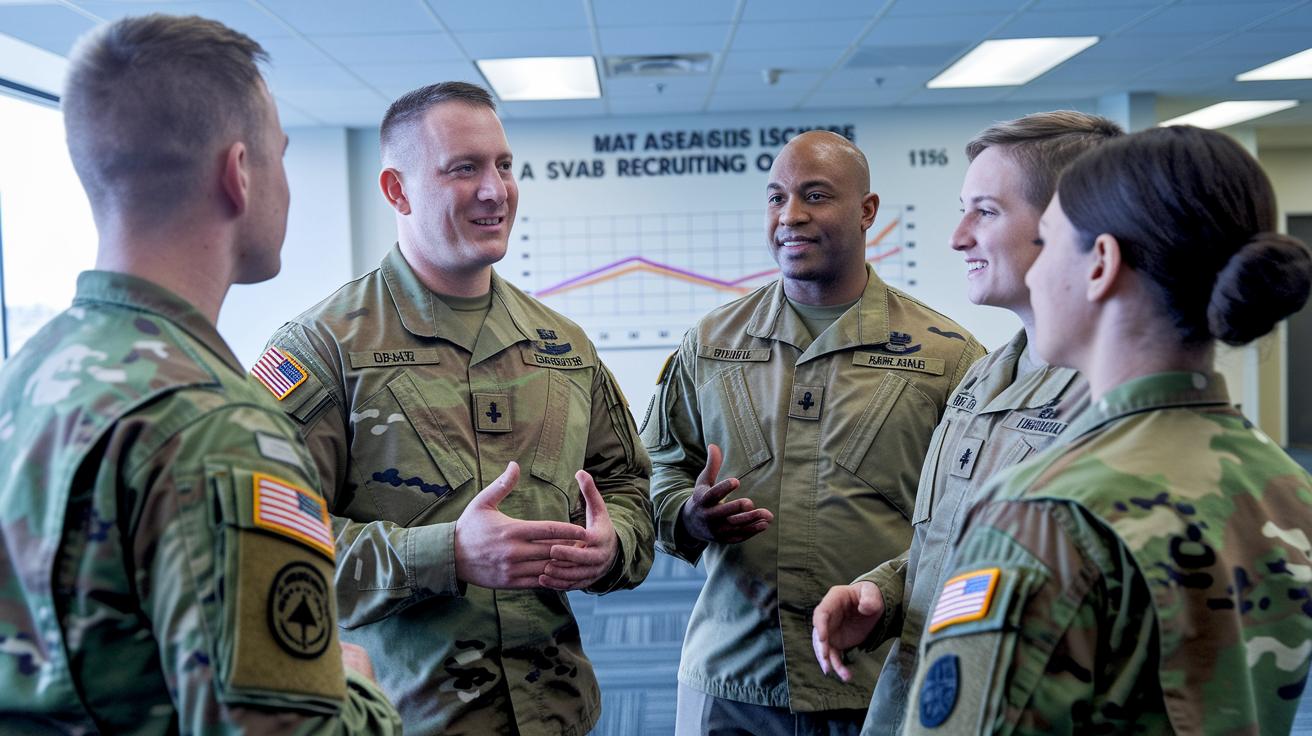
Our military leaders have been checking recruitment numbers closely and found that when enough people aren’t signing up, lowering the general ASVAB score can help fill the ranks. Still, they keep strict standards for roles that need special technical skills or leadership (positions that require extra capabilities).
For instance, one Army officer explained, “We dropped the general score by a few points so we wouldn’t run out of recruits, but our technical openings still call for top scores.” The Navy is doing the same. Recruiters there say that to attract a wider group, they’ve eased the overall score requirement, yet they still hold on to tough benchmarks for technical positions. One sailor mentioned, “Even with the relaxed basic scores, my training program still demands high marks for complex technical tasks.”
The Air Force and Marine Corps have also made similar adjustments. The strategy is simple: lower the entry score to boost numbers right away, while still making sure that the vital, high-skill roles are filled with the very best. This approach shows that, although the overall entry level has been lowered, there’s no cutting corners when it comes to jobs that need precision and advanced skills.
Data shows that these changes are not just short-term fixes. Recruiters are keeping an eye on both the general scores and the specialist requirements, and the adjustments seem to be here to stay. Every branch that lowers the general threshold tends to keep it this way rather than making temporary changes.
| Branch | Score Threshold Change | Specialist Role Threshold |
|---|---|---|
| Army | Lowered by 5-10 points | Kept higher |
| Navy | Lowered by 5-10 points | Unchanged for tech roles |
| Air Force | Lowered by 5-10 points | Retains high benchmark |
| Marine Corps | Lowered by 5-10 points | Kept steady for specialists |
Future Outlook on Recruitment Trends and Exam Standard Revisions

The military exam system is gearing up for a big change, one that leans heavily on tech and fresh tactics. Soon, AI-driven adaptive testing (a system that tweaks questions in real time based on your answers) might become the norm. Picture a test that tailors itself to your responses. This method is all about offering a more customized evaluation so that every candidate’s skills shine through.
As the need for fresh recruits grows, we might see entry standards for non-technical roles easing up. The idea is simple: cast a wider net to keep volunteer numbers high while still making sure our force works at full capacity. Of course, if we notice gaps in combat readiness or specialized skills, experts say we could bump up standards for those key roles. So, while general requirements might relax, tougher rules could stick around for positions that need them most.
Policymakers will have to balance fast-tracked recruitment with long-term readiness. Imagine digital tools that not only help recruits plan their study schedule flexibly but also track their test performance in real time. This smart, data-driven way of assessing candidates means every new recruit could be ready for the mission ahead. In this shifting landscape, both candidates and decision-makers need to be prepared for a test setting that’s as dynamic as the challenges we face every day.
Final Words
In the action, we saw how service branches adjusted exam thresholds and revamped testing methods to meet pressing recruitment needs. The blog walked you through historical shifts, modern digital tools, and case studies showing these changes in real-time. We also explored future predictions like AI-driven adaptive testing, all underlining the impact of recruitment trends on military exam standards. With these insights, we head into the future with confidence and a clear view of what’s ahead.
FAQ
Military recruitment numbers 2025
The military recruitment numbers in 2025 show targeted efforts, seasonal shifts, and revised exam criteria. Data is closely tracked over time to guide enlistment policies and training adjustments.
Military recruitment shortage 2025
The military recruitment shortage in 2025 highlights challenges in keeping up with force requirements. Adjusted test standards and outreach are key strategies to attract more qualified candidates.
Military recruitment goals
The military recruitment goals focus on meeting force readiness needs while attracting skilled candidates. Revised exam thresholds and customized outreach help align recruitment efforts with operational demands.
Military recruitment numbers by month
The military recruitment numbers by month reveal seasonal enlistment patterns. Monthly trends assist decision makers in planning training schedules and adjusting exam standards throughout the year.
Military recruitment numbers by year
The military recruitment numbers by year provide an overview of annual enlistment trends. These figures reflect how policy adjustments, revised exam cutoffs, and outreach efforts collectively impact yearly targets.
Military recruitment numbers graph
The military recruitment numbers graph visually represents monthly and yearly enlistment trends. It helps analysts see fluctuations and identify periods of improved or reduced recruitment activity.
Military recruitment statistics
The military recruitment statistics compile data on enlistment figures, adjusted exam scores, and applicant quality. These statistics inform policy revisions and help service branches make data-driven recruitment decisions.
Military recruitment trends
The military recruitment trends illustrate shifts in exam standards, outreach programs, and seasonal enlistment patterns. Such trends guide service branches in recalibrating criteria to meet current and future personnel needs.