
Have you ever felt that the score cutoffs were too high or even a bit old-fashioned? Recent changes to the military entrance exam scores might flip what you thought you knew about joining the forces.
These new guidelines spell out exactly what each branch expects and may even open up some surprising opportunities. In plain terms, they clear up the requirements and could boost your chance to serve, whether you’re dreaming of the Air Force, Army, Coast Guard, or another branch.
Take a moment to read on and see how these updates might bring new hope to your mission.
Military Entrance Exam Cut Score Updates Overview

Recent changes have made it easier for you to see what AFQT scores you need for each branch. The ASVAB (a test that checks your verbal, math, science, and spatial skills) has been used since 1968 to help determine your military job placement. Each branch sets its own score requirements, which not only affect your eligibility but also the work you might do. For example, the Air Force needs a basic score of 36 if you have a high school diploma, but most successful recruits score 50 or more. Imagine a recruit confidently finishing practice drills because they set their sights on a score of 50 for the best chance at success.
In the Army, the minimum score is 31. However, hitting above 50 can even earn you some bonuses. GED holders in the Army also get a bit of an edge with a higher acceptance rate. The Coast Guard, on the other hand, asks for a tougher score, raising the GED requirement to 47 while the diploma requirement stays at 36. The Marine Corps keeps the diploma cut score at 31, yet only a small 5% of GED recruits are allowed, and they must have a score of 50 or higher. For the National Guard, a score of 31 works for a diploma, but if you have a GED, you'll need a 50 or you can show 15 college credits as an alternative. Finally, the Navy sets a 35 for diplomas, while GED candidates must score 50 and also provide three community references.
| Branch | Minimum AFQT Score (Diploma) | Minimum AFQT Score (GED) | Notes |
|---|---|---|---|
| Air Force | 36 | 50 | Most recruits score 50 or above |
| Army | 31 | 50 | Bonuses for scores over 50 |
| Coast Guard | 36 | 47 | Tougher GED requirement |
| Marine Corps | 31 | 50 | Only 5% of GED recruits permitted |
| National Guard | 31 | 50 or 15 college credits | College credits serve as an alternative |
| Navy | 35 | 50 | GED holders need three community references |
Analysis of Military Entrance Exam Cutoff Revision Trends

Recent talks among officers and educators have sparked worries about the ASVAB's focus on academic marks. Many feel that simply tallying classroom scores might miss out on a recruit's true, everyday skills. Some even suggest that hands-on tests, like checking basic repair skills or technical instructions, could give a better sense of practical ability.
Military leaders regularly review score trends and make adjustments to hit recruitment targets while keeping things fair. In these checks, experts compare numbers on verbal reasoning and math (basic number skills) to see if the benchmarks really show a recruit's potential. One officer said, "When you prepare for a test like a strategy briefing, every detail matters, even the smallest change in scoring can count."
At the same time, major shifts in policy have been quite rare over the years. The Department of Defense monitors these figures closely to prevent any bias among recruits from different backgrounds. Officials remain focused on fine-tuning the standards to balance a recruit’s school achievements with their on-ground abilities. This steady recalibration reminds all applicants to keep refining their test prep in step with new guidelines.
Understanding Scoring Criteria in Military Entrance Exam Cut Score Updates

AFQT scores come from four ASVAB subtests: Arithmetic Reasoning, Mathematics Knowledge, Paragraph Comprehension, and Word Knowledge. These tests check your basic math and reading skills. Imagine getting ready for a field drill, you need to be both quick and spot-on when following orders.
Combined scores from different sections help recruiters decide which role fits you best. Each military branch may change the weight of these tests slightly to match the needs of specific jobs. For example, even a tiny shift in your Mathematics Knowledge score might change your chances for a technical position.
Since 1968, the way we score these tests has mostly stayed the same. Still, periodic reviews bring small tweaks to the rules so they match today’s training standards and real-life demands. This ensures you get a fair picture of both your academic abilities and practical skills, leading to roles that truly suit you.
Think of these scoring updates like fine-tuning a mission briefing, small changes that can make a big difference. Every tweak is meant to match your potential with the right military job, helping you face real challenges on the field every day.
Impact of Military Entrance Exam Cut Score Updates on Applicants

The new cut scores bring a mix of challenges and fresh goals. Some high school graduates still find an easier path, but now everyone must sharpen their math and language skills a bit more. One recruit mentioned that he was caught off guard when a higher score meant he had to study more, so he switched to a strict study routine.
GED candidates now face tougher standards. Their updated AFQT target means they need a more rigorous plan. One former GED candidate said he did extra drills and even had a friend quiz him until he felt confident with the new requirements. These examples show that extra practice, and sometimes even outside tutoring, can really make a difference.
Candidates with extra credentials, like a few college credits or community references, should see this change as a chance to boost their overall profile. Each military branch has its own guidelines, with some offering alternative options and others sticking to a strict cap. This means preparation should be both diverse and flexible.
Advice for all candidates:
- Set up a clear study schedule focusing on both math and language skills.
- Connect with peers or join online study groups to swap practice tips.
- Take timed practice tests to build up your test stamina.
Some experts believe these changes could lead to further updates later, encouraging recruiters to value a variety of skills. This gives you the chance to adjust and refine your preparation strategy so you’re ready for whatever comes next.
Official Channels for Military Entrance Exam Cut Score Updates
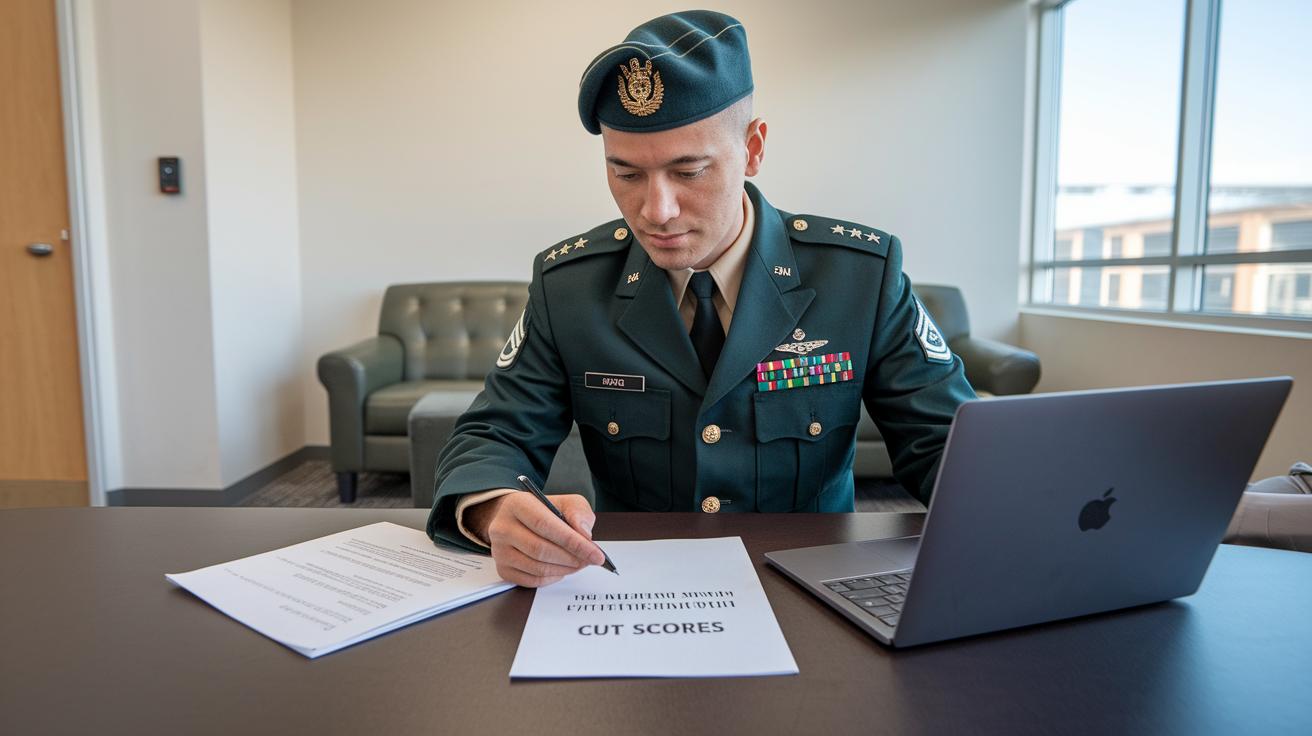
If you need the latest exam cut score updates, check your branch’s official recruiting website or the DoD portal. These sites work like your mission briefings, giving you clear, up-to-date orders. They post exam board memos along with the effective dates for all changes. You can usually find these updates on sites like Air Force AFPC, Army Human Resources Command, Coast Guard Recruiting Command, Marine Corps HQ, National Guard Bureau, and Navy Recruiting Command.
This is where you get the real scoop on policy updates and selection changes. One recruit even shared, "I knew my next step when I saw the official update on my branch’s website." So, make it a habit to check these official channels often to stay informed on the latest testing details. If you need further verification, look for posts labeled as military entrance exam updates or consult a military entrance exam guide for extra context.
Frequently Asked Questions on Military Entrance Exam Cut Score Updates

- What is the appeal or reconsideration process for scores?
Some branches let you ask for a second look if you think there was a mistake during scoring. It’s a bit like having a trusted buddy double-check your mission report. For example, if you’re unsure about your score, you can request a review, and that extra check might just smooth your mind by confirming things were done right.
Final Words
In the action, we broke down key updates on service branch entry score requirements, looked at trends in test scoring, and reviewed how these changes affect applicants.
We also pointed out where to find the most reliable official announcements. Staying informed helps you prepare smarter and build confidence for the future. Keep your focus sharp, and let the latest military entrance exam cut score updates guide your plan forward.
FAQ
Military entrance exam cut score updates California
The military entrance exam cut score updates California show the current minimum scores required for enlistment, helping candidates understand if they meet state-specific eligibility benchmarks.
What jobs do I qualify for with my ASVAB score (including Army positions)?
The jobs you qualify for with your ASVAB score depend on your results and branch guidelines. In the Army, particular roles require higher scores, while many positions accept scores near the cutoff.
ASVAB practice test
The ASVAB practice test mimics the real exam by covering math, verbal, and technical sections. It helps build confidence, highlights weak areas, and can guide you on what to study next.
ASVAB score chart Army
The ASVAB score chart for the Army outlines score ranges tied to different job roles. It provides a clear picture of which scores open up various position opportunities and where improvements may be needed.
AFQT score
The AFQT score comes from four ASVAB subtests and shows if you meet the branch’s enlistment score requirements. It acts as an overall measure of your aptitude for military service.
What is the lowest ASVAB score needed for Army and what Army jobs accept an ASVAB score of 31?
The Army requires a minimum ASVAB score of 31 for enlistment. Some positions are available at this score, though higher scores typically allow access to more technical or specialized roles.
What is a good score on the military entrance exam, and is a score of 25 or 27 on the ASVAB good?
A good military entrance exam score is one that exceeds the minimum branch requirements and offers a wider range of job options. Scores of 25 or 27 are below average and may restrict your choices.
How rare is a 99 on the ASVAB?
A 99 on the ASVAB is extremely rare and indicates outstanding performance. It places you among the top candidates, significantly expanding your eligible job roles in the military.