
Have you ever thought of treating your study plan like a mission? When you get ready for military exams, you face challenges in areas like science, arithmetic, and word knowledge, much like running through training drills.
Imagine setting clear goals, timing your drills, and doing regular reviews. This routine builds the confidence you need to hit your targets. Each exam section becomes a task you overcome with the right approach.
Keep reading to learn exam strategies that turn your study routine into a smart, well-organized campaign for success in your military career.
Essential Military Exam Strategies to Maximize Performance
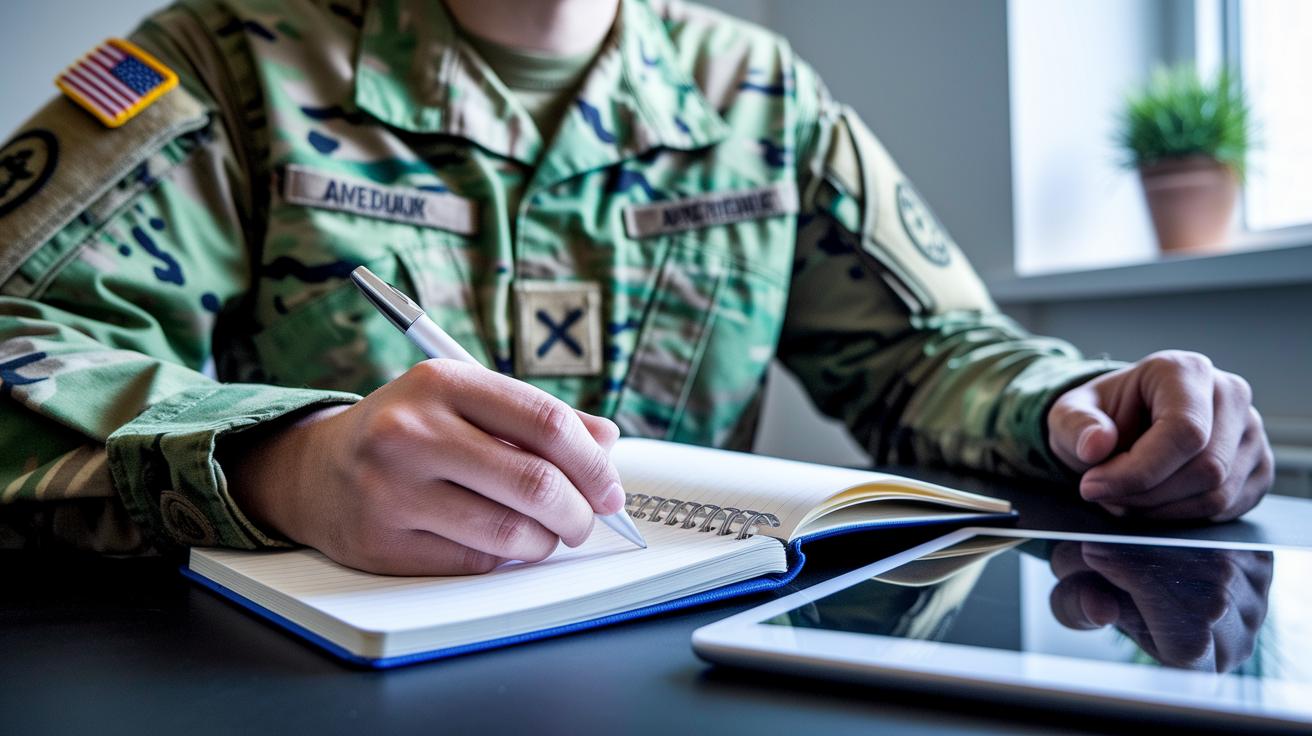
When you're gearing up for a military exam, think of it like planning a mission. You need a battle plan that pays attention to every little detail. The test covers areas like General Science, Arithmetic Reasoning, Word Knowledge, and Mechanical Comprehension. Setting a clear plan helps you manage your time, focus on what really matters, and boost your confidence.
Start by setting straightforward objectives. Mix traditional study methods with modern tech tools, like apps or online resources, to keep your training sharp. This way, you create a well-organized strategy that feels like a smart campaign.
Taking on key strategies means using personalized tips, specific study guides, and lots of practice tests. A proper study schedule makes a huge difference, helping you master the subjects and nail down the test strategies. Focusing on your strengths not only gets you ready for the exam but may also open doors for specialized roles, extra training, and enlistment bonuses.
- Analyze the exam blueprint
- Set clear targets
- Stick to regular review sessions
- Use timed practice tests
- Keep track of your progress
These five steps work together like a tight unit. When you review the exam layout, set clear goals, plan regular reviews, practice under exam conditions, and monitor your improvements, you build a strategy that leaves hardly any room for surprises. Each step feeds into the next, helping you stay focused, manage your time well, and hit the performance level you need for success.
Analyzing Military Exam Patterns and Structures

Understanding how military exams are built helps you study smart and focus on what matters most. Tests like the ASVAB are split into several sections that check both what you know and how you apply that knowledge in real-life settings. Knowing the exam's layout, timing, and scoring system clears up much of the uncertainty, boosting your confidence for test day. When you know what to expect, you can zero in on areas that need extra work, tackling the exam one section at a time.
Grasping the exam’s setup also helps you pace yourself during the test. When you study the patterns, you quickly see how each part adds to your final score. This insight lets you hone in on important topics, such as scientific reasoning (using science ideas in practical ways) or basic math skills, much like planning and executing a well-thought-out mission.
| Subtest | Topics Covered | Time Limit |
|---|---|---|
| General Science | Basic science facts and principles | 20 minutes |
| Arithmetic Reasoning | Math word problems and calculations | 25 minutes |
| Word Knowledge | Vocabulary and language usage | 15 minutes |
| Mechanical Comprehension | Machinery and technical concepts | 20 minutes |
Developing a Structured Study Plan for Military Exams

Think of your study plan as a clear mission briefing. It sets aside time and goals so you can give each topic your full focus without rehashing old ground. First, take a good look at your syllabus to pick out the important topics. Then, set simple goals for every study session. Use studious blocks of 60 to 90 minutes to make sure you stay in the zone. Next, fit in review cycles to lock in what you’ve learned.
Mark your progress with clear milestones, and team up with study groups when a topic gets tricky. Add practice tests to find any weak spots in your knowledge. And if your daily duty shifts or new challenges show up, adjust your schedule accordingly. Keep a daily or weekly record of your progress to stay on track and ready for whatever comes next.
Mastering Test Practice Drills and Simulation Exams

Practice drills and simulation exams work like a dress rehearsal before the big day. Running timed quizzes or full-length tests in exam conditions helps you get used to the pressure and pace of the real deal. It trains you to spot when you need more time or if a subject is giving you trouble. For example, try simulating an ASVAB subtest to see how you handle word problems and technical questions while the clock ticks down. The more you work through these drills, the more natural the test rhythm will feel.
- Try online question generators that mimic different exam formats.
- Join digital drill sessions on platforms like Chegg, Quizlet, and Study Buddy.
- Take full-length practice exams under strict time limits.
- Do scenario-based drills aimed at specific subtests.
- Mix different types of questions to test various skills all at once.
Reviewing your results is key. Look over your scores to see which areas need more focus, then tweak your study plan. This focused method helps you build confidence and sharpen your skills for the actual exam.
Time Management and Exam Day Preparation Strategies

Before exam day, make sure you've got all your essentials ready. Double-check your ID, pencils, and calculator a few days ahead so you don't end up scrambling last minute.
When you're in the exam room, plan your time smartly. Look over the test and decide how many minutes you'll spend on each section based on the number of questions and what the test demands.
Follow these simple steps:
- Gather your materials (ID, pencils, calculator).
- Check the exam's time and location so you're not confused.
- Read the test instructions carefully.
- Split your time per section based on the number of questions.
- Take a few deep breaths before you start.
- Don't try to learn everything at the last minute.
On test day, deep breaths can work wonders for calming your nerves. Stay relaxed and work through each section one at a time. A brief pause to reset your focus can help lower stress and keep you clear-headed as you tackle the test.
Subject-Specific Military Exam Strategies

When you’re getting ready for a military exam, breaking each subject into bite-sized pieces is key. Focusing on the main topics builds a solid base to tackle tougher questions later. In this section, we share straightforward methods to master General Science, Arithmetic Reasoning, Word Knowledge, and Mechanical Comprehension. Practicing with these strategies can really boost your confidence on test day.
General Science Strategies
Flashcards and concept maps make tough science ideas easier to understand. Think of flashcards as mini briefings: write a key idea on one side and its explanation on the other. For example, picture a card showing the gravity formula with a drawing of falling objects on the flip side. Meanwhile, concept maps help you see how one fact links to another in a clear, step-by-step flow.
Arithmetic Reasoning Strategies
Working through word problems step by step is a winning tactic. Break each problem into clear, simple parts. Imagine a scenario where you need to calculate a vehicle’s speed; start by grabbing the numbers and then set up your equation. With regular practice, these problems become manageable tasks you can tackle even under pressure.
Word Knowledge Strategies
Boosting your vocabulary with themed word lists can sharpen your reading skills. Write down words that connect to the military world and try them out in sentences. For instance, gather words like "strategy," "tactics," and "operations," then quiz yourself by crafting short sentences about mission planning. Reviewing these lists regularly helps lock in their meanings.
Mechanical Comprehension Strategies
Diagrams and visual tools are great for understanding how machines work. Sketch out simple pictures of mechanical devices and label their parts. Try drawing a basic pulley system and note how the force is shared among its parts. This hands-on approach makes complex technical ideas much clearer and easier to remember.
Managing Stress, Anxiety, and Mental Readiness for Military Exams

Getting ready for exam day means calming your nerves and preparing your mind. Taking a few deep breaths or a short meditation session can clear your head, making it easier to face those tough questions. A steady mind helps you handle unexpected challenges with ease. Using these simple strategies not only reduces stress but also builds the mental toughness you need to recall key information when it really counts.
- Do some breath-work to keep your mind steady.
- Take quick mindfulness breaks while studying.
- Use pre-test affirmations to boost your confidence.
- Enjoy light exercises to help release tension.
- Stick to a good sleep schedule and get proper rest.
By making these habits part of your daily routine, you lay a solid foundation for mental readiness. When your mind is calm and alert, you can approach each question with clear focus and confidence.
Final Words
In the action of preparing for your military exams, this guide covers a battle-plan style approach, key study routines, and stress control methods. Each tactic works together to enhance both physical and cognitive abilities while building confidence. Focusing on military exam strategies paves the way for success on test day and beyond.
Keep your schedule tight, practice relentlessly, and remember to give yourself time to recharge. Your hard work today builds a stronger tomorrow.
FAQ
Best military exam strategies
The best military exam strategies integrate practice exams, targeted study plans, and time management techniques to boost your confidence and performance on test day.
ASVAB practice test
The ASVAB practice test offers realistic exam conditions that help you identify strengths, pinpoint weak areas, and improve your timing for the actual test.
What is ASVAB test in high school
The ASVAB test in high school is an aptitude exam that measures skills in various subjects, guiding students in choosing career paths and potential military roles.
How to pass the ASVAB test without studying
The ASVAB test without studying can be very challenging because the exam requires solid subject knowledge and practice to handle its diverse question formats effectively.
How to study for the ASVAB Air Force
The ASVAB Air Force study approach focuses on reviewing core subjects like arithmetic reasoning and mechanical comprehension through targeted practice tests and specialized study materials.
ASVAB test Army
The ASVAB for the Army follows the standard format with multiple subtests, so a well-rounded study plan and regular practice tests are essential for success in Army entrance exams.
ASVAB skilled technical practice test
The ASVAB skilled technical practice test concentrates on technical areas, offering drills and practice questions designed to sharpen your mechanical and technical skills for advanced roles.
ASVAB Practice Test PDF
The ASVAB Practice Test PDF is a downloadable resource that mimics the actual exam, allowing you to review key topics, practice under timed conditions, and build confidence.
Is a 70 on the ASVAB bad?
The ASVAB score of 70 is usually seen as competitive, reflecting a solid performance that qualifies you for several military specialties.
How to pass the military exam?
The strategy to pass the military exam involves following a structured study plan, taking regular practice tests, and targeting weak subject areas to improve overall performance.
Is 27 a bad ASVAB score?
The ASVAB score of 27 is considered low, indicating significant gaps in knowledge. Improving your score will require dedicated study and consistent practice.
How rare is a 99 on the ASVAB?
The ASVAB score of 99 is extremely rare, achieved by very few test-takers, and reflects an exceptional level of aptitude ideal for qualifying for top-tier military roles.