
Have you ever wondered if your everyday workout really drives you to the limit? Military fitness classes are built to test both your body and your determination (that strong push to keep going). They include tough moves like push-ups, burpees, and running drills that feel more like field exercises than a normal gym routine.
These sessions help you build strength, endurance, and focus all at once. Each drill is like a mini mission that turns a regular workout into a serious strength boost. Next, we'll break down the moves so you can see how the right technique transforms everyday exercises into power-packed drills.
So, ready to feel that surge of determination as you conquer each drill?
Core Military Fitness Class Workouts to Jumpstart Your Training
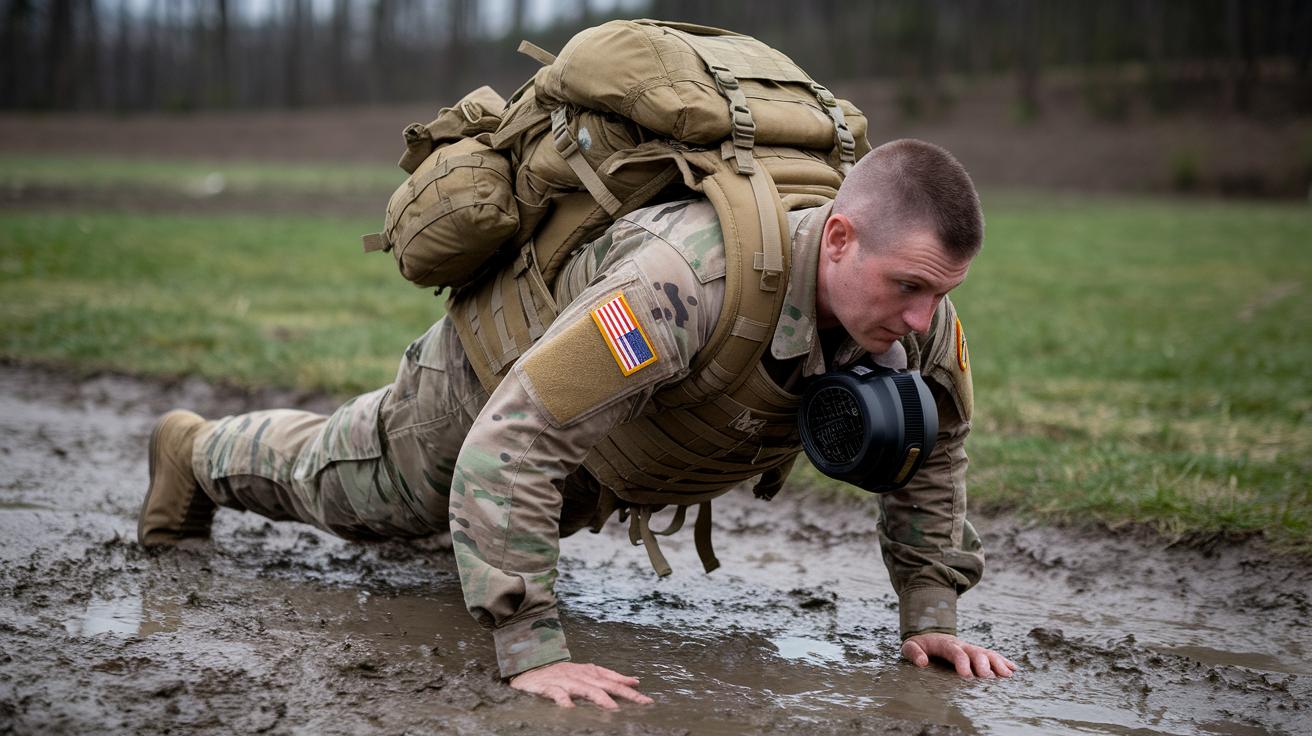
Military fitness workouts pack a punch by mixing high-energy moves that boost both strength and cardio. You’ll encounter drills like push-ups, sit-ups, burpees, lunges, running, pull-ups, swimming, and air squats. A proper push-up means keeping your elbows close and your back straight, think "push-up power" with a tight core and a body like a plank. Sit-ups usually involve crossing your arms over your chest and bending your knees almost 90 degrees, really working your core muscles.
Some sessions ramp up the challenge with a 6-mile gear hike, where recruits lug around an 80-pound pack and even wear a gas mask. It’s brutal and builds both physical endurance and mental toughness. Group workouts like Run Club and Battle LITE are designed to keep everyone motivated and foster a strong sense of camaraderie among the troops. These circuits blend classic bodyweight drills with bursts of explosive exercises to develop full-body strength and stamina.
Form is key. For example, lunges should be done with smooth, controlled movement to improve balance and leg power. And when doing air squats, keeping a deep squat and a chest-up stance makes a big difference. Whether you’re just starting out or a seasoned participant, these workouts can be adjusted to match your personal level.
| Workout Name | Rounds | Duration/Reps | Key Movements |
|---|---|---|---|
| Push-Up Power Circuit | 4 | 15 reps per round | Push-ups (keep elbows close, back straight) |
| Core Circuit Challenge | 4 | 20 reps per round | Sit-ups with arms crossed |
| Burpee Burn | 3 | 10 reps per round | Burpees for full-body strength |
| Run Club Drill | 1 | 1-mile run | Running with powerful strides |
| Gear Hike Challenge | 1 | 6-mile hike | Lunges and marching with an 80 lbs pack |
Structured Regiment: Army-Style Military Fitness Class Workouts and Drills

Group workouts like Battle Group Training (learn more on https://militaryaptitudetests.com?p=294) push you to your limits with clear-cut circuit routines, quick HIIT bursts (short, intense bursts of exercise), and strength drills. These sessions mix army-style drills with tactical exercises, think rifle squats (air squats), bear crawls, push-ups, lunges, and mountain climbers. Picture a team moving in sync, every soldier focused on perfect form and full effort. For example, nailing a rifle squat means sinking into a deep air squat with a tight core and lifted chest, almost like you're steadying yourself for the next big mission.
Teamwork and sharp focus drive every one of these sessions. They start simple for beginners and gradually get more challenging, just like advancing through mission steps. Every drill stresses clear communication and mutual help, much like coordinating a well-planned operation. As you work through the routines, you'll tackle challenges that build both strength and determination. Imagine a squad sweating it out during a bear crawl drill, mastering each move with precision while staying mentally alert. This steady, methodical approach hones your combat skills and gets you ready for the physical and mental demands of service.
Endurance Circuit Sessions in Military Fitness Class Workouts

Military workout classes often mix short bursts of hard work to boost your stamina and build true endurance. One top drill is the Cycle Circuit. In this drill, you do five rounds of 30-second max-effort bike sprints followed by 10 single-leg Romanian deadlifts (an exercise that works your lower body and back). It’s a quick blast that tests your cardio and strength all at once.
Next, try the Calisthenics Challenge. Imagine doing five rounds of 12 archer push-ups paired with 20 lateral lunges (10 on each side). This workout not only sculpts your upper body but also improves your balance and leg power. It’s like getting ready for a mission where every move has to be sharp and true.
Then there’s the Jumping Jack Fury. Begin with a 3-minute warm-up, then tackle sets of jumping jacks in a 25-50-75-50-25 pattern, and finish with 25 mountain climbers. This steady pace gets your heart pumping and works several muscle groups, building solid full-body endurance.
For a complete session, consider the Circuit Crusher. Do five rounds that include a 400-meter row, 12 kettlebell swings, 15 push-ups, and 25 bicycle crunches. Lastly, the Rope Rampage tests your energy with five rounds of 30-second alternating battle rope waves. By the end, you’ll feel tougher and more ready for any challenge ahead.
Strength and Power Drills in Military Fitness Class Workouts

Push-ups are a go-to move for building strength. When you do one, focus on straightening your arms completely. If you’re just starting, try the knee version while keeping your elbows close to your body. Pull-ups target your upper body and back, and using band-assisted pull-ups can help you build strength step by step. Air squats are another must-do; keep your chest up and move steadily as you lower into a deep squat.
Next, try kettlebell swings with a weight that isn’t too heavy, doing sets of 12 to work your hips, glutes, and core. Dumbbell step-ups are great too; aim for 12 reps on each leg to boost balance and leg power. Dive bomber push-ups add a dynamic twist, with 15 reps that help improve both flexibility and upper-body power.
Then, mix in split jumps, doing 15 reps on each side to ramp up explosive power and train your core. Battle rope intervals offer a quick cardio burst, try 30-second waves to challenge your endurance and strengthen your upper body. For advice on perfecting your form or safely increasing your load, check out guidance from military fitness trainers who are ready to help you progress.
Core Combat and Mobility in Military Fitness Class Workouts

The Core Destruction routine is a straight-to-the-point workout that pushes your midsection strength and balance. You’ll do 50 reverse crunches, 50 plank knee-ins (25 per side), and 50 heel touches, taking a one-minute break between sets. Each move is like a small win that makes your core tougher and boosts your stamina for the field.
Start your session with a light warm-up. Begin with a 3-minute jog to get your heart pumping. Then, do some hip openers and shoulder rolls to loosen up. Next, add lunges with a twist, imagine you’re twisting quickly to dodge an incoming threat. It’s about moving sharp and steady.
Once you finish the core work, take a few moments for static stretches. Focus on your hamstrings, quads, and shoulders. These stretches help your muscles cool down and lower the risk of injury, keeping you ready for your next drill.
Adapting Military Fitness Class Workouts for All Fitness Levels

Start by adjusting each exercise to your current strength. For example, begin with knee push-ups until your form feels solid, then move on to full push-ups where your body forms a straight line. Similarly, use band-assisted pull-ups at first and switch to unassisted reps as your upper-body strength grows.
For squats, stick with air squats at first, focusing on solid form. Once you're comfortable, add some weights. Running works the same way, start with a mile and gradually add an extra half mile each week to build your endurance. And when tackling circuits, start with three rounds; as your stamina and confidence grow, add an extra round each week.
Keep an eye out for common risks like tendonitis and strains. It’s a smart move to schedule rest days so your muscles can recover properly. By steadily increasing the intensity as you progress, you can build strength safely while preparing for mission-ready workouts.
Fueling and Recovery for Military Fitness Class Workouts

Before you start a tough workout, fuel up like a soldier. Try to eat about 1 gram of protein for every pound of your weight. This helps fix up your muscles and gives you energy. For example, have a meal with lean protein and some complex carbs, think grilled chicken with brown rice, about 60 to 90 minutes before your session. And don’t forget water: gulp down 16 to 20 ounces before you begin, and keep sipping as you go.
After your workout, recovery is just as key. Take around 10 minutes to do some slow, static stretches to help your muscles relax, focusing on your hamstrings and quads. A few minutes with a foam roller on big muscle groups can ease any tightness, kind of like an officer checking on teammates. Also, aim for 7 to 9 hours of sleep each night; that’s the best way to rebuild your strength and beat fatigue.
Lastly, wear moisture-wicking gear during your workouts. It helps manage sweat and cuts down on chafing, keeping you dry and focused on your mission.
Final Words
In the action, this article broke down high-intensity routines, ranging from core exercises to endurance circuits and strength drills. It gave clear guidance on gear, technique, and recovery strategies that boost both physical and mental strength.
Our review of military fitness class workouts shows you can work smart while staying active. Keep pushing forward, and remember that every session builds confidence for the challenges ahead.
FAQ
Q: What do military fitness class workouts PDFs offer and are free downloads available?
A: Military fitness class workouts PDFs offer detailed boot-camp style drills and circuits for strength and cardio training. They serve as handy workout guides, and many free downloads are available online for quick reference.
Q: How do military fitness class workouts cater to beginners and promote weight loss?
A: Military fitness class workouts provide modifications for beginners with bodyweight drills, while also offering intense circuits that help burn calories and build endurance—ideal for those aiming for weight loss.
Q: How can I perform military fitness class workouts at home?
A: Military fitness class workouts can be adapted for home use by focusing on bodyweight exercises, core drills, and circuit routines that require minimal equipment, allowing you to train effectively in your space.
Q: What does an 8-week military fitness program typically include?
A: An 8-week military fitness program usually offers a structured progression of strength, endurance, and mobility workouts that gradually build overall fitness with planned rounds and rest days.
Q: What defines the best military workout routine?
A: The best military workout routine balances strength, cardio, and endurance drills. It often features circuits with push-ups, burpees, running, and emphasizes proper form and steadily increasing challenge.
Q: What is the 3-3-3 rule for workouts?
A: The 3-3-3 rule organizes workouts into three sets of exercises, three circuits per session, and three key movements per round to keep training balanced and maintain intensity throughout the session.
Q: What does the 6 12 25 rule for workouts mean?
A: The 6 12 25 rule sets a structure of six repetitions, twelve seconds of rest between sets, and a total of twenty-five minutes per session, aiming to boost both endurance and strength efficiently.
Q: What is the 4 30 10 method in workouts?
A: The 4 30 10 method divides the workout into four phases, includes 30 seconds of high-intensity activity, and ends with a 10-minute cool-down, helping to safely elevate your performance while preventing injury.