
Ever wonder how a simple chart can change your military fitness game? In this post, we take a close look at how each branch sets up its own tough tests with clear events and scores.
We break down the key differences between the Army Combat Fitness Test (a test focusing on combat readiness) and the old Army Physical Fitness Test. We also show you what those scoring changes really mean for you.
This guide gives you a behind-the-scenes look that can help you train smarter and hit your marks. Get ready to see how a focused plan can lead to peak performance.
Military Fitness Test Chart Sparks Peak Performance
This section gives you a quick, friendly look at how different military branches set up their fitness tests. Every branch uses its own events, scoring, and adjustments based on age or gender so you can see how they compare. This makes it easier for you to gear up and be ready. For all the branch details, check out our full standards at militaryaptitudetests.com?p=
Take the Army Combat Fitness Test as an example. It includes five events: a three-rep max deadlift, hand-release push-up, sprint-drag-carry, plank, and a two-mile run. In this test, you need at least 60 points per event and a total score of 350 to meet the combat standard. On the other hand, the older Army Physical Fitness Test has three events, push-ups, sit-ups, and a two-mile run, and requires 60 points per event with a total score of 180. The same idea applies to the USMC, USAF, and USCG tests, where strength and endurance are key and scores adjust for age and gender.
Imagine a soldier charging through the sprint-drag-carry event. Picture them hitting each phase with focus: “Get set, go, and finish strong.” This clear sequence shows the process that drives peak performance.
| Branch | Events | Min Score/Event | Overall Min | Age/Gender Norming |
|---|---|---|---|---|
| Army ACFT | Deadlift; Hand-Release Push-up; Sprint-Drag-Carry; Plank; Two-Mile Run | 60 | 350 (Combat) / 300 (General) | Yes |
| Army APFT | Push-ups; Sit-ups; Two-Mile Run | 60 | 180 | Yes |
| USMC PFT | Pull-ups/Push-ups; Crunches or Plank; Three-Mile Run | Varies | Based on total points | Yes |
| USAF PT | Push-ups; Sit-ups; 1.5-Mile Run | Varies | Based on benchmarks | Yes |
| USCG Fitness | Push-ups; Sit-ups; Two-Mile Run (plus Swim) | Varies | Based on total score | Yes |
For a deeper dive into training, check out our military fitness plan at militaryaptitudetests.com?p=77.
Army Combat Fitness Test Chart (ACFT) Benchmark
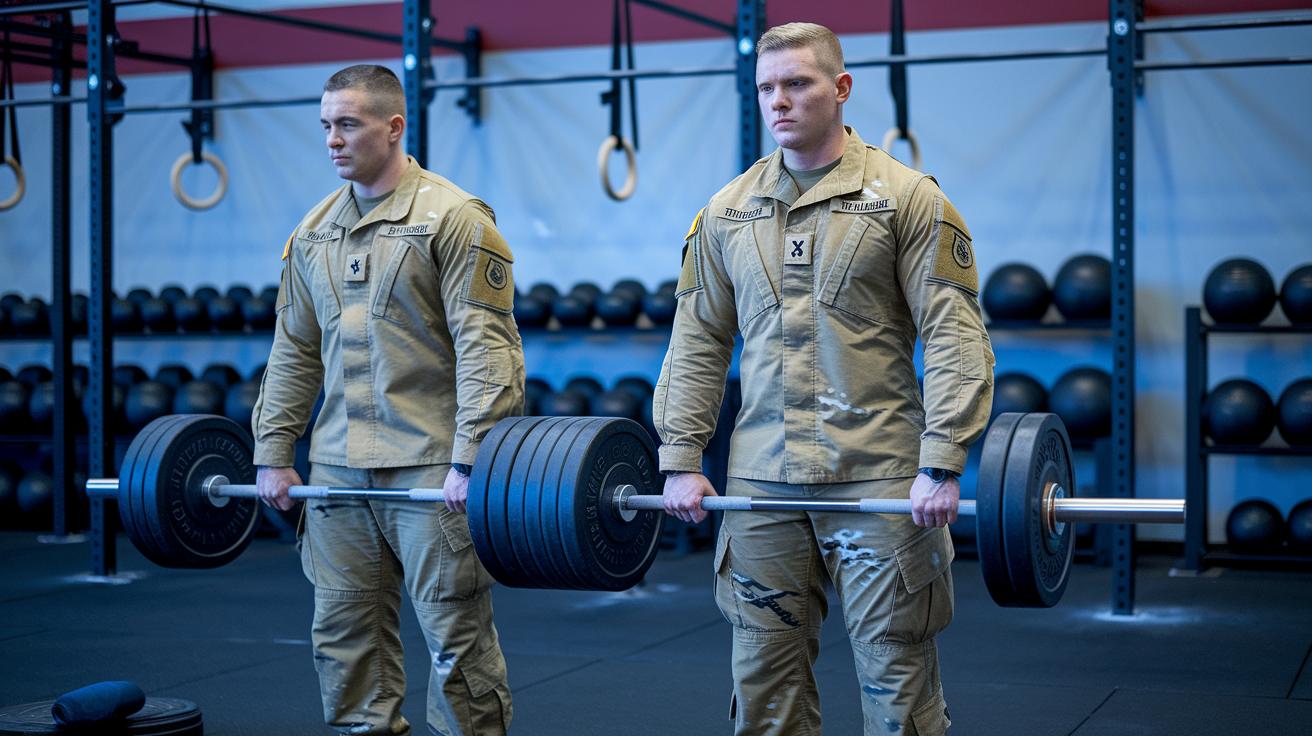
The ACFT checks how ready you are for the field by testing strength, endurance, and agility in five different events. It uses a system that doesn’t change by gender, in every event, you need at least 60 points to meet the combat standard (total of 350 points) or the general standard for combat-enabling roles (total of 300 points). Scores are adjusted based on age and gender.
Before weight events, you hear a "GET SET" command followed by "GO" and then a lowering movement when needed. For weight lifts, you do three reps in a row without stopping. For example, in the three-rep max deadlift, you must lift steadily three times to show consistent strength and keep it safe.
The five ACFT events are:
- Three-rep max deadlift: Lift a heavy weight three times in a row, keeping your form correct.
- Hand-release push-up: Lower yourself fully and then lift your hands off the ground at the bottom.
- Sprint-drag-carry: Start with a sprint, then drag a weighted sled, move sideways, carry kettlebells, and finish with a sprint.
- Plank: Hold a plank position to prove your core strength.
- Two-mile run: Run two miles at a steady and strong pace.
The ACFT standards will roll out on the scheduled implementation dates.
Army Physical Fitness Test Chart (APFT) Standards
The APFT is a quick way to see how fit you are by checking your strength and stamina. It measures your performance in three key events: push-ups, sit-ups, and a two-mile run. Each event can earn you up to 100 points, but you need at least 60 points in each and a total of 180 to pass. Keep in mind that these standards change with your age and gender. For example, younger soldiers are held to tougher numbers, like more repetitions or faster run times, compared to their older counterparts.
Here’s a simple rundown of the events with basic tips:
- Push-ups: Do as many good-form push-ups as you can before the time runs out.
- Sit-ups: Keep your form tight to hit the necessary count.
- Two-mile run: Aim to finish strong with a steady pace.
The performance benchmarks adjust as you get older. Think of it like this: a soldier aged 17–21 is expected to perform at peak levels, while older soldiers have targets that focus on steady endurance. I remember hearing someone say, “At 17, doing 60 push-ups seems routine, but by 60, it’s all about keeping a solid pace and good form.”
Male APFT Score Chart Overview
For men, the score chart lays out performance milestones for different age groups, from 17–21 all the way up to 62+. Younger men usually have to hit higher repetition counts and run faster because they’re at their physical peak. Meanwhile, older men are measured on their endurance and quality of movements. For instance, a guy aged 17–21 might need to do around 70 push-ups to excel, whereas someone over 62 might focus more on performing each rep neatly and with good form, showing strength built over years of service.
Female APFT Score Chart Overview
Female standards work in a similar way, changing with age. Younger women are expected to complete more repetitions and run at a brisk pace, while the targets ease a bit for older age groups. It’s all about balancing continuous strength with endurance. For example, a woman between 17 and 21 might aim for a quicker run time and more sit-ups, whereas older age groups concentrate on maintaining steady strength and overall stamina.
Marine Corps PFT Chart and Scoring Standards

The Marine Corps Physical Fitness Test is set up to check your strength, endurance, and agility. It includes events like pull-ups (or push-ups if pull-ups aren’t your thing), crunches or a timed plank, and a three-mile run. Studies that started in 2015 led to updates in 2019, and now the scoring adjusts based on your age and gender.
Each event builds up your overall score. The points you can earn change with age, what works for someone aged 17–20 is different from the standards for a 51+ recruit. This system shows respect for the natural changes our bodies go through while still pushing you to stay prepared.
The scoring itself is pretty straightforward. With pull-ups, every perfect rep adds to your total, and if pull-ups aren’t feasible, there’s a push-up option available. When you’re doing crunches or a plank, you need to watch your form and keep a steady pace. The three-mile run is about testing your overall heart and lung strength, with set time goals depending on your age group.
| Event | Focus |
|---|---|
| Pull-ups or Push-up Alternative | Upper Body Strength |
| Crunches or Plank | Core Stability |
| Three-mile Run | Endurance and Speed |
Age- and Gender-Normed Fitness Chart Guidelines
The ACFT uses the same standard for everyone. It sets age-based goals for five events, so there's one clear guideline no matter your gender. For the APFT, the chart is divided into six different age groups and separates targets for men and women. This means that numbers like how many reps you do or how fast you need to run change as you get older.
Similarly, the USMC PFT adjusts the expectations more noticeably for older recruits compared to younger ones.
For instance, an APFT chart might show that a soldier aged 18 to 25 should aim for 50 push-ups in 2 minutes, whereas someone over 40 would target 45 push-ups.
Military Performance Calculator Tools and Charts

Hey there, soldier. Today, technology makes it easier to track your fitness scores. You now have digital tools that let you input your time, repetitions, or distances and see your points and readiness percentiles, right on the spot. Think of it as a quick mission update on your training progress.
Here’s what’s in your kit:
- A member calculator app where you enter results from events like a two-mile run or hand-release push-ups. It gives you immediate feedback.
- A service-level numeric calculator app that turns complex score numbers into clear targets.
- An FAQ section that explains test standards, details on score conversion, and tips on retesting.
Imagine this: you punch in your sprint-drag-carry time, and a fellow soldier once said, "I hit 2:45 and the calculator showed I earned 95 points." That instant reply can sharpen your focus and gear you up for the next drill.
Final Words
In the action, we've looked at various fitness standards across branches. We compared the Army's ACFT and APFT, detailed the Marine Corps PFT, and discussed age- and gender-normed guidelines. We also reviewed performance calculator tools for quick scoring. Each section breaks down key events and requirements to help you match your training with the branch standards. This friendly guide and military fitness test chart aim to support your drive and readiness for test day. Keep training hard and stay confident in your abilities.
FAQ
What is a military fitness test chart pdf?
The military fitness test chart pdf details performance metrics across all services by listing event requirements, scoring guidelines, and age/gender adjustments in a clear, downloadable format.
What are the Air Force PT test scoring charts for both genders?
The Air Force PT test scoring charts provide updated benchmarks for both men and women. They set age-adjusted scoring requirements for events like push-ups, sit-ups, and the 1.5-mile run.
What are Army physical fitness test standards by age and what is the Army fitness test?
The Army physical fitness test standards by age outline minimum performance levels for events such as push-ups, sit-ups, and a two-mile run. They help measure overall strength and endurance for all soldiers.
What is the basic military fitness test?
The basic military fitness test involves key events like push-ups, sit-ups, and a timed run, all designed to gauge overall physical readiness and ensure service members meet minimum fitness requirements.
What is the Army standard for a 2 mile run?
The Army standard for a two-mile run identifies required run times based on age and gender benchmarks, setting a minimum performance level that soldiers must reach to demonstrate adequate fitness.
What is a passing score on a PFT?
The passing score on a PFT means achieving a minimum of around 60 points per event, with an overall score typically near 180 points, indicating that the service member meets basic physical fitness standards.
What is considered the hardest fitness test in the military?
The hardest fitness test is often seen as the Army Combat Fitness Test, as it combines multiple high-intensity events that challenge strength, endurance, and agility in a single, rigorous assessment.