
Have you ever wondered if college could be the start of developing real military skills? This guide lays out a program that begins with basic leadership and tactics (simple plans and methods) and gradually builds up to real defense duties.
Think of it like trying a new sport before joining the team. It offers safe practice that builds your confidence step by step.
Each lesson helps you gain skills needed for roles in our armed forces. So, are you ready to start your training?
military science study guide: Boost Your Knowledge

This study guide gives you a clear look at a college-level program that lets you explore military science without having to commit to active service right away. In your first two years, you dive into the basics of armed forces theory (how the military works) and the study of war, armed conflicts, defense systems, and military tactics. Think of it like trying out a new sport before you decide to join the team, it’s both safe and exciting.
At the start, you take introductory courses during your freshman and sophomore years. For example, you might enroll in a class like "101 Foundations of Basic Leadership" where you learn how to lead a team, just like a squad leader in the field. These courses lay a solid foundation for understanding defense studies and the basics of military training.
Then, in your junior and senior years, you advance to tougher classes. When you finish these, you earn a commission as a second lieutenant with the U.S. Army, National Guard, or Army Reserves. Essentially, you complete your studies and step into a role that kicks off an eight-year service commitment.
On top of that, the program offers an Army ROTC Global Preparedness Certificate that shows you’re ready for the challenges of real-life assignments. Just as teams perfect the basics in training before battle, this curriculum sharpens your tactical skills and reinforces the duty of strengthening national security.
Theoretical Frameworks in a Military Science Study Guide
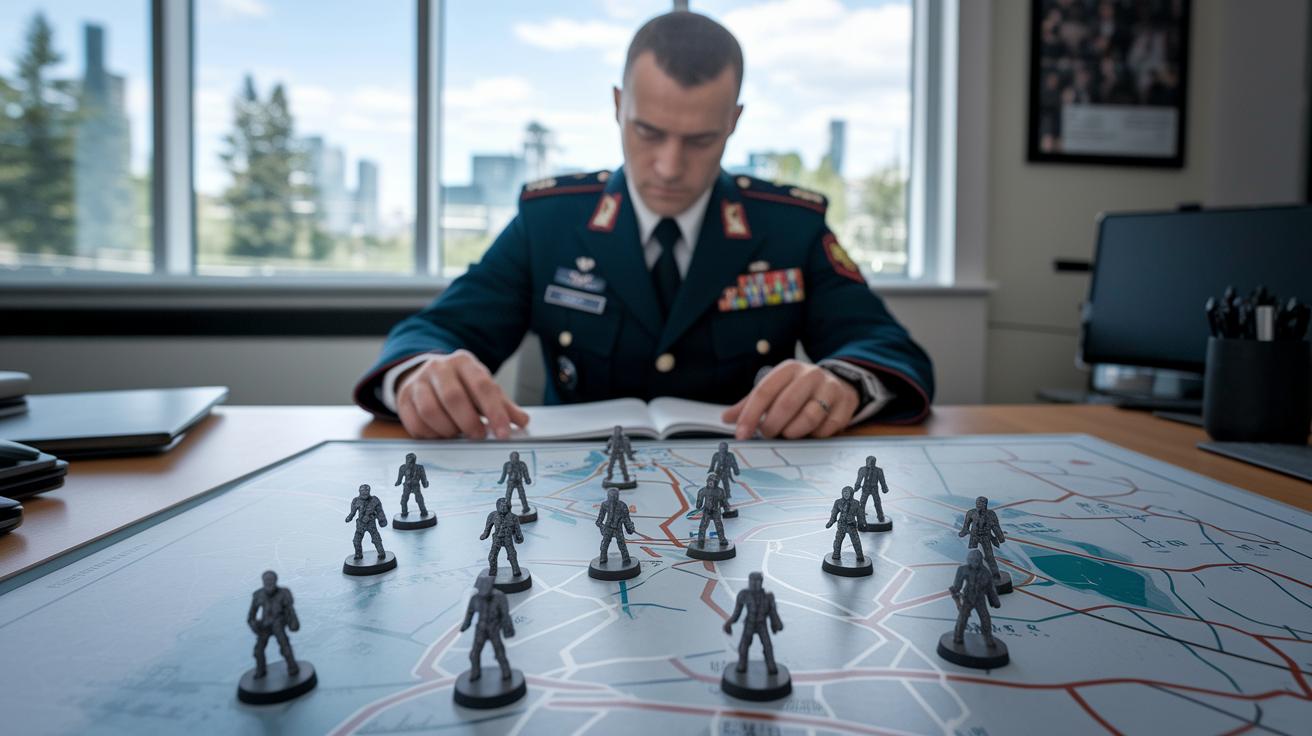
This study guide breaks down the basics of how our military works in plain language. It brings together classic ideas from thinkers like Clausewitz and Jomini along with modern views that fit our world today. These core concepts help explain everything from small-unit moves to major battle plans.
Think of it like this: planning your strategy is just like setting up a board game. Every move matters and every piece plays a role. That image makes the big ideas of warfare easy to relate to.
The guide highlights key points such as offense (making the first move), defense (holding your ground), center of gravity (the enemy’s main strength), and lines of operation (the paths for troop movement). These points show why each detail is important. It also walks you through how to compare different tactics, like deep‐strike campaigns that target weak spots versus attrition campaigns that slowly wear down the enemy. In short, it serves as a practical manual to help you understand and plan military actions on the battlefield.
Historical Case Studies and Battlefield Analysis in the Military Science Study Guide

We learn a lot from digging into past battles. These case studies help us see how old fights have shaped the tactics we use today. For instance, in the United States, WWII showed us that teaming up different forces creates a power move that really counts. In the United Kingdom, the Napoleonic wars taught the value of fast moves and coordinated strikes, ideas we still use on the field. And over in South Africa, the Anglo-Zulu War gave us a close look at small unit actions, reminding us that staying agile can be a game-changer.
Looking back at WWI, we see how trench warfare pushed defenders to rethink their methods during long, drawn-out battles, sparking fresh tactics. Then, in WWII, the switch to using tanks and motorized troops completely shifted the way battles were fought.
Here are a few key takeaways:
| Lesson | What It Means |
|---|---|
| Logistics | Commanders learned to clear supply route bottlenecks. |
| Communication | They saw the need for better real-time updates. |
| Force Integration | Working together in step helped overcome individual limits. |
Take a moment to think on this, improved coordination turned what could have been chaos into a smooth, well-planned action. These historical lessons show why today’s military plans stress clear communication and teamwork. Every move on the field is thought through so that the mission goes off without a hitch.
Key Terminology and Doctrine Exploration in Military Science Study Guide

Understanding these military terms is a lot like knowing every piece on a chess board. Doctrine is simply the set of core ideas that guide our actions in the field. Mission command (how leaders let trusted team members make decisions during operations) builds the trust needed to work together. Rules of engagement tell you when and how to act, while center of gravity points to the enemy’s strongest asset.
Take the ROTC course "101 Foundations of Basic Leadership" as an example. This course breaks down those ideas into easy-to-understand modules. It’s like learning the alphabet before you can form words during a mission.
Tactical maneuvers are laid out step-by-step. To flank means moving to the enemy’s side to surprise them. Envelopment is when you surround them to cut off their escape routes. A pincer movement attacks from two sides at once, almost like a bear trap snapping shut. Defense-in-depth involves setting up layered security, much like forming multiple perimeters. Each tactic gives you a clear plan for real-world scenarios.
The guide also covers a command-control framework. This system includes command, control, communications, computers, cyber, intelligence, surveillance, and reconnaissance (C5ISR), all working together to keep actions smooth and coordinated. Think of it like a well-oiled machine where each part, from technology to strategy, plays its role.
Lastly, the operational planning cycle is broken down into clear steps. First, you analyze the mission. Next, you develop possible strategies (COA development means planning different courses of action). Then, you produce your orders and execute the plan. Finally, an after-action review (AAR) lets you learn and improve from each operation.
Exam Preparation and Study Objectives in Military Science Study Guide

This part shows you how to boost your skills and get ready for military science exams using easy, smart study methods. Think of your study schedule like mission planning, detailed, organized, and meant to get results. Using tools like flashcards, learn modules, timed tests, matching games, and block quizzes makes studying fun and effective. For instance, a timed test can feel like a quick battlefield drill where you must make fast calls.
These interactive tools are like checking off orders on a mission list. They help you see what you’ve mastered and point out the parts where you need a bit more practice before the big exam day. After each quiz, you can go over the results to know where to focus next, much like discussing what went right or wrong after a training exercise.
It’s all about setting clear goals. Write down your targets for each study module. Maybe decide you want to hit a certain score on a timed test or finish a set of matching games within a few minutes. These clear steps act like your mission orders, giving each study session a clear purpose.
You can also fine-tune your study plan by looking at the exam’s format and what topics matter most. Spend extra time on tougher subjects, mix up different study techniques to keep your mind alert, and balance a heavy review session with a lighter one. It's like switching between patrol duties to keep your energy up and your focus sharp.
Finally, remember to review, adjust, and repeat your plan. Every time you master a tool or method, it’s a big win, just like pulling off a crucial maneuver on the field.
Curated Resources and Simulation Exercises in Military Science Study Guide

Simulation-based learning puts you right in the middle of the action. Imagine leading a squad through a detailed, mock urban environment or commanding a unit in a larger brigade scenario. It’s a way to practice tough decisions in a classroom that feels as real as a field exercise. You get hands-on experience that mirrors the feel of actual operations, all through well-planned simulation protocols.
Distance learning and online degree options now fit the modern military lifestyle. These programs offer specialized tracks on both regional and global conflict tactics, making it easier to juggle studies with active duty. The courses cover many regions, letting you see how different strategies stack up. Plus, there’s a scholarship initiative offering €20,000 for those who want to study military science abroad. This helps you get advanced training while widening your view of military tactics and global defense systems.
Keep current with the latest news, professional events, and joint task force exercise updates to stay sharp. If you’re looking for clear, structured simulation guidelines, check out the detailed simulation test strategies for military exam practice at https://militaryaptitudetests.com?p=1870.
These carefully selected learning tools are here to help you build practical skills and sharpen the abilities you need for today’s fast-changing military landscape.
Final Words
In the action, this blog mapped out a clear overview of the military science study guide. We reviewed theories, historical battles, key terms, and exam prep tactics to help sharpen both the mind and physical skills. Each section builds on the last, offering real-world insights and practical study tips. The material ties together essential concepts for anyone committed to military test success. Stay motivated, trust your training, and move forward with confidence.
FAQ
What do you study in military science?
The study of military science covers topics like warfare theories, tactical leadership, historical battle analysis, and planning strategies to prepare for a role in the armed forces.
Is military science worth it?
The military science program is worth it if you want hands-on learning in leadership, strategy, and historical case studies that pave the way for an officer commission and a career in defense.
What are the courses under military science?
Military science courses include basic leadership training, tactical maneuvers, warfare principles, historical analyses, and simulation exercises designed to build a strong foundation for your future role in the armed forces.
Can military science be used for good?
Military science is used for good by preparing future leaders to safeguard national security, develop ethical strategies, and lead with responsibility in both defense and peace-keeping missions.