
Have you ever wondered if military tests measure true talent or just skills you pick up over time? When you sign up, you'll face a mix of mental challenges and physical drills that set clear standards for service.
Tests like the ASVAB check if you can think quickly (a test of how well you think) while fitness drills prove you're strong enough for boot camp. This guide breaks down both the brainy side and the physical side of testing so you know exactly what's expected.
Ready to see what you'll face in the field and the classroom?
Core Military Testing Requirements and Criteria
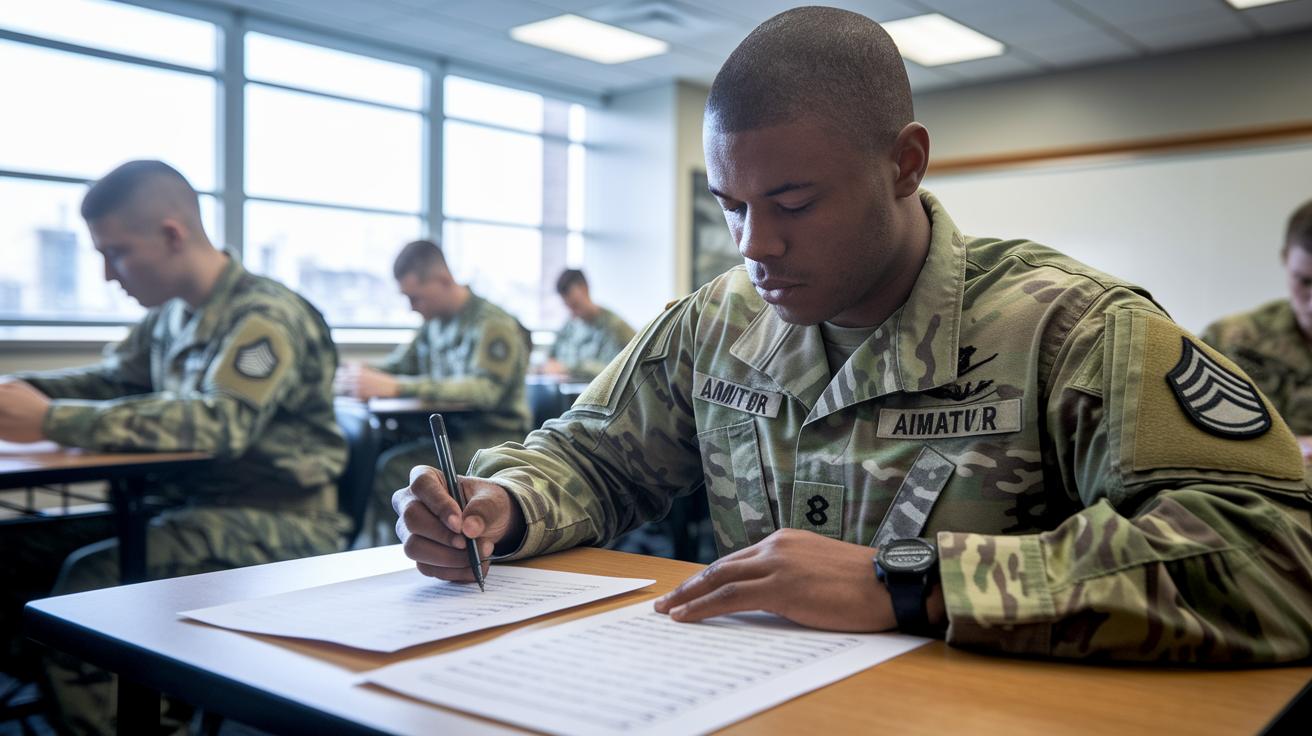
Military tests are set up to quickly show if you’re ready to tackle both tough physical tasks and challenging mental problems. There are two clear groups: aptitude tests and physical fitness checks. For example, the ASVAB (a test that measures skills like math and word knowledge) splits into nine parts. Fun fact: before joining, one recruit was amazed to learn that more than nine different tests could highlight his abilities.
The physical side is just as straightforward. Boot camp drills let you see how you stack up against branch-specific standards. Take the Army, for instance, a recruit needs at least 60 points in events like push-ups, sit-ups, and running. The Navy, Air Force, Marines, and Coast Guard run similar tests that look at your strength, endurance, and agility. This way, every service member is ready for training and the challenges on the field.
Both newcomers and experienced members follow these simple guidelines, which are all about being ready for the everyday demands of military life.
- Checks both your mental sharpness and physical stamina
- Uses boot camp drills as a way to filter candidates
- Keeps branch-specific standards high for operational readiness
Clear, straightforward testing standards help each branch pick the right candidate while keeping things fair for everyone who serves.
Cognitive Aptitude Testing Requirements: ASVAB and AFQT Criteria

The ASVAB is made up of nine parts. Each part is scored on a scale from 0 to 100. Your scores combine into overall scores that show your strengths and areas that might need some work. So, if arithmetic reasoning is your strong suit but you struggle a bit with paragraph comprehension, the scores will make that clear.
The AFQT (Armed Forces Qualification Test) pulls from four main areas: Word Knowledge, Paragraph Comprehension, Arithmetic Reasoning, and Mathematics Knowledge. You receive a percentile score between 1 and 99. In other words, this score tells you how you did compared to other recruits. Imagine scoring a 70, it means you did better than 70 out of every 100 candidates.
Your AFQT score is what decides if you can enlist, and it stays valid for two years. Tests are taken on computers at MEPS in a self-paced format, or at MET sites if you’re in a remote area. If you feel you need another try, you can retake the test after a 30-day wait.
- Clear scoring helps match your abilities with service requirements.
- The process supports both quick assessments and more detailed evaluations.
- The waiting period gives you time to prepare before giving it another shot.
Physical Fitness Testing Requirements for Military Readiness
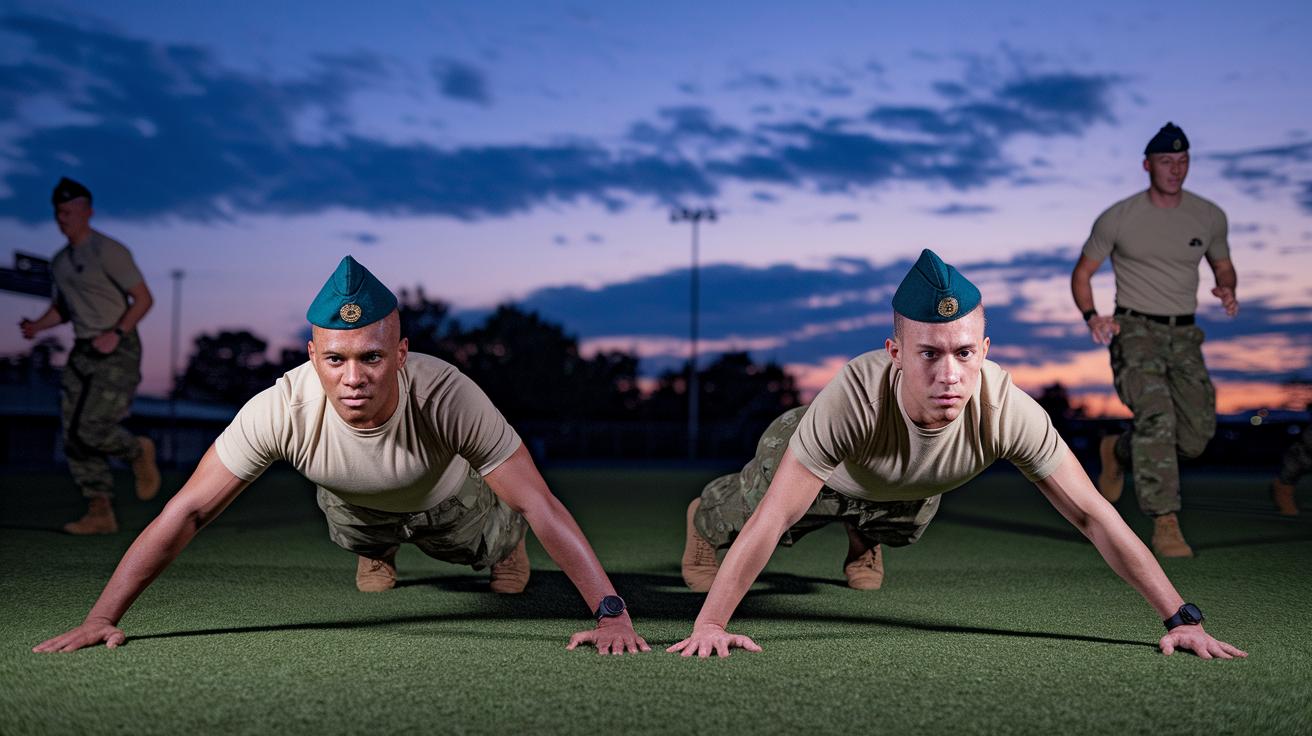
Let's break down what each branch expects during fitness tests. For the Army, recruits must earn at least 60 points on push-ups, sit-ups, and the run, which adds up to 180 out of 300 possible points. This test shows how you handle strength drills, like completing 30 push-ups to prove your power.
For the Navy, active duty members have options. You can choose between a 1.5-mile run or a 500-yard swim. But if you’re in boot camp, you're set on the 1.5-mile run to really test your endurance.
Since 2013, the Air Force has zeroed in on cardio, strength, and core stability. Their tests include exercises that mimic real field tasks, think timed circuits and stability drills that put your overall fitness to the test.
Below is a quick summary of each branch’s requirements:
- Army: 60 points per event, totaling 180 out of 300 points
- Navy: Boot camp requires a 1.5-mile run, while active duty offers a swim option
- Air Force: Emphasizes cardio, strength, and core stability with tasks like timed circuits
Test Scheduling, Retake Policies, and Career Exploration Programs

Recruiters set up your test appointments at MEPS for enlisted processing and at MET sites if you're applying remotely. If you need a refresher on the full scheduling and retake rules, just check out the Cognitive Aptitude Testing Requirements section. When it comes to retakes, you get your first chance after 30 days and a second try 30 days after that. I once booked my test at MEPS and had a solid plan ready in case I needed another go.
The Career Exploration Program (CEP) is completely free and is here to help you figure out what you enjoy and plan your future, whether in the military or civilian world. With simple tools like interest assessments, CEP helps you see which career paths best match your long-term goals. I used CEP myself and found the military role that really matched my skills and interests, setting me up for success after my service.
Key points:
- Recruiters handle test appointments at both MEPS and MET sites.
- There’s a 30-day wait before you can retake the test.
- CEP gives you free career guidance and interest assessments.
Branch-Specific Score Benchmarks and Qualification Criteria
Every branch in the military sets its own minimum scores so that each recruit can handle the job's demands. For example, the AFQT percentile can differ from one branch to another. One branch may require a higher percentile than another, so it’s important to compare your score to the specific branch’s benchmarks.
Your composite line scores are just as important. They're like pieces of a puzzle for jobs such as MOS, AFSC, or ratings placements (job roles). Even if your total score looks strong, you need to meet the number targets in key areas for the career you want.
Take the Army as an example. If you're checking its requirements, you'll want to know the minimum ASVAB score needed for enlistment. This clear data shows you where your strengths and weaknesses lie, helping you pick the branch that fits your profile and plan your future steps.
- Review your AFQT percentiles
- Compare your composite scores to each branch’s cutoffs
- Use this detailed info to make smart career choices
Matching your scores accurately is key in choosing your path and planning your military future.
Interpreting Military Test Results for Career Advancement
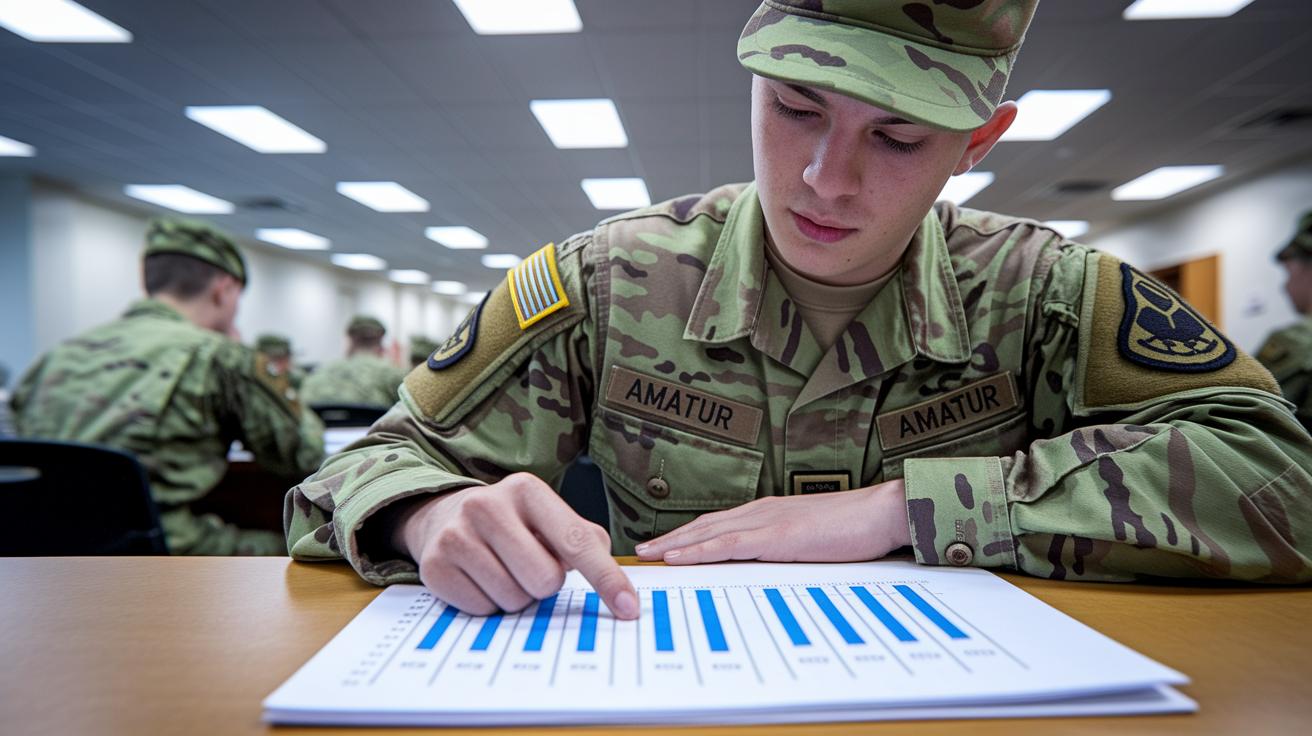
Military test scores show you exactly how ready you are and help you spot areas that need some extra focus. Standard scores and percentiles break down your strengths and weaknesses. For example, if you do really well in word knowledge and arithmetic reasoning but fall behind in paragraph comprehension, you know where to shoot for improvement, kind of like targeting a weak spot in a drill.
Composite scores also count a lot when it comes to qualifying for specialty schools, officer programs, or earning a promotion. Think of each composite score as a checkpoint, proving you’re ready to move forward in your career.
Looking at your test results lets you fine-tune your study and training methods. You can see how you perform over time and adjust your sessions just like you would plan a training cycle. This approach helps you measure your progress and stay on target. With the right data, you can align your efforts with your career goals and meet the high standards expected in service.
- Reflect on your percentile rankings
- Monitor composite score trends
- Adjust study practices based on data insights
Final Words
In the action, we covered how military testing requirements explained are designed to measure both physical fitness and mental sharpness. We broke down cognitive assessments like the ASVAB along with branch-specific physical evaluations and scheduling tips.
The post also outlined when to retake tests and how to interpret scores to guide career planning. Each section showed clear steps for meeting military test standards and advancing in your career. Stay focused, believe in your skills, and move forward with confidence.
FAQ
What do military testing requirements for females include?
Military testing for female recruits covers both cognitive and physical assessments. It involves taking exams like the ASVAB and meeting branch-specific fitness standards that verify preparedness for duty.
What are the Army testing requirements for both males and females?
Army testing combines aptitude exams with physical fitness evaluations. The fitness standards, which include push-ups, sit-ups, and timed runs, vary by age and gender to verify overall readiness.
How can an ASVAB practice test help?
An ASVAB practice exam builds familiarity with the test’s format and timing. It highlights areas for review, making you better prepared for the official exam.
What tests are required to join the military?
Military entry testing includes cognitive assessments like the ASVAB and physical fitness challenges. Both types determine if candidates are equipped with the mental and physical skills needed for service.
How does military testing work overall?
Military testing evaluates both mental aptitude and physical strength. Exams like the ASVAB measure cognitive skills, while fitness tests check endurance and ability to perform on active duty.
What score on the ASVAB qualifies as passing?
A passing ASVAB score depends on the standards set by each service branch. Generally, meeting the minimum AFQT percentile is required to qualify for enlistment.
What is the Army’s 2-mile run requirement?
The Army’s 2-mile run is part of its fitness test and must be completed within time limits that vary based on age and gender. This test measures your endurance for duty.