
Ever wonder if your knack for logical thinking could boost your military future? Military officer tests do more than assign a score. They show you your strengths and point out areas where a bit more practice might pay off. Think of each exam as a friendly mission briefing that helps match you with the role where you can truly excel. In this guide, we break down what these tests check for and explain why a clear score might be your ticket to real success on the field.
overview of military officer aptitude tests: fresh insights
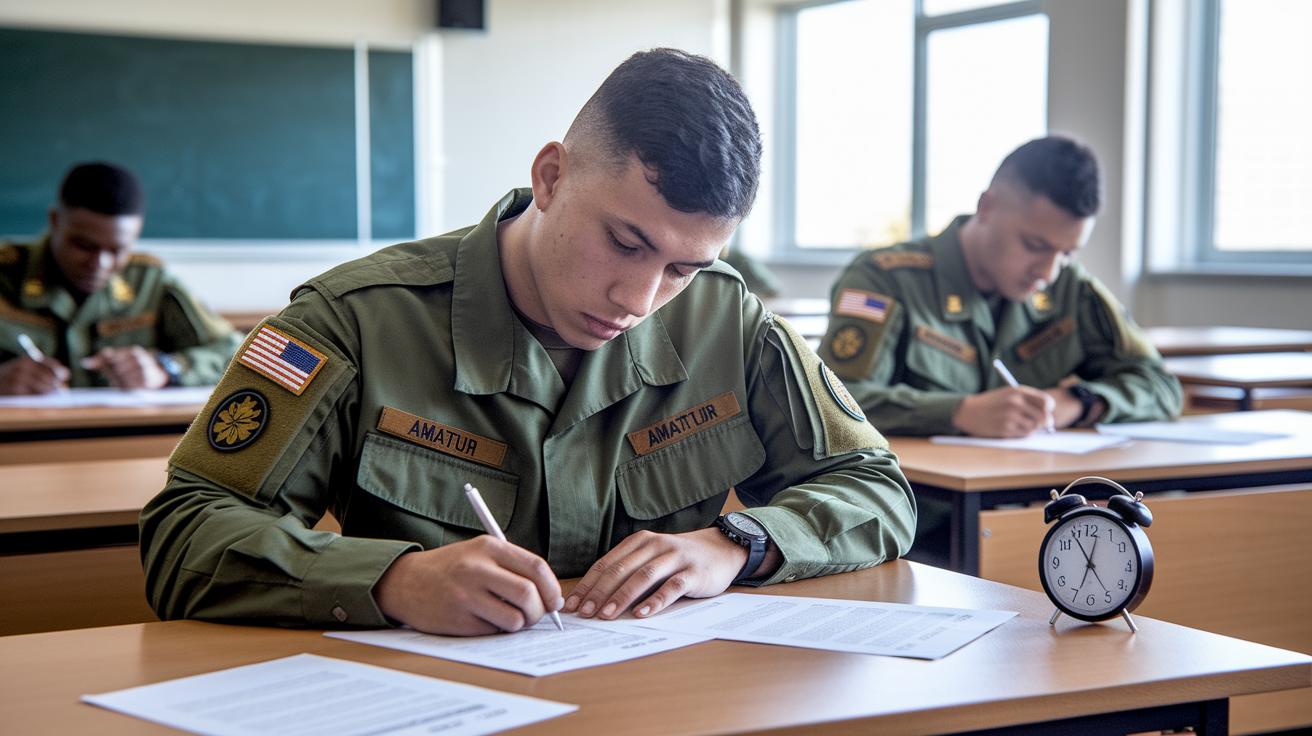
Military officer aptitude tests help decide if you’re suited for different officer roles by checking both your mental sharpness and technical know-how. They match your abilities with the right career path and help cut down on dropouts by predicting how well you might handle tough training. Tests like the ASVAB, AFOQT, ASTB, and OAR each shine a light on different strengths you might have.
When you’re gearing up for these tests, think of it like preparing for an important mission. Each exam shows you where you shine and where a bit more practice could help. For instance, consider this surprising tidbit: before she became a famous scientist, Marie Curie once carried test tubes of radioactive material in her pockets, unaware of the risks. It’s a reminder that even small habits and skills can say a lot about your potential.
Take the OAR subtest in the ASTB, for example. It checks your thinking skills across three main areas: a Math Skills Test (college math level), a Reading Comprehension Test with 20 questions in 30 minutes, and a Mechanical Comprehension Test based on high school physics. Scores range from 20 to 80, with most people landing between 40 and 60. Only a few hit above 60, so a high score is crucial if you’re aiming for competitive spots.
In the end, these tests ensure you’re placed in a role that fits your abilities best. For more details on how each exam is structured and scored, check out the military officer candidate test guide (linked above).
Breakdown of Popular Military Officer Aptitude Tests

The ASVAB is a well-known exam used by many branches. It breaks into eight parts that check a range of skills. Your General Technical score comes from mixing results in language (Word Knowledge and Paragraph Comprehension) and Arithmetic Reasoning. Think of it as a quick check on both how well you understand words and how you tackle math problems under pressure.
The AFOQT is designed especially for Air Force officer candidates. It has 12 timed sections that cover topics like verbal analogies, spatial awareness, and other language or reasoning challenges. There's also a Self-Description Inventory that isn’t scored but helps give a clear picture of your personality. Each part is built to mirror real-life situations you might face in training.
The ASTB exam, used by the Navy, Marine Corps, and Coast Guard, is divided into six parts. It tests your math skills, reading comprehension, mechanical understanding, and spatial perception, along with some basic aviation and nautical ideas. Picture yourself quickly looking over a diagram to grasp how a part works, this sort of challenge is exactly what the test is about.
Lastly, the OAR focuses on three main areas: the Math Skills Test, the Reading Comprehension Test, and the Mechanical Comprehension Test. For example, you might need to calculate the net salary after a 25% deduction from a gross amount. Each test has its own set of time limits and rules, ensuring that every candidate is judged fairly and consistently.
Eligibility and Candidate Screening Criteria for Officer Aptitude Tests

If you're looking to take these tests, here's what you need to know. You must be between 19 and 35 years old and have a bachelor's degree. This rule shows you’re ready and have the experience needed for demanding military roles.
You can take each exam up to three times. Just keep in mind, there's a 31-day wait between tests. For example, if you take a test on the 1st, plan on retaking it no sooner than the 2nd of the following month. This gives you a breather to review your mistakes and come back stronger.
Different service branches might add their own requirements. Aviation roles, for instance, need you to complete the full ASTB-E battery (a set of tests designed to measure your mechanical and spatial skills). Non-aviation roles typically only need the OAR test. The extra step for aviation helps ensure that only those with the right skills move forward.
Key candidate screening criteria include:
- Being between 19 and 35 years old.
- Holding a bachelor’s degree.
- A limit of three exam attempts with a 31-day wait between them.
- Aviation roles requiring the ASTB-E battery.
- Scores remaining valid until you decide to retake the exam.
Test Format and Administration Protocols in Officer Aptitude Evaluations
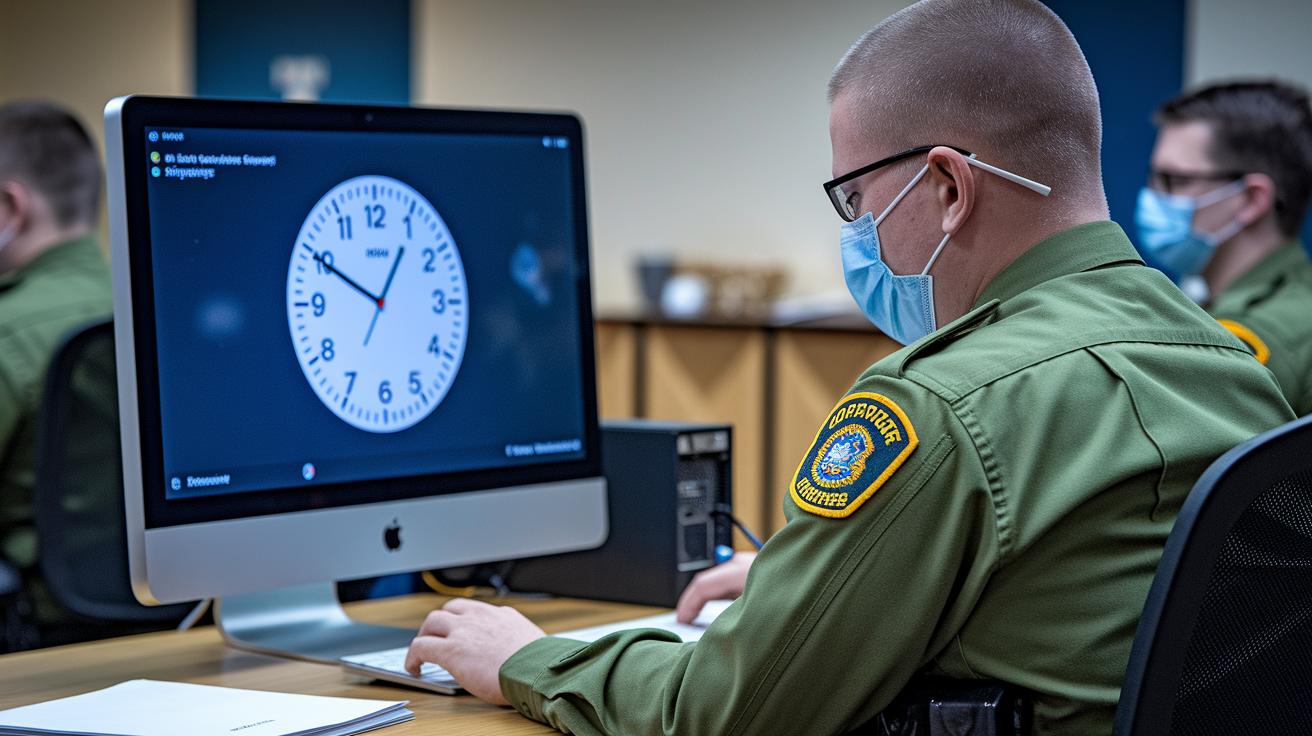
Tests come in two main types: computer-based tests (CBT) and paper tests. Many officer exams lean on CBT because it’s fast and scores you right away. For example, the reading subtest has a strict 30-minute timer, putting you under pressure just like you’d feel in the field.
The OAR exam is a bit different since it’s free for everyone, whether you’re a civilian or enlisted. It’s closely watched at military bases or approved test centers, keeping the testing ground fair and even. Picture a practice test where every second counts, similar to a tight drill.
AFOQT sessions follow clear Air Force rules with set appointment times so that every candidate gets a fair shot. Meanwhile, ASTB-E tests can sometimes be run in groups, just like real team exercises during training. Taking a test with your peers lets you feel the teamwork essential in our line of duty.
Every subtest has its own strict time limit, making time management a must-have skill. The controlled setup and clear rules ensure that every candidate is tested in a fair, standardized way. This organized approach, with its set timing and secure supervision, mirrors the discipline we rely on in the field. Absolutely essential.
Scoring Guidelines and Result Interpretation for Officer Aptitude Tests

Your test scores decide if you're eligible and help place you in the right career path. Take the OAR, for example. It uses a scale from 20 to 80, and most scores fall between 40 and 60. A score of 50 or above puts you in the competitive range, kind of like hitting a key target in a practice drill.
The ASVAB General Technical is shown as a percentile, giving you a quick look at how you stacked up against your peers. Then there are the AFOQT and ASTB. The AFOQT gives standard scores for specific skills, while the ASTB shows both composite scores and percentiles for areas like math, reading, mechanics, and spatial tasks.
For all the specific details, check out each test’s breakdown section. That way, you can get all the info you need without repeating anything here.
Core Skills and Aptitude Evaluation Criteria Assessed by Officer Tests

In this section, we show how each subtest ties into real military tasks. Each skill you learn is directly used in everyday field operations.
The Math Skills Test (MST) helps you practice quick, accurate math, just like when you calculate artillery paths or plan supply routes during a mission. For example, solving a simple algebra problem is similar to figuring out how many supplies you need in a drill.
The Reading Comprehension Test (RCT) does more than checking your reading skills. It trains you to quickly understand orders and technical memos, much like picking out key details in a briefing. Think of it as reading a note and instantly catching the important points, just as you would on the field.
The Mechanical Comprehension Test (MCT) measures your ability to solve problems with military equipment. Imagine studying a technical drawing and then quickly fixing a vehicle issue during a routine equipment check.
Spatial awareness is also important, especially for roles in aviation or armored units where you need to see layouts in your mind. Being able to rotate shapes in your head can be crucial when placing your team or equipment on a map.
| Subtest | Real-World Military Task |
|---|---|
| Math Skills Test | Calculating trajectories and planning supply routes |
| Reading Comprehension Test | Understanding tactical orders and technical memos |
| Mechanical Comprehension Test | Fixing equipment issues and reading schematics |
| Spatial Awareness | Planning movement and visualizing maps |
- MST is all about smart field calculations.
- RCT helps you quickly pick out important details from orders.
- MCT shows you how to troubleshoot equipment on the fly.
- Spatial awareness tests boost your skill in planning movements on the ground and in the air.
Sample Test Items and Analytical Reasoning Measurement in Officer Tests
This section talks about smart ways to handle test questions. Instead of reusing old examples, we focus on breaking tasks into small, clear steps. For questions like finding net salary or solving algebra, list what you know first. Then, follow a clear, step-by-step plan to solve them. One recruit even jotted down key numbers on scraps of paper before a tough drill, saving time when it mattered most.
Some common mistakes are missing the main idea in a reading or rushing through math steps. When you face a reading passage, try to mark essential words to capture the core message. For instance, underlining hints about the main idea can help you do better on follow-up questions.
It really helps to have a mental checklist. Here’s an example:
| Cognitive Strategy | Example |
|---|---|
| Step-by-step breakdown | “For an equation like 2x+5=17, isolate x carefully.” |
| Visualization | “Mentally rotate shapes to see how a map icon fits into a tactical layout.” |
When dealing with problems that need mechanical reasoning, a quick diagram can be a lifesaver. Drawing a simple lever, for example, lets you see force points and calculate the mechanical advantage better. A handy tip is to sketch the object and label its parts before doing your math.
Plan your approach before answering. Use diagrams whenever you can for spatial or mechanical tasks. And don’t forget to mark key words in reading sections so the main idea stays clear.
Test Preparation Strategies and Study Resources for Officer Aptitude Exams
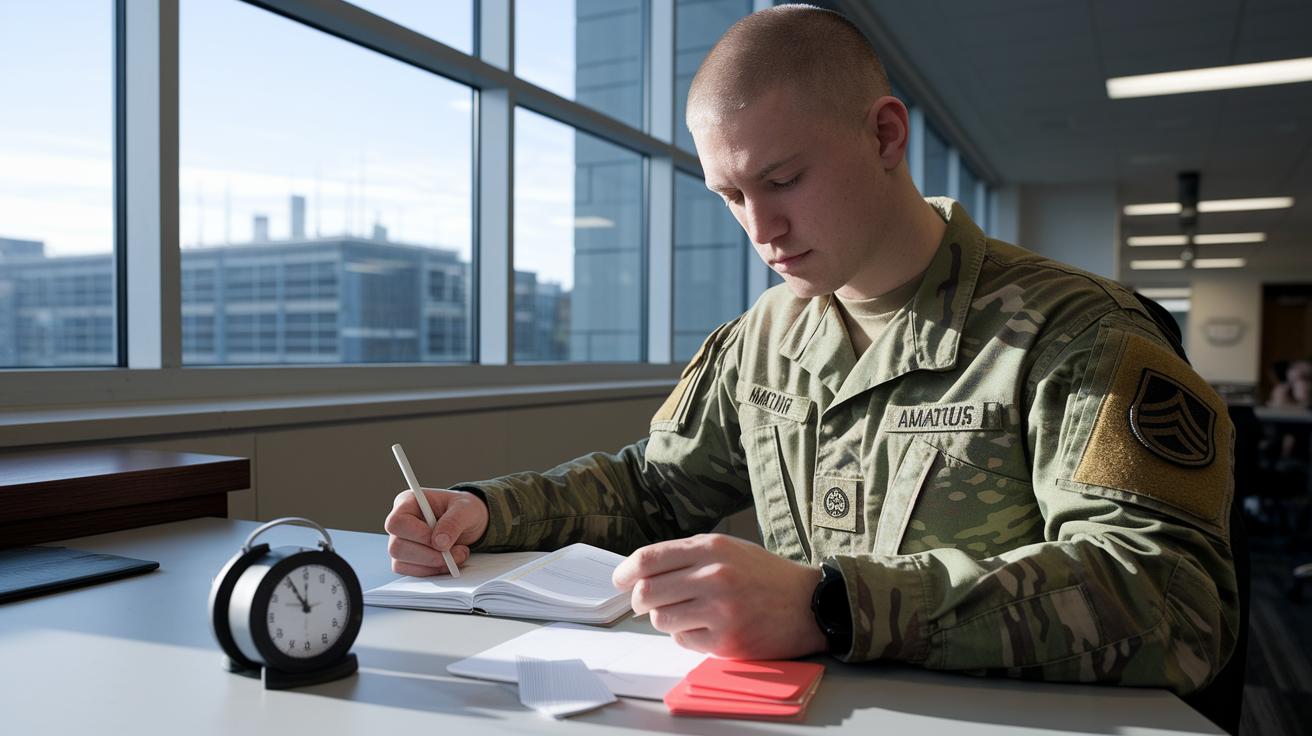
Managing your time is the first step in getting ready for officer aptitude exams. One smart trick is doing timed practice tests. It helps you get used to working quickly, just like during a fast-paced mission briefing. For every practice round, try a 20-question, 30-minute reading segment. This way, you get a feel for the pressure and can check your understanding before moving on.
Flashcards are a great tool for remembering important terms and formulas. They work especially well during short breaks between sessions. Ever flipped through a deck while waiting for your next drill? It’s a perfect time to review key math and physics ideas and make them less intimidating.
Instructional videos can also lend a hand. They give you a clear view and sound-by-sound explanation of steps, much like watching an instructor work through a problem on a chalkboard. Seeing all the steps in action can change complex topics into easy-to-follow steps.
Another key part of your routine is setting up a clear study plan. Breaking your studies into small, manageable parts helps you track progress. Think about using a study calendar where you set daily goals, add in rest breaks, and mark regular checkpoints. Need ideas? Try out a step-by-step guide for military test preparation and see how it fits.
Lastly, keeping both your mind and body in top shape makes a big difference. Short workouts, good sleep, and quick moments of relaxation can boost focus over long study days. Remember, you get up to three tries to pass the test, with a 31-day wait between each attempt. Stick to this plan, and you’re set to meet the challenges of officer aptitude exams head-on.
Historical Evolution and Modern Advancements in Officer Aptitude Testing
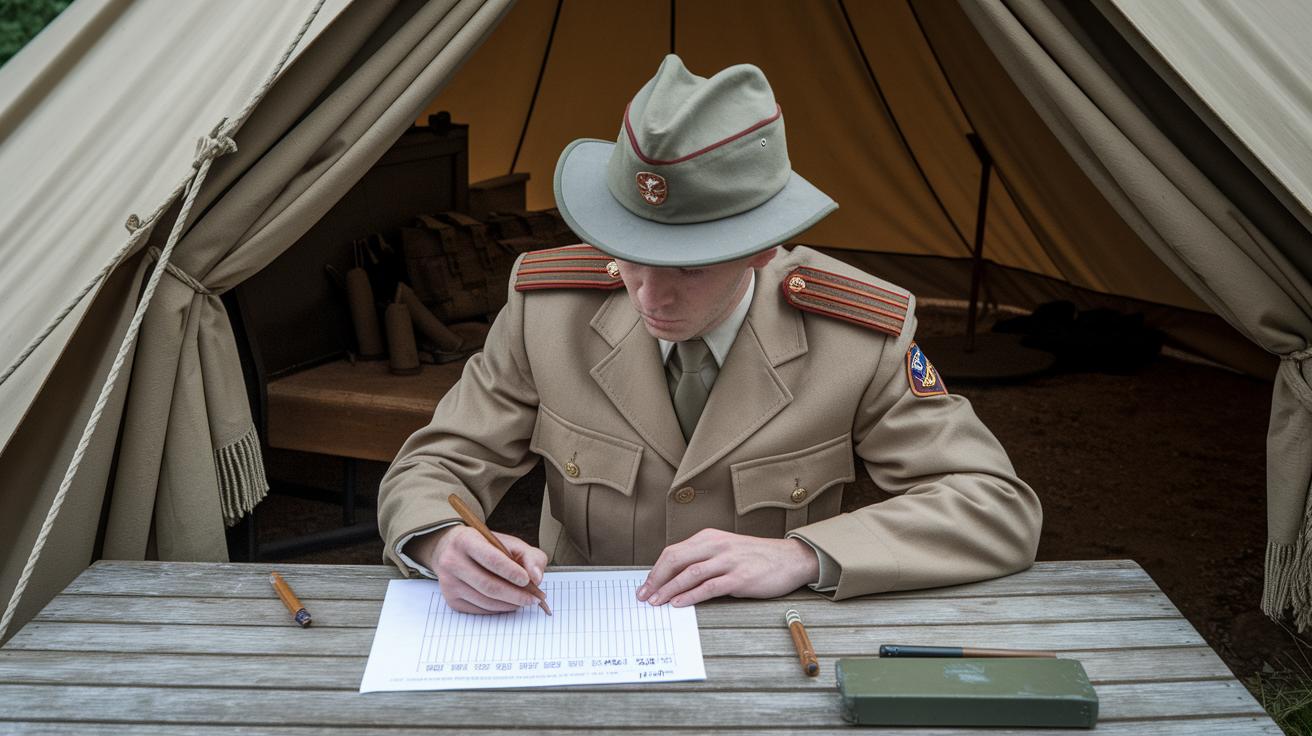
Officer aptitude testing has changed a lot since its early days. During World War II, the ASTB was created to check if a recruit had the skills needed for military service. Picture a recruit in a busy tent, working on a paper test with strict time limits. That was everyday life back then.
In the 1950s, the USAF introduced the AFOQT to help choose officer candidates. This test provided clear evaluations that matched a recruit's potential to military demands. Later, as military roles grew more complex, the OAR was developed to hone in on aviation skills. It focused on math, reading, and mechanical know-how, much like checking key gears before a flight.
As time went on, technology completely reshaped these tests. Early paper tests slowly gave way to computer-based exams. A big change came in the 2000s with the ASVAB, which not only sped up scoring but also brought in new ideas to keep the tests fair.
Today, adaptive testing is leading the way. These tests change the questions depending on your performance, which means every assessment is a unique challenge. It’s a clear sign of the military’s commitment to using modern tools that evolve alongside technology and the shifting needs of defense.
Future Trends and Innovations in Officer Aptitude Evaluation

New testing tools are coming that will change how we check officer skills. One big trend is AI-powered adaptive testing. Picture a test that changes its questions based on your answers, like a drill instructor who notices your strengths. This clever system makes sure every candidate gets a test that really shows what they can do.
Biometric tracking is another rising feature. Sensors might check your pulse and focus during the test, giving hints about stress levels. For example, a quick rise in your heart rate could be a sign to work on managing your time better.
Then there’s virtual reality training. Imagine practicing in a VR world where you navigate through simulated field exercises. These tasks help make the test feel more real by mimicking decisions you might face in tight spaces.
Predictive data analytics and remote proctoring are also making headway. They team up to spot patterns in your answers and keep the testing environment fair, even if you’re not at a physical testing center.
Ongoing research in test fairness keeps refining these methods, promising assessments that are both just and smart enough to score with accuracy.
Final Words
In the action, we explored the core purpose of officer aptitude tests. We examined exam structures, eligibility criteria, test formats, and scoring systems, along with sample questions and practical study strategies.
We also looked at how these tests have evolved and what new tools might be on the horizon. With this overview of military officer aptitude tests, your readiness and confidence get a solid boost. Keep marching ahead and tackle your test preparation with determination.
FAQ
What is the overview of military officer aptitude tests free?
The overview of military officer aptitude tests free explains that exams like ASVAB, AFOQT, ASTB, and OAR measure abilities in math, reading, and technical skills to guide officer selections without cost.
What does the ASVAB practice test offer?
The ASVAB practice test offers a simulation of real exam conditions, helping you review skills like arithmetic reasoning and word knowledge to boost confidence and readiness for your military career.
What is the Officer Aptitude Rating Study Guide PDF and how can it help?
The Officer Aptitude Rating Study Guide PDF provides a focused review of key topics such as math, reading, and mechanics, helping you familiarize yourself with the exam format and improve your test performance.
What is the Officer Aptitude Rating Test and what do its scores mean?
The Officer Aptitude Rating Test measures critical cognitive skills through subtests in math, reading, and mechanics. Scores range from 20 to 80, with competitive roles often requiring scores near or above 50, and practice tests help sharpen proficiency.
What does the ASVAB test for the Army assess?
The ASVAB test for the Army assesses various abilities like arithmetic reasoning and verbal skills to determine your qualification for different Army roles and career fields.
What is the aptitude test for military officers?
The aptitude test for military officers includes exams such as ASVAB, AFOQT, ASTB, and OAR, all designed to evaluate essential cognitive and technical skills necessary for officer roles.
Is a 70 a high ASVAB score?
A 70 on the ASVAB is considered above average. It reflects strong performance, often opening up more career options within the military since scores are reported as percentiles based on comparisons with peers.
How do I prepare for the military aptitude test?
To prepare for the military aptitude test, schedule practice exams, review foundational subjects like math and reading, and use study guides and flashcards to build knowledge and test-taking skills.
What are the 10 tests on the ASVAB?
The ASVAB comprises 10 subtests that cover topics such as arithmetic reasoning, word knowledge, paragraph comprehension, mathematics, electronics, auto mechanics, mechanical comprehension, and more, collectively evaluating diverse aptitudes.