
Have you ever thought a few simple moves could change your entire training session? Picture getting ready like you're heading into an important mission, where every stretch and lunge sets your body up for action. In this post, we break down a warm-up routine that wakes your muscles and prepares you for tough work, all while cutting down your risk of injury. Think of it as your game plan for a safer, more effective workout. Ready to boost your training?
Complete Soldier Warm-Up Routine for Training Sessions

Start your session with a dynamic warm-up to get your blood rushing and help lower your risk of injury. This Army-approved routine wakes up several muscle groups so you’re ready for intense work.
Begin with a brisk set of Bend & Reach for 10 reps. This move fires up your shoulders and upper back. Imagine it like preparing for a tough mission, you stretch out any tension before you load up on heavy gear.
Next, hit the Rear Lunge with 8 reps per side. This exercise targets your hips and quads, making sure your legs are ready for action. After that, move on to 10 reps of High Jumper, which works your calves and hip flexors.
Now, do the Squat Bender for 10 reps to get your glutes and hamstrings fired up. This sets a strong foundation for the exercises that follow.
Switch to the Windmill exercise next, doing 8 reps per side. This drill has your core and hamstrings working together to boost overall flexibility. Then, perform the Forward Lunge using a precise 6-inch heel landing for 8 reps per side. It builds your quads and glutes while enhancing balance and coordination. Follow up with 10 reps of the Prone Row to strengthen your upper back and improve stability.
Work on your obliques with 10 reps of Bent-Leg Body Twist on each side, and then use the Rower for another 10 reps to sharpen your mid-back and shoulder foundation. Finally, wrap up with 10 classic push-ups to target your chest and triceps. If standard push-ups are too tricky, feel free to switch to knee-supported push-ups.
Every step in this full-body routine is designed to boost mobility and activate your muscles. These exercises, which are commonly used in troop mobility drills and strength sequences, can be adjusted based on your training needs. And remember, it’s always a good idea to work under the guidance of a certified strength and conditioning specialist (CSCS®) who might even bring some Navy SEAL experience to the table.
Dynamic vs Static Soldier Warm-Up Techniques

Dynamic warm-ups are the go-to when you're gearing up for a mission. They fire up your muscles and get your heart rate climbing. This means more blood flowing and better coordination between your nerves and muscles (neuromuscular coordination: simply, how well your nerves and muscles work together). Picture yourself stepping out onto the field, swinging your arms, kicking your legs, and twisting your torso, each move echoing the real actions you'll need in the field.
Static stretching, in contrast, means holding one position for over 30 seconds. While it can boost your flexibility, research shows it might actually sap some of your power right before you hit a hard workout. Imagine stretching deeply and then suddenly feeling like you’ve lost the spring in your step. That’s why your training guides often favor dynamic drills over long, held stretches when you're about to jump into high-intensity work.
Dynamic stretches kick your muscles into gear, offering quick activation that sets you up for explosive power. They prepare your mind and body for action, which is key in combat scenarios and tough training sessions. So, if you want to be alert, agile, and ready for any challenge, choosing dynamic warm-ups is the smart move.
Soldier Warm-Up Exercise Chart for Training Sessions

This chart shows you specific exercises that get your key muscle groups ready for a busy training session. Every move targets parts like your shoulders, hips, core, and legs to fire them up quickly, just like a real combat warm-up. Think of this chart as your go-to guide for setting up a preactivity circuit. It tells you which exercise works which muscle and even gives you easier options if you need to start slow.
Take the Bend & Reach, for example. It wakes up your shoulders and upper back so you’re ready for more moves. If that feels too tough, try doing half-depth arm swings first. Then there’s the Rear Lunge and High Jumper, which build strength in your hips, quads, and calves. Not feeling 100%? Use a knee-supported step-back or do marching hops to ease into it. Moves like the Squat Bender and Windmill boost your lower body and core strength, with choices like a shallow squat or reduced arm circles to help adjust the intensity.
| Exercise | Target Muscles | Modification |
|---|---|---|
| Bend & Reach | Shoulders, Upper Back | Half-depth arm swings |
| Rear Lunge | Hips, Quads | Knee-supported step-back |
| High Jumper | Calves, Hip Flexors | Marching hops |
| Squat Bender | Glutes, Hamstrings | Shallow squat only |
| Windmill | Core, Hamstrings | Reduced arm circles |
| Forward Lunge | Quads, Glutes | Static split stance |
| Prone Row | Upper Back, Lats | Elbow lifts only |
| Bent-Leg Body Twist | Obliques | Seated twist |
| Rower | Mid Back, Shoulders | Semi-prone pulls |
| Push-Up | Chest, Triceps | Knee-supported push-ups |
Use this series of exercises to build a routine that wakes up your muscles and gets you ready for any challenge your training might bring.
Safety Tips and Modifications for Soldier Warm-Up Routines

Let's gear up smartly to cut down injuries. Whether you're new or a seasoned soldier, these easy tweaks build on your regular warm-up.
-
Start slow with gentle joint circles and short movements. Jumping into big actions too quickly can strain your muscles early on.
-
Keep your pace steady and breathe deeply. Don’t rush your breaths. Think of it like keeping a smooth drumbeat during a mission.
-
Slowly widen your movements. Experts say this gradual stretch helps avoid sudden muscle strains.
-
Use support if you feel stiff. Beginners, try leaning on a wall; veterans, add resistance bands into the mix. For a quick guide, check out a resistance band routine at https://militaryaptitudetests.com?p=2220.
-
Increase repeats and resistance little by little. Overdoing it may tire you out before the real work starts, so steady progress is key.
Benefits of Soldier Warm-Up Routines for Training Performance
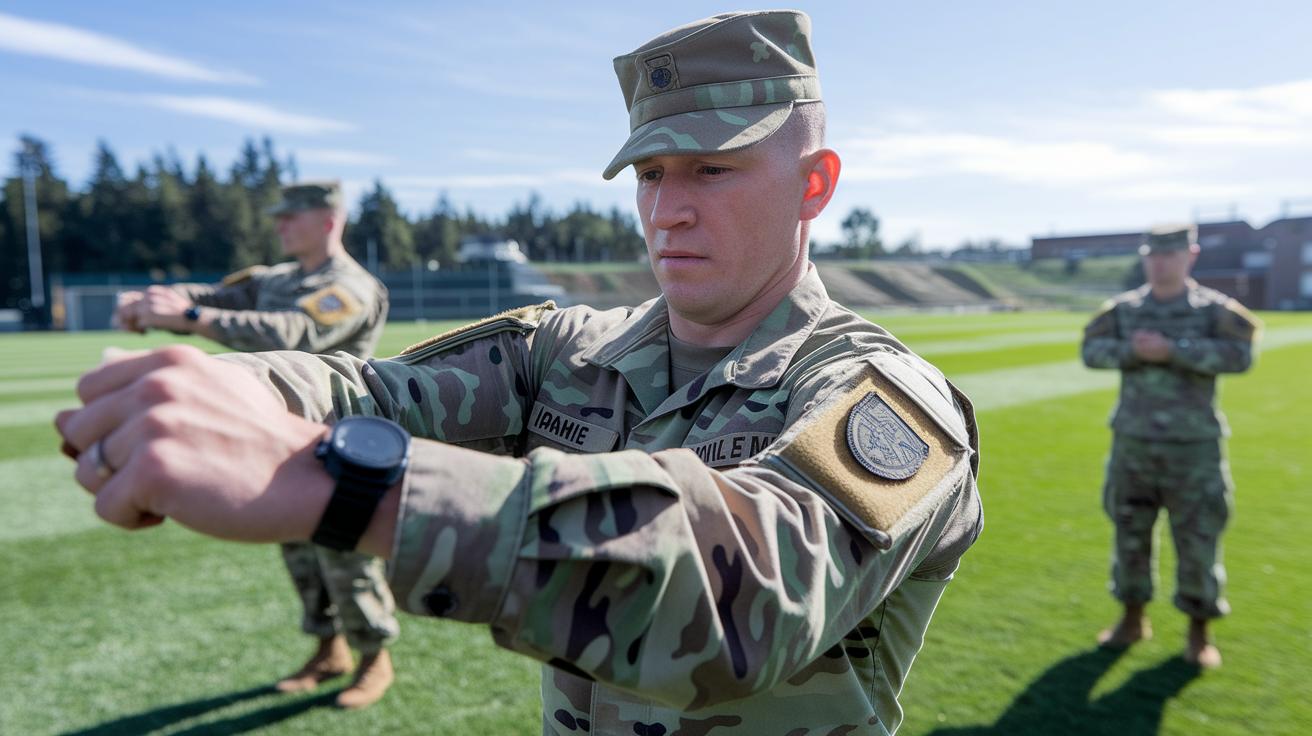
Soldier warm-up routines do more than loosen your muscles, they set you up for a strong training session by building both body and mind. These routines get your blood pumping with motions like arm swings and leg kicks, getting you ready to work hard while keeping you safe. Each move helps boost your physical readiness, making sure you're prepared to move quickly when it counts.
Dynamic warm-ups pump extra oxygen to your muscles, cutting down your risk of strains and pulls. This means you'll feel less stiffness during strength drills and perform better during endurance workouts. Your heart and muscles work together in a smooth, coordinated way, kind of like a well-run mission debrief where every move matters.
Taking part in these performance-boosting routines is an investment in long-term readiness. Every movement simulates stress, much like the challenges you might face on the field, which not only protects you during training but also sharpens your mental focus. This clear-headed state is essential when things heat up. Simply put, soldier warm-up routines keep you flexible, lower your risk of injury, and help you train smarter so you can push your limits safely.
Soldier Warm-Up Routines for Training: Energize Your Regimen

A quick 10-minute warm-up is a must if you want to train well. Slot it into your day so your muscles are ready for strength workouts, ruck marches, or obstacle drills.
Timing and Scheduling of Warm-Ups
Starting your morning with a burst of movement can really wake you up. A brisk 5-minute jog outside sharpens your focus and gets your body charged. Later in the day, a shorter session can help fight off tiredness during long missions.
Mix your warm-up to match your training stage:
| Training Phase | Frequency | Focus |
|---|---|---|
| Basic Training | Daily | Full-body dynamic moves |
| Maintenance | 3x Weekly | Quick mobilization drills |
| Mission Prep | As Needed | Pre-march warm-up mimicking load challenges |
Adjust the intensity and duration based on your current training needs to keep each session sharp and effective.
Final Words
In the action, we broke down a complete warm-up routine that ramps up your muscles, boosts blood flow, and builds readiness before heavy training. This guide covered key dynamic exercises, muscle-targeting drills, and important safety modifications to help you perform at your best. It also detailed how to mix these steps into your daily training cycle, ensuring steady progress and sharper focus. Keep practicing these soldier warm-up routines for training to build confidence and reach your full potential.
FAQ
Soldier warm up routines for training youtube
Soldier warm-up routines for training on YouTube offer clear video guides that walk you through dynamic drills. These routines show you how to activate muscles and boost readiness before the main workout.
Where can I find free, downloadable soldier warm up routines in PDF format?
Free PDFs for soldier warm-up routines are available online. They detail full-body activation drills with rep counts and modifications to help reduce injury and improve training performance.
Where can I get an ordered list of military warm up exercises, drills, stretches, and PT routines?
An ordered list of military warm-up exercises and drills is available on many fitness sites. These guides provide step-by-step sequences and modifications to help you prep efficiently for training.
What is the 5 4 3 2 1 training method?
The 5 4 3 2 1 training method uses a descending rep scheme, guiding you through different exercises by reducing counts. This approach helps maintain focus and varying intensity during the session.
What are the 5 warm-up exercises?
The five warm-up exercises usually include dynamic moves like arm swings, leg kicks, torso rotations, high knees, and butt kicks. These exercises raise your heart rate and prepare your muscles for training.
What is the 3-3-3 rule for workout?
The 3-3-3 rule for workouts splits your routine into three equal parts. This simple rule helps balance exercise, ensuring each segment targets key muscles for full-body engagement.
What is the 6 12 25 rule?
The 6 12 25 rule organizes exercises into sets of six, twelve, and twenty-five reps. This method helps you manage work intensity and volume, maintaining steady progress throughout your workout.