
Have you ever wondered why some test-takers seem to shine more than others? It might be because they stick to a clear study schedule.
A solid plan helps you cover each topic step by step so you won’t be scrambling at the end. Think of it like planning a mission, each step builds on the last, boosting your skills and confidence.
In this article, you’ll learn how setting up a realistic timeline can close your knowledge gaps and leave you ready to ace exam day.
Comprehensive Military Exam Study Timeline Overview

A clear roadmap is like your mission plan. It lays out what to study and when so you can focus on building strong skills for the ASVAB (a test that checks your verbal, math, science, and technical abilities). Starting early helps you avoid the stress of cramming at the last minute. Think of it like a step-by-step guide that helps you fill in any gaps in your knowledge using reliable resources like full-length practice exams. This way, you build a true understanding of concepts instead of just memorizing facts, getting you ready for any surprise questions on exam day.
Below is a simple schedule that breaks your study plan into manageable steps:
| Timeframe | Key Activities |
|---|---|
| One month before | Take a baseline practice exam and review your scores |
| Two weeks before | Retake the exam and see where you’ve improved |
| One week before | Focus on reviewing your weakest areas |
| One day before | Do a quick review and practice relaxation techniques |
This timetable is built to guide you from the start to test day, helping track your progress and adjust your focus along the way. Feel free to tweak it to match your own pace or the date of your exam. If some parts seem tougher than others, spend a little extra time on them. This method helps you manage your study sessions effectively while keeping you relaxed and confident for test day.
Breaking Down Exam Subjects into Focused Study Modules

Start off by taking a practice test to see where your strengths and weaknesses lie. This quick check helps you decide how much time to spend on each subject and sets a clear path for your studying.
When you work on Word Knowledge, focus on vocabulary tricks. Try exercises that ask you to choose the best word in context. For example, consider the sentence, "The sergeant’s clear and precise orders ensured the unit moved in perfect formation." This builds a strong foundation in the language used on the field.
For Arithmetic Reasoning, work on word problems that feel like real-life situations. Picture figuring out supplies or distances, like deciding how to use limited fuel to cover a set distance. This kind of practice helps you think clearly, even when the pressure is on.
When it comes to Mathematics Knowledge, review key formulas and drill them until they stick. Ask yourself questions like, "What is the speed if a troop covers 60 miles in 2 hours?" Repeating these drills sharpens your quick problem-solving skills.
For Electronics Information, focus on the basics by answering short quiz-style questions. Simple, clear-cut questions help cement your understanding of the technical details.
With Mechanical Comprehension, get hands-on with physics ideas and sketch out diagrams. Drawing examples of forces in action helps you see and understand how things move.
Some tests might also include General Science. In that case, review the core principles and tackle a few concise practice questions. Keep an eye on your progress and adjust your study time for each area as needed.
Scheduling Templates and Tools for Military Exam Prep
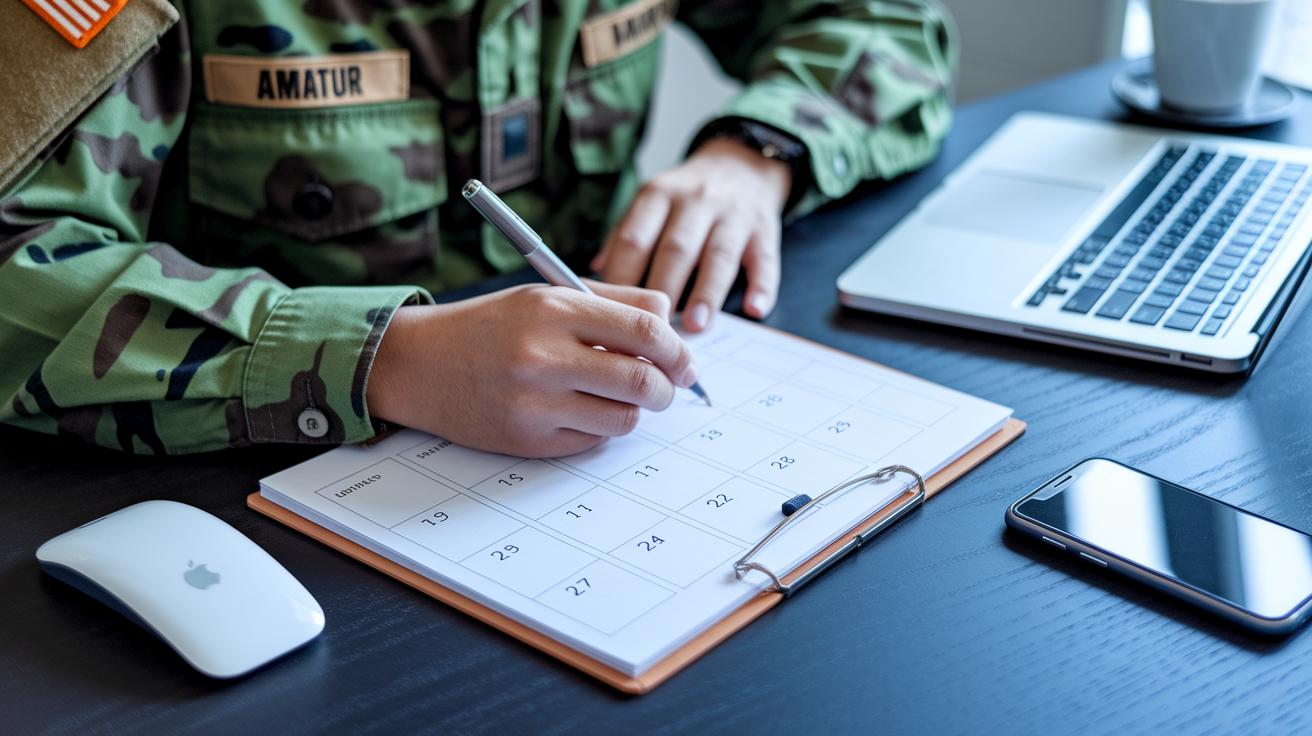
When you plan your study time with ready-made schedules, you ease your stress and keep your exam prep on track. Whether you use a weekly planner or a daily checklist, a regular routine helps you avoid last-minute cramming. Visual calendars and digital apps send timely reminders, so you never forget your study sessions even when you're on the move.
Weekly Prep Planner
Picture a simple 7-day plan. Each evening, pick one subject to focus on. For example, Monday could be all about vocabulary and verbal drills, while Tuesday might be your arithmetic or science review day. Save weekends for deeper dives into harder topics. A steady weekly routine makes sure you balance review and practice, so your progress stays clear and steady.
Daily Regimented Routine
Imagine a day divided into four focused blocks. Start your morning by refreshing key ideas when your mind is sharp. At midday, challenge yourself with practical problems to put your learning into action. After lunch, spend a few minutes with flashcards or quick drills to keep those facts fresh. Wrap up your day with an evening summary that ties everything together and sets up your focus for tomorrow.
You can choose digital tools like Google Calendar or Trello, or stick with a trusty paper planner, whatever fits your style best. Mixing both methods can give you the balanced system you need to keep every study block organized and on target.
Balancing Military Duties and Personal Commitments with Study
Many service members know what it’s like to have a packed day. With training, duty shifts, and family time all thrown into the mix, finding time to study can feel like a real challenge. But short, focused review sessions can make a big difference, even on your busiest days.
Try breaking your study time into small, steady blocks. Even if you only have 30 minutes before or after your shift, those minutes count. Think of each session as a small drill that boosts your memory and keeps you on track without burning you out.
Here are some practical tips to fit study into your hectic schedule:
- Carve out 30-minute review slots around your duty schedule.
- Plan backup study sessions for those unexpected shifts.
- Use micro-study breaks, quick flashcards or quizzes can work wonders.
- Sync study blocks with off-duty periods, like quiet weekend mornings.
- Coordinate with your family to find study times that work for everyone.
Remember, flexibility is the key here. Your study plan should move with your duty hours and personal life. When you stay adaptable, you can steadily progress in your studies while still handling all your other responsibilities. This approach helps you build a system that supports both your educational goals and your daily military duties, keeping you prepared and confident when exam day comes around.
Time Management Techniques to Boost Study Efficiency
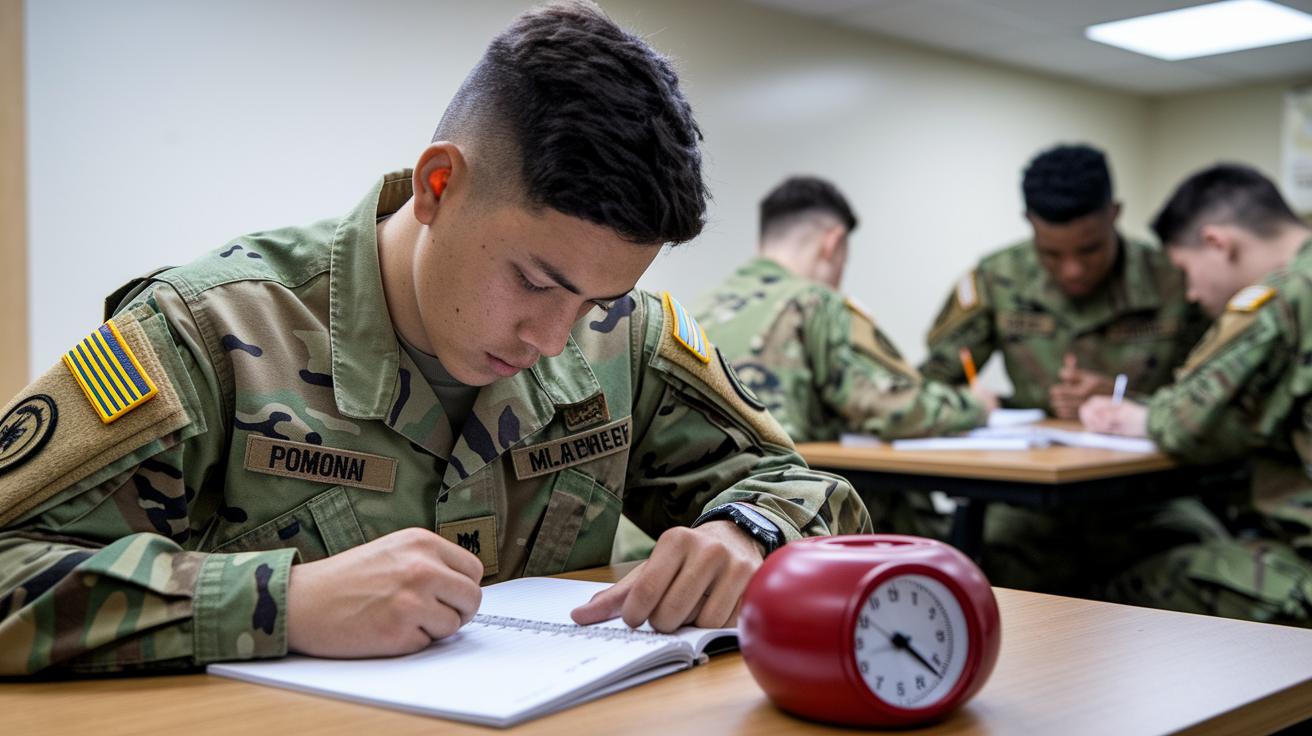
Distractions can really mess with your focus and skyrocket stress, especially when exam time is near. A messy schedule makes it tough to stay on target, and putting things off only means you'll be scrambling when the test day comes. Starting your studies early and sticking to a routine can help ease your anxiety and cut through the chaos of your military duties.
Try using Pomodoro cycles to keep your focus strong. Break your day into study sessions by subtest with set start and end times. At the end of each day, take just five minutes to review your progress, you’d be surprised how much that small habit helps. And keeping a habit-tracking journal can boost your consistency, too.
Playing around with these techniques can really help you find a study rhythm that fits your military schedule. If you’re dealing with sudden duty shifts or packed schedules, adjusting these methods can keep you on track without adding extra stress. Keep tweaking your time blocks and review periods until you land on a system that feels right for you.
Tracking Milestones and Adjusting Your Study Roadmap

Setting clear checkpoints can really change the game. When you build in regular milestones, you catch weak spots in your study plan before they pile up. Try this: after finishing two study modules, take a quick practice test. This lets you see exactly where you stand. Then, look over your test scores closely to see which areas need extra work. Imagine you’ve just finished a couple of modules and ask yourself, “Did I improve?” This simple weekly routine, test, score review, and fine-tuning your next study steps, keeps your plan sharp and on track.
Using tools to log your progress can boost these benefits even more. You might use a Google Sheets template or apps like Notion and Evernote to record your scores over time. These tools show score trends and help you decide when to adjust your study blocks. For more detailed tactics, check out a step-by-step military test preparation guide (a clear, organized plan to help you get ready). This data-driven approach not only tells you how ready you are but also helps you rebalance your study sessions. Rely on these checkpoints to fine-tune your timeline and keep your focus where it counts, driving you closer to exam success.
Final Words
In the action, we broke down a clear study plan that covers every step, from initial practice tests to targeted review sessions. The guide explained breaking down exam subjects into focused modules and setting up a daily and weekly plan. It showed how to balance military duties with study time and sharpen focus with time management techniques.
Remember, using a solid military exam study timeline and scheduling strategies can give you a real edge. Keep refining your plan and stay positive as you push toward success.
FAQ
How long to study for ASVAB Reddit
The discussion on Reddit indicates that study time varies based on your starting point, with most recommending several weeks of regular, focused sessions to build a firm foundation for the exam.
How to study for the ASVAB in a week
The question about studying in a week suggests that you must prioritize key subtests and use practice exams. Focus on your most challenging areas and review critical concepts daily to make the best use of limited time.
ASVAB practice test
The question on the ASVAB practice test means that these tests simulate the real exam environment, helping you identify strengths and gaps while boosting your confidence with realistic exam conditions.
ASVAB study schedule
The query about an ASVAB study schedule shows that setting a clear timetable with dedicated sessions for each subtest helps you work systematically, balance your topics, and reinforce your understanding regularly.
What to study for ASVAB test Air Force
The question for the Air Force ASVAB implies that you should focus on verbal, math, and technical skills. Concentrate on vocabulary, arithmetic reasoning, and science-related sections to build a rounded preparation.
ASVAB preparation Book
The question on an ASVAB preparation book suggests that choosing a resource with clear explanations, practice questions, and detailed content for each subtest is key to mastering the material effectively.
How to study for ASVAB math
The question on studying for ASVAB math indicates that you should focus on key areas like arithmetic, algebra, and problem-solving. Regular practice and timed drills can help you build speed and accuracy.
How to study for the ASVAB Marines
The question about ASVAB study for the Marines implies that you need to pay extra attention to technical and aptitude sections. Use specialized practice tests and focused review sessions to address your weak areas.
Is two weeks enough to study for the ASVAB?
The question on a two-week study period implies that while it might cover the basics, longer, consistent preparation usually yields better results. Intensive, short-term study may work for some, but more time is typically beneficial.
How long should I study for the ASVAB a day?
The query on daily study duration suggests that spending 2-3 hours per day on focused preparation usually offers a good balance between consistent review and avoiding burnout.
How to schedule an ASVAB exam?
The question on scheduling the exam indicates that you should contact your local military processing station or testing center, often arranging your exam online or via their established booking system.
How can I improve my ASVAB score fast?
The question about quickly boosting your ASVAB score suggests that pinpointing your weak areas, taking multiple practice tests, and reviewing targeted subtest content will help you see rapid score improvements.