
Have you ever felt that your endurance drills could take you further? If you're ready to boost your combat readiness and build more strength, these drills might be just what you need. Imagine training sessions that break your workout into simple rounds, much like field training, where you build stamina and muscle step by step. The exercises adjust the load and intensity based on your level, so you keep improving overall. Stick with me as we walk through proven moves to help you ramp up your strength and endurance for peak performance.
Core Soldier Endurance Drills for Operational Fitness
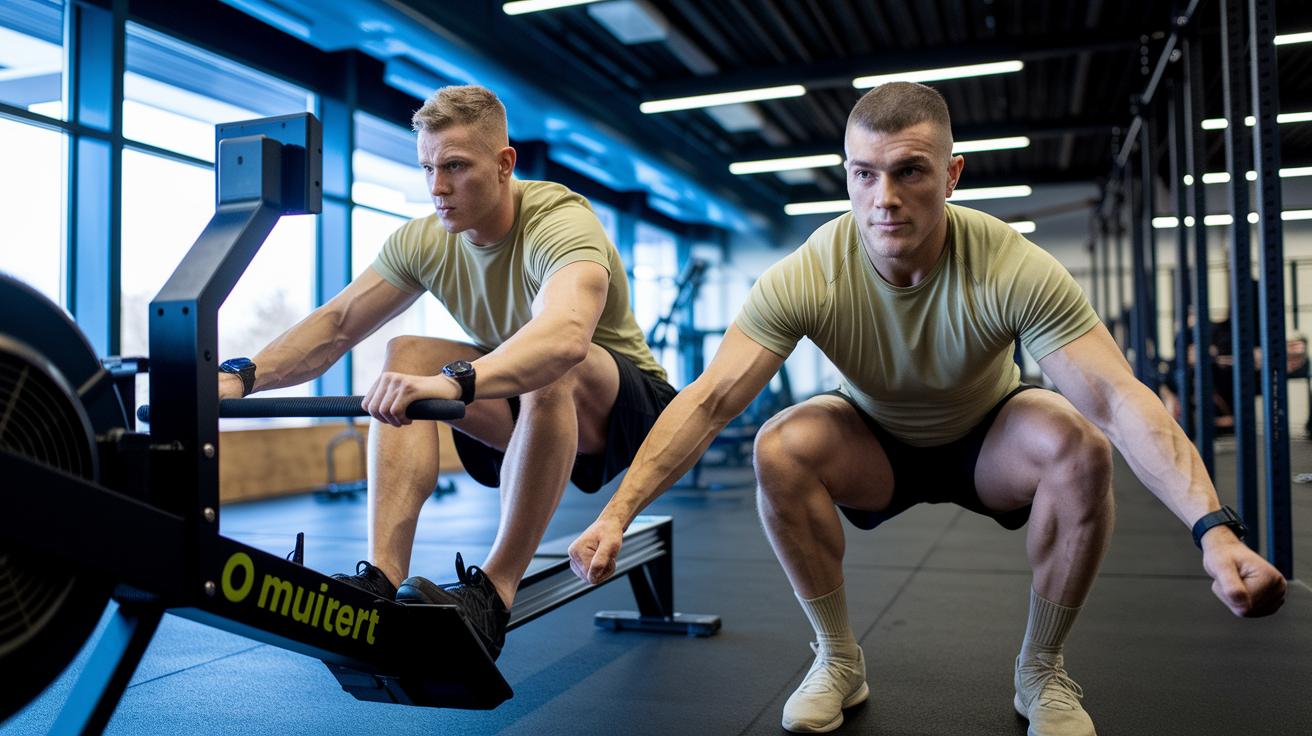
Give these tough endurance drills a shot to boost your combat readiness and overall strength. Each exercise is set up in simple rounds that test your stamina and build muscle, much like what you experience during field training.
- Cardio Strength Circuit: Complete 5 rounds where you start with a 30-second sprint on the rowing machine, then do 12 Bulgarian split squats for each leg to develop explosive power (Bulgarian split squats are a type of squat that targets your legs).
- Bodyweight Power Circuit: Do 5 rounds of 12 decline push-ups paired with 20 reverse lunges (10 on each side); this mix helps improve your balance and endurance.
- Burpee Blast Pyramid: Begin with a 2 to 3 minute warm-up jog. Next, work through a pyramid of burpees (10-20-30-20-10). Cap off each set with 30 mountain climbers (15 on each leg) and 15 V-ups, while giving yourself 90 seconds to rest between sets.
- Warrior Circuit: Start with a 400-meter jog, then move into 5 rounds that mix moderate-weight dumbbell thrusters with pull-ups. If pull-ups are too challenging, try using a band for assistance.
- Rope Rumble: Warm up with 2 minutes of shadowboxing or skipping, then perform 5 rounds of alternating battle-rope waves (battle-rope waves involve moving a heavy rope in waves to build upper body strength).
- Loaded Carries: Pick up a 40-pound sandbag or rucksack and carry it over a set distance or for timed laps. This drill works on your strength and balance.
- Hill Sprints: Run uphill at full effort for 5 to 8 sprints, using a 1:3 ratio of work to rest.
These drills are key to keeping you combat-ready, building the strength and endurance needed to tackle the challenges of military missions.
Effective Soldier Training Drills for Endurance: Peak Performance
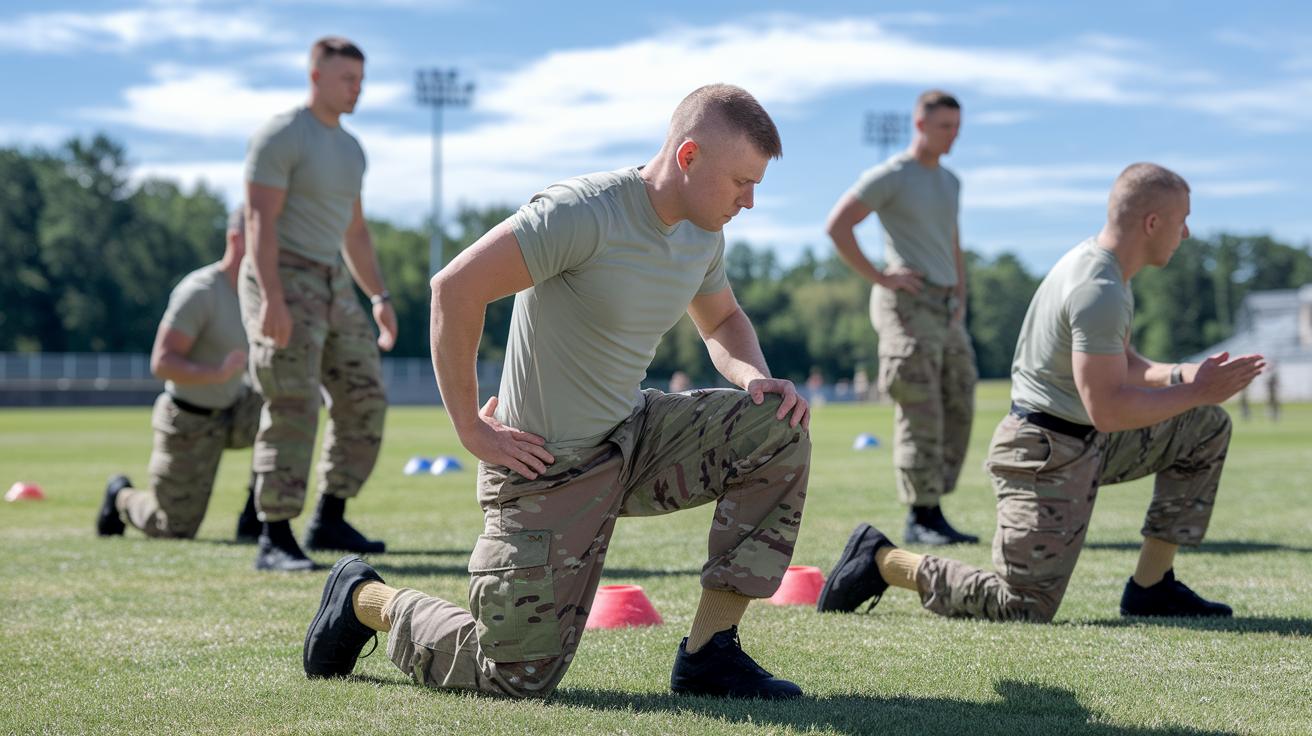
When you're tailoring endurance drills, it's all about tweaking the load, volume, intensity, and rest times to fit each soldier’s fitness level. For those just starting out, it’s a good idea to knock off a couple of rounds and adjust the exercises. Instead of doing full push-ups, try doing knee push-ups, and cut the sprints to half the usual distance. This way, new recruits can build stamina at a steady, manageable pace. Think of it as gradually stepping up the challenge.
For soldiers with a bit more experience, sticking with the full drill works best. They can follow the standard plan – doing all the reps as prescribed and resting 60 to 90 seconds between sets. This level means moving through full push-ups and complete sprints, which sets a solid foundation for getting ready for tough missions. For instance, a routine like hill sprints might start with a 50-meter burst on an incline for beginners and push up to 100 meters with 10 to 12 reps for those more fit.
For the advanced troopers, it’s time to kick it up a notch. Trainers can boost intensity by adding 10–20% extra weight and trimming the rest by 15–30 seconds. Using gear like a weighted vest or sandbag during exercises like decline push-ups really challenges the muscles further.
| Level | Modifications |
|---|---|
| Beginner | Reduce rounds by 2, use modifications like knee push-ups, and shorten sprints to half distance |
| Intermediate | Full drill as prescribed, with 60–90 sec rest intervals and complete reps |
| Advanced | Add 10–20% load and reduce rest intervals by 15–30 seconds, using weighted gear as needed |
This approach makes sure everyone can hit their stride at a pace that matches their current fitness, steadily pushing toward peak performance. Have you ever noticed how a little adjustment can make a huge difference in the training ground? It's all about smart scaling and staying ready for the mission ahead.
Safety and Recovery Techniques for Soldier Endurance Training Drills

Start every drill with a good warm-up. Do some dynamic stretches and take a brisk five-minute jog to get your body ready. It's like clearing your head before a big mission, imagine that quick drill run that sets the pace for the day. Keep an eye on your heart rate and use RPE (that’s how hard you feel you’re working) to stay around 6 or 7 out of 10. This way, you won’t push your body too hard, too soon.
When you add more weight or intensity, stick to a safe 10% increase each week. This careful step helps you avoid injuries during your recovery drills. After your session, cool down with foam rolling and static stretches. This little routine goes a long way in easing muscle tension and boosting your flexibility.
Next, remember the value of active recovery. On off-days, consider a light jog or even a swim. Giving your muscles a 24-hour break from targeted groups can really cut down on cumulative stress, just like letting your squad catch a breather mid-mission. And don’t forget nutrition. Have 3 to 5 grams per kilogram of carbohydrates before long sessions, then get in about 0.3 grams per kilogram of protein within 30 minutes after your workout. This step helps kick-start muscle repair and redistributes your energy.
Always tweak your plan as needed. Smart recovery practices are just as important as the actual drills.
Benchmarking Soldier Endurance Training Drills for Performance Goals
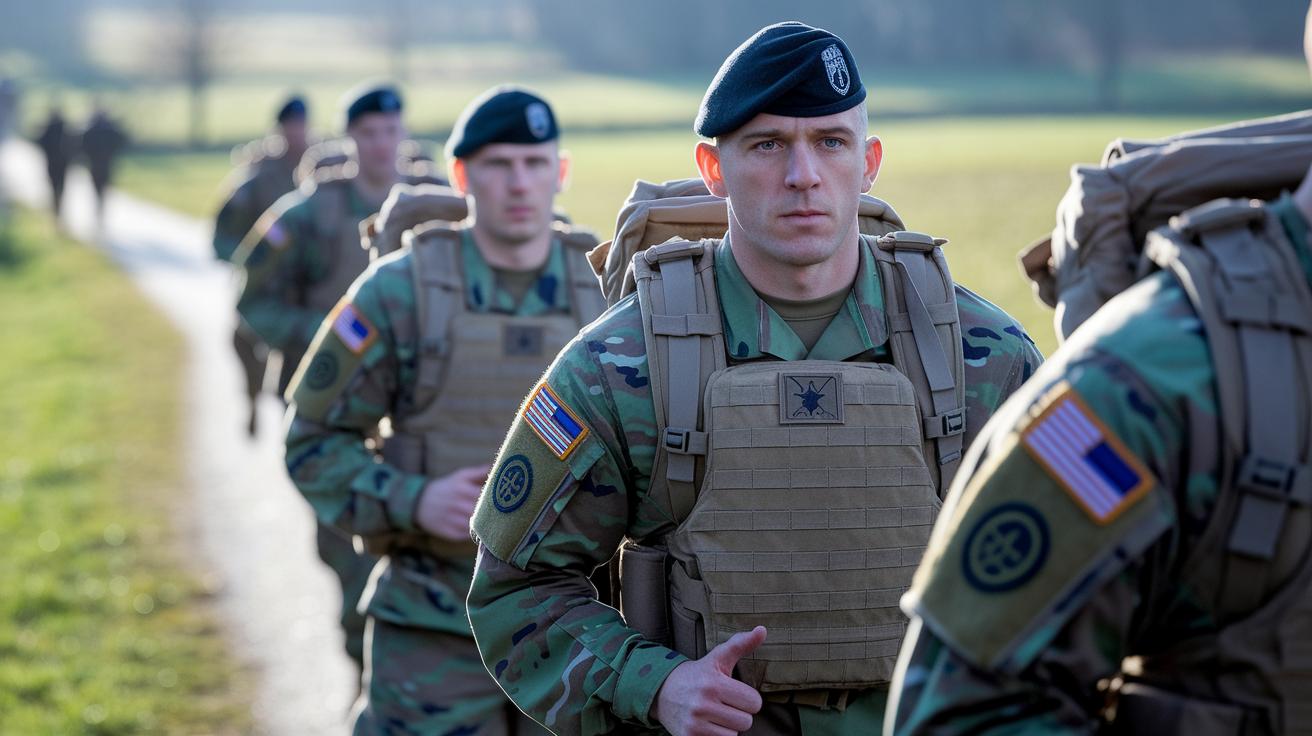
When planning soldier training, having clear goals is a must. These benchmarks show progress and highlight where improvements are needed. Tests like these, whether a steady run or a challenging drill, help you see how soldiers perform under pressure. With set standards, every workout is a focused step toward peak performance both in training and on the field.
• 1.5-mile run: Top performers should finish in less than 9 minutes, while a good baseline is under 12 minutes.
• Ruck marches: Carry 40 pounds for 12 miles in 3 hours to test strength and stamina.
• Cooper test: Run as far as you can in 12 minutes to check your overall running ability.
• Beep test: Aim to reach level 10 or higher in shuttle runs to measure high-intensity aerobic endurance.
• Week 1 Base: Start with 3 sessions of 30-minute Zone 2 runs to build a solid endurance base.
• Week 2 Build: Add 4 intervals of 400-meter runs at 80% of your VO2 max (your max oxygen use) to push your limits.
• Week 3 Peak (followed by Week 4 Recovery): Do 2 sessions of 20-minute threshold runs and then cut your training volume by half during the recovery week.
These drills and tests form a step-by-step training plan that can adjust over time. Breaking down performance into manageable tasks lets trainers refine programs to meet the real challenges of military operations, ensuring every soldier is measured by the same high standard for readiness.
Case Studies of Soldier Endurance Training Drills in Action
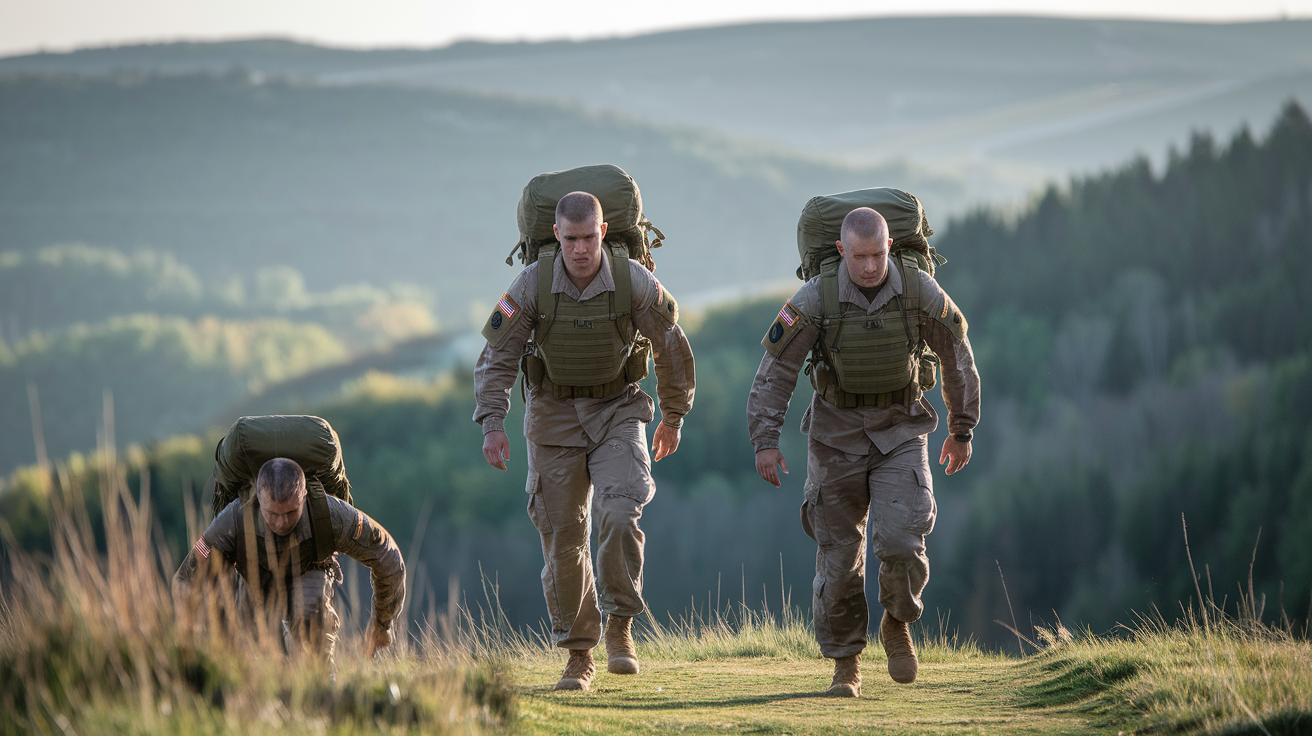
The USMC 8-Week Ruck Progression is a great example of careful, step-by-step training that builds toughness. In Week 1, soldiers start by rucking 8 miles with a load equal to 20% of their body weight. By Week 8, they increase to a 12-mile ruck with 30% of their body weight while keeping a 4 mph pace. This steady build-up not only boosts endurance but also makes it easier to carry heavier loads. Imagine your pack gradually getting heavier each week, every step helps build your strength and confidence.
The British Army Commando program mixes a 500-meter swim in uniform and boots (done in less than 12 minutes) with a 6- to 8-mile march carrying a load. This combo of a quick, chilly swim and a long, smooth march tests your heart and breathing. Picture cooling off in a sharp, refreshing swim that quickly leads into a steady march. Both parts work together to sharpen your stamina and prepare you for tough field situations.
The Australian SAS method focuses on daily high-intensity interval training (HIIT). Soldiers perform exercises like Tabata squats and burpee broad jumps, and then hit a 10-mile tempo run. This mix of fast, powerful bursts and longer steady runs mimics the rapid changes of combat. Think of it as switching between short, explosive moves and longer laps to get you ready for real-world challenges.
- USMC: 8-Week Ruck Progression with 8 to 12 miles and increasing loads
- British Army: 500m swim and 6 to 8 miles of loaded marches
- Australian SAS: Daily HIIT workouts plus a 10-mile tempo run
These programs show how different drills can boost endurance, improve load-carrying strength, and build overall readiness, key traits that keep soldiers strong and mission-ready.
Research and Expert Insights on Soldier Endurance Drills

Research from 2021 in the Journal of Strength and Conditioning Research shows that high-intensity interval training circuits can boost VO2 max (a measure of how well your body uses oxygen) by 12% in just six weeks. That’s twice the increase you get from steady-state cardio workouts, which only see about a 6% boost. Think of it like a soldier sprinting to evade a sudden charge, the body adapts quickly under such intense conditions.
Another study in the LDI Report highlights that doing loaded carries twice a week can raise functional strength by 8% over eight weeks. Loaded carries mimic real-life tasks by combining endurance with strength training. For example, you could gradually add more weight to your pack during morning drills to better match operational demands.
Experts, including Col. John Smith (Ret.), point out that these progressive, challenging drills not only improve physical performance but also build mental toughness. Soldiers gain the kind of mental resilience needed for sustained combat readiness. In truth, using varied and disciplined training routines is key to staying sharp both physically and mentally in high-stress situations.
Final Words
in the action, we reviewed core soldier endurance drills like cardio strength circuits and bodyweight power drills. We touched on modifying routines for different fitness levels and highlighted essential safety and recovery techniques.
We also set clear performance benchmarks and shared real-world examples along with expert insights. These tips are designed to build both your physical and mental readiness. With effective soldier training drills for endurance, you’re set to push your limits and succeed.
FAQ
How can I find effective soldier training drills for endurance at home?
The search for effective soldier training drills for endurance when working out at home generally means accessing comprehensive PDF guides that detail drills you can perform without a gym setup, along with modifications for different fitness levels.
Where can I download a military workout program PDF, including a 30-day version?
The idea of a military workout program in PDF format means finding downloadable guides online. These documents often include structured routines like a 30-day program to build strength and endurance.
What gym routines and beginner workouts work for military training?
The approach to military workouts for beginners and gym-based sessions involves starting with simple drills that build basic strength and stamina. As you progress, you can add equipment and more challenging exercises to boost performance.
How do I train for military endurance?
Training for military endurance means incorporating a mix of cardio, strength, and loaded drills into your routine. Combining interval sessions with hill runs can improve stamina needed for demanding tasks.
What is the 5-4-3-2-1 training method?
The 5-4-3-2-1 training method signifies a structured interval approach where exercises decrease in repetitions. It gradually lowers intensity, making it useful for building endurance while keeping your form in check.
What does the 3-3-3 rule for workouts involve?
The 3-3-3 rule for workouts means performing three exercises, three sets each, for about three minutes per set. This setup provides a balanced way to maintain consistent training intensity.
What is the 6-12-25 rule in soldier training workouts?
The 6-12-25 rule reorganizes workout timing by setting targets of 6 rounds, 12 movements each, with each round completed in 25 seconds. This method elevates endurance and speed by limiting recovery time.