
Have you ever thought that nailing your military exams starts with your everyday routine? Imagine setting up your study space like you would get ready for an important drill. A calm room, a clear schedule, and focused sessions can boost your confidence and sharpen your skills. When you treat each review like a training exercise, you build the discipline needed on exam day.
Next, use simple steps to turn your study habits into a solid game plan. By following these ground-level strategies, you prepare yourself for success exactly when it counts.
Core Strategies for Improving Test Performance on Military Exams

First off, find a quiet spot where you can really focus, whether it's a room at home, your dorm, or even a library nook. Imagine setting up your study space like you’re preparing for a mission. Pick a time and place free from distractions so you can give your full attention, just like you would during a drill. It builds the discipline you need for handling a timed, high-pressure test.
Regular study beats last-minute cramming any day. Think of your daily review sessions as training drills that help lock in your skills. Take short breaks during long study sessions, maybe a quick 10-minute stretch after working for 50 minutes, to clear your head and boost your concentration. Stick to your routine, even when it feels tough, so you’re always mission-ready when exam day rolls around.
A custom study plan with weekly goals and built-in breaks can really keep you on track. Break your material into smaller chunks that zero in on key topics like arithmetic reasoning or basics of mechanics. For example, try focusing on reading comprehension one week and math drills the next. By keeping an eye on your progress and tweaking your plan as needed, you’ll build confidence and be prepared for anything the exam throws at you.
Decoding Military Exam Structures and Scoring for Optimal Performance

If you're gearing up for military entry, knowing key exams like the ASVAB, ACT, and SAT can really set you on the right track. The ASVAB tests your math, science, mechanical reasoning, and word skills, and it even helps decide what jobs you might be suited for. At the same time, military academies lean on ACT and SAT scores to check your academic readiness, and some ROTC scholarships even factor in your ASVAB performance.
Understanding the ins and outs of these exams lets you focus your study efforts. For example, while the ASVAB comes with nine sections, the SAT skips the essay. This information helps you plan practice sessions that mimic the real test environment. Check out the basics in the table below:
| Exam Name | Subtests | Time Limit |
|---|---|---|
| ASVAB | Math, General Science, Mechanical Reasoning, Verbal Skills, etc. | Varies by subtest |
| ACT | English, Math, Reading, Science, (optional Writing) | About 2 hours 55 minutes |
| SAT | Evidence-Based Reading, Math (no essay) | About 3 hours |
By learning how these tests work and what they require, you build both mental and physical readiness for the challenge ahead. Focusing on your best areas, fine-tuning your timing, and even knowing tactics like the ASVAB guessing rules can help clear up test-day jitters. It’s like planning for a mission, where every detail counts and your preparation directly boosts your confidence.
Crafting a Personalized Military Exam Study Plan

Start by sitting down with a diagnostic exam, it’s like a quick mission briefing that shows you where you currently stand. This first step helps you see which parts, such as arithmetic reasoning or mechanical principles, require extra work.
Here's a clear action plan:
- Begin with a diagnostic exam to spot your strengths and areas needing improvement
- Set clear, measurable study goals for each test section
- Focus on your weaker topics during your first weeks of study
- Plan study sessions with a 10-minute break after every 50 minutes of work
- Check your progress at set milestones to see if your pace is right
- Update your study plan based on your quiz scores and practice tests
By mixing in regular diagnostic checks with planned progress reviews, you create a clear path toward improvement. Breaking down the study material into weekly parts and including brief reviews makes your plan feel like real exam conditions. Short breaks help keep your mind sharp, while milestone reviews let you tweak your strategy as needed. This well-rounded approach not only builds your confidence but also helps you manage your time effectively on test day. For more detailed planning strategies, visit https://militaryaptitudetests.com?p=2035.
Maximizing Military Exam Readiness Through Practice Tests and Simulation Drills
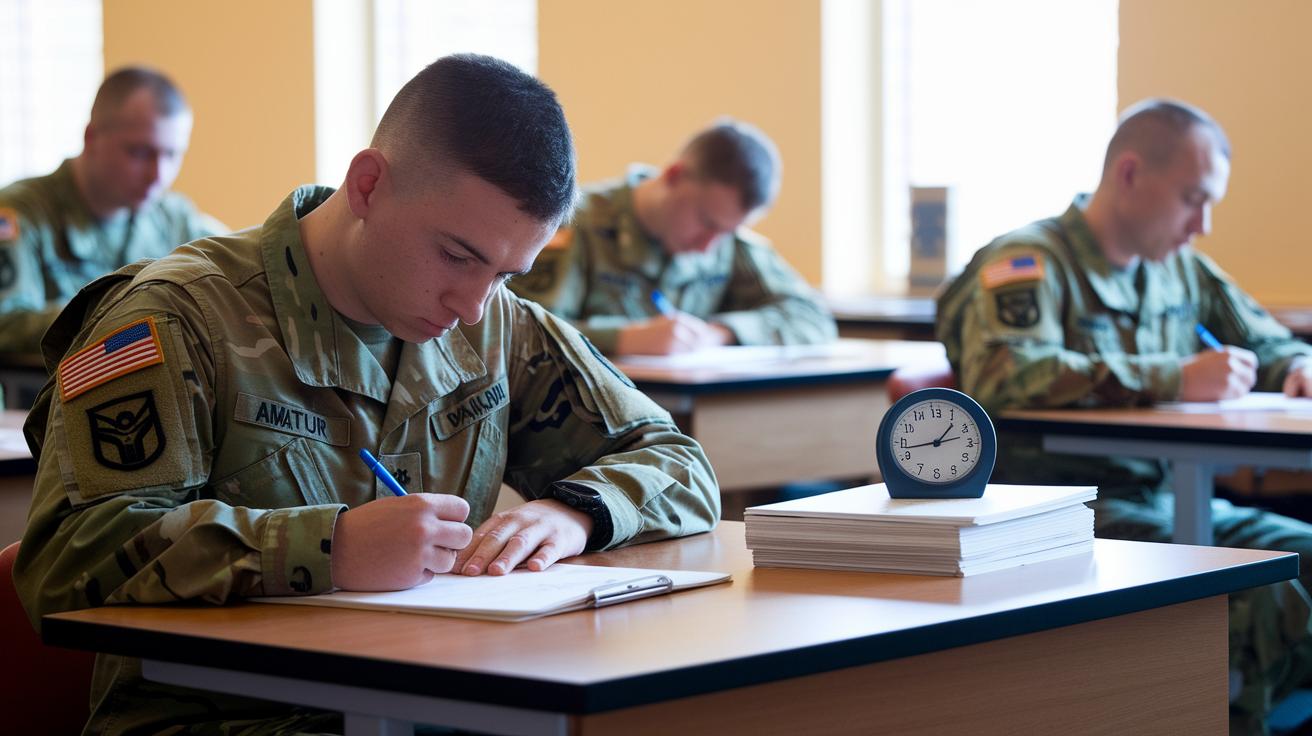
Practice tests and simulation drills are a real game-changer when it comes to getting ready for military exams. They mimic the real test setting, so you get a clear picture of what to expect. Plus, they help you spot common question types and work on your timing under pressure, so you're more prepared on exam day.
Full-Length Practice Tests
When you take a full-length practice test, it's like running the entire race before the big day. This practice builds your stamina and gets you used to the exam's overall layout and timing. You start seeing patterns in the questions and learn how to manage your time better. Many folks find that keeping it real with complete tests helps ease the nerves and boosts confidence before the real challenge.
Timed Section Drills
Timed drills break things down into bite-sized parts, letting you zero in on one area at a time. These quick, focused practice sessions sharpen your speed and accuracy, which is crucial when every second counts. By working on these sections individually, you can pinpoint the tricky spots, improve your answering style, and make snap decisions when it matters most.
Mixing full-length tests with targeted timed drills builds the endurance and flexibility you need. It lets you experience various parts of exam day, uncover any weak spots, and polish your overall time management. This balanced approach not only strengthens your confidence but also builds the mental toughness essential for military exam success.
Employing Stress Management and Anxiety Reduction Techniques for Military Exams

When study sessions or practice tests start to pile on the pressure, try using deep breathing, guided imagination, or a step-by-step muscle relaxation. Think of it like this, you take a slow, deep breath and let go of some of that built-up stress, just like dropping a heavy pack during a well-deserved break on base. With guided visualization, picture yourself on a calm training field where each step is steady and sure. And when you work through each muscle group slowly, it's like debriefing after a tough drill. These simple moves give you a moment to catch your breath and keep your mind sharp when the going gets tough.
On test day, stick to a solid routine. Aim for 7 to 9 hours of sleep so you wake up feeling refreshed and mission-ready. Use friendly self-talk to remind yourself of your training, say, "I got this" as you prepare to tackle the exam. A quick review of key points along with steady breathing can help calm any nerves, ensuring you step into the testing room focused and ready to perform your best.
Essential Test-Day Practices for Military Exam Success

Start your day by ticking off your essentials. The night before, set out your ID, pencils, calculator, and admission ticket so there’s no last-minute scramble. Enjoy a hearty breakfast, like oatmeal, eggs, or a protein smoothie, to get you powered up. Arriving at the test center 15–20 minutes early gives you a chance to settle in, much like grabbing a quiet coffee while reviewing your notes before a big mission.
Once you’re inside the testing hall, take a moment to carefully read the instructions. This simple step helps you plan your pace throughout the exam. Divide your time for each section, and if you’re stuck on a question, take a smart guess since there’s no penalty for getting it wrong. Think of it as following a well-practiced drill: steady, step-by-step, and built on your hard training. With these clear steps and a calm mindset, you’re ready to handle the pressure and perform at your peak.
Analyzing Performance and Adapting for Continuous Military Exam Improvement

Start by reviewing your exam scores to clearly see where you're strong and where you need to work harder. Look at results in subjects like math, science, reading, and mechanical reasoning. Think of it like a quick debrief after a training run, you see what tactics worked and which ones need tweaking. Comparing your practice test scores with your real exam scores gives you a clear map of where to focus next.
Next, set fresh, clear goals to boost your skills. Break these goals into small milestones you can track easily. Say arithmetic reasoning is giving you trouble, plan extra practice sessions until you notice improvement. Then, check your progress regularly, just like a post-mission briefing. Each exam is another chance to learn, build confidence, and hone your strengths. Keep notes on what strategies work and what might need more adjustment, and let every improvement push you further along your career path.
Keep adapting your study plan as you learn more about your strengths and weaknesses. Every step forward is a win on your journey in the military. Keep at it with steady determination, and remember, even small gains make a big difference over time.
Final Words
In the action, we’ve explored setting up a focused study space, planning steady routines, and fine-tuning exam-day practices.
The post covered stress relief techniques, realistic practice tests, and personalized plans built on weekly milestones.
All these elements come together to support improving test performance on military exams while boosting overall readiness. Keep your eyes on clear goals, trust your steady progress, and remain confident. Every small step builds the path to success.
FAQ
What is the ASVAB test?
The ASVAB test is a multi-subject exam assessing math, science, mechanical reasoning, and verbal skills to help assign military roles and determine eligibility.
How can I improve my ASVAB score and overall exam performance?
Improving exam performance is achieved through consistent study, realistic practice tests, and targeted strategies that build confidence and reduce test-day anxiety.
Is a 70 a good ASVAB score?
A 70 on the ASVAB is generally seen as strong, meeting many military requirements, though standards may vary by branch and desired job assignments.
How should I prepare for the ASVAB using available resources?
Preparing for the test involves using free ASVAB prep tests, mastery practice tests, and proven test-taking strategies that build familiarity with the exam format.
How can I pass the ASVAB test without studying or even get 100% on every test?
The idea of passing without studying or scoring 100% on every test is unrealistic; steady preparation and practice are essential for achieving the best possible results.