
Ever feel like prepping for your military exam is like climbing a steep hill? You’re not alone. Every year, countless veterans work hard to succeed, and a solid study guide can be your best ally.
This guide turns complicated topics into easy, clear steps, much like planning a mission before heading out. It shows you how sticking to steady routines and doing smart self-checks can transform your study sessions into effective preparation.
Curious to see your scores rise? Stick with us and discover proven methods to boost your exam success.
Core Components of a Veteran Military Exam Study Guide

A good study guide chops topics into bite-sized pieces so you can steadily build your confidence. We focus on really understanding each idea rather than simply memorizing practice questions, the exam isn’t going to throw the same ones at you twice. I recommend starting at least two months before your test. Just like planning a mission, taking calm, organized steps beats scrambling at the last minute.
One strategy that works well is to set up clear, modular lesson plans. Break down each subject into small sections, and then check in with yourself regularly using quick quizzes or mini practice tests. I remember adding an extra 15 minutes to my daily drill, and suddenly my scores began climbing. These little self-checks not only help you see your progress but also show you which areas need a bit more focus.
It also makes sense to stick with a steady study routine, even on days when your energy is low. Even a short daily session can reinforce the ideas you need to master, like using flashcards for formulas or running through quick arithmetic drills. Regular cycles of review build a rock-solid foundation for your overall study plan, making your exam prep both practical and effective.
Understanding the Military Exam Structure for Veterans
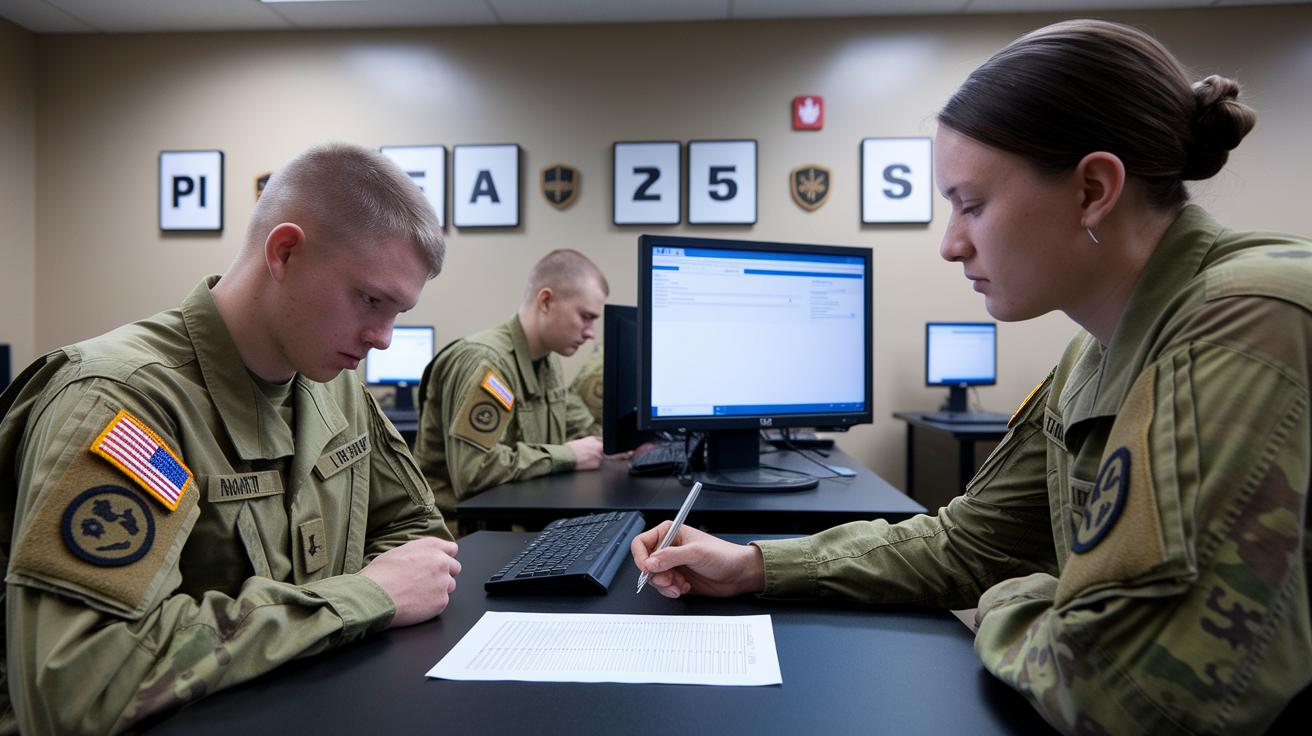
The ASVAB exam comes in two versions, each designed to match different needs. One version, the CAT-ASVAB, is computer-based with 135 questions to answer in 173 minutes. The other version, called the P&P-ASVAB, has 225 questions all to be answered in 149 minutes. Each test is split into 10 sections that cover topics such as General Science, Arithmetic Reasoning, and Word Knowledge. Over 1 million candidates sit this exam each year, all striving to qualify for more than 480 military roles.
Your score is given as a percentile from 1 to 99, which shows how you did compared with others. This percentile score is a big deal because it helps decide what military jobs you can qualify for. Since you won't be allowed to use a calculator, it's key to work through the math on your own and keep an eye on the clock while you solve problems.
Planning is important, especially when it comes to retaking the exam. After your first try, you have to wait one month before you can retake it. Then, if you need a third shot, that comes after another month. For the fourth attempt, you must wait for six months. Use this time to study smart and improve your performance.
| Exam Format | Questions | Time Limit |
|---|---|---|
| CAT-ASVAB | 135 | 173 minutes |
| P&P-ASVAB | 225 | 149 minutes |
Strategic Study Planning and Scheduling for Veteran Test Readiness

Map out your study time by lining up key goals with the retake guidelines. Every break is a chance to sharpen your skills. Build your plan around the required waiting time after a test, so if you have to pause after your first try, use that window to practice those tricky topics, like working through math problems during the wait as if you’re fine-tuning your technique.
Quick checklist:
- Add retake intervals into your study schedule.
- Carve out brief, focused review sessions even on hectic days.
- Zero in on challenging topics during mandatory waiting periods.
This way, each session works to boost your readiness, step by step.
Targeted Practice Methods and Tools in a Veteran Military Exam Study Guide

Practice drills sharpen your abilities by creating real exam scenarios. Free ASVAB practice tests with real-type questions show where you’re strong and where you need more work. I remember once taking a test that felt just like a field drill, every moment mattered, and my weak points stood out. This way of self-checking helps you get used to the exam setup and builds confidence for test day.
Using flashcards focused on specific topics is another smart move. They let you review formulas and important terms, especially for subjects like Arithmetic Reasoning and Electronics Information (information about circuits and signals). It’s like carrying a quick reference during training to keep crucial facts fresh in your mind. Plus, doing math drills without a calculator mirrors test rules, sharpening your mental math skills. Think of it like doing a drill without your usual gear, it pushes you to trust your own skill set.
Take time to check your mistakes, too. Looking over errors step-by-step stops you from repeating them and deepens your understanding of tough topics. This blend of practice, review, and assessment really gets you mission-ready.
| Practice Strategy | Benefit |
|---|---|
| Timed practice tests | Mimics exam pressure |
| Topic-specific flashcards | Refreshes key formulas and terms |
| No-calculator math drills | Strengthens mental math |
| Systematic error reviews | Prevents repeated mistakes |
Focusing on AFQT Sections: A Veterans Exam Pass Guide

Arithmetic Reasoning
This six-page module breaks down word problems into simple, clear steps, much like planning a quick field exercise. You learn how to pick out the important bits and then use basic math to solve the problem. Say you come across a question like, “If a vehicle travels 50 miles in 1 hour, how far does it go in 3 hours?” The guide walks you through figuring out the answer, showing you that every challenge has its own straightforward solution.
Mathematics Knowledge
In these five pages, you review key algebra and geometry concepts, strengthening your everyday math skills. It’s similar to checking your gear before heading out on a mission. The section covers how to solve for unknowns and understand shapes with step-by-step examples, helping you feel prepared to tackle any question on the exam.
Paragraph Comprehension
Over the course of just two pages, this guide teaches you how to find the main ideas and supporting details in a passage. Think of it like spotting the crucial piece of intel during a briefing. You learn techniques like picking out topic sentences and summarizing paragraphs quickly, making sure you never miss an important detail.
Word Knowledge
This one-page overview focuses on using context clues to figure out unfamiliar words. It’s like scanning the area during a mission to figure out what needs your attention. By following this guide, you learn to read between the lines so that even tricky vocabulary feels more approachable.
Balancing Civilian Life and Military Exam Study for Veterans

If you're a veteran trying to juggle work, family, and exam prep, try mixing practical scheduling with clear study tactics. I suggest breaking your study time into short sessions that fit into your routine. For instance, you might squeeze in a 20-minute review over lunch or early in the morning when things are quiet at home. Starting at least two months before the exam helps you build a routine that works with your daily life.
Also, think of any gaps between exam retakes as extra chances to focus on tougher topics. Use these breaks to work on areas where you're not as confident. Adjust your study times based on what your day looks like. And if unexpected work or family demands crop up, a quick review session can help you keep on track without feeling overwhelmed.
This flexible approach lets you combine targeted study sessions with everyday responsibilities. It means you won’t lose momentum, even when plans change suddenly. In short, you get effective exam prep while still handling the challenges of civilian life.
Quick checklist:
- Plan short, daily study sessions that fit your schedule.
- Use breaks between exam retakes for focused reviews.
- Arrange your study time to suit family and work needs.
- Check out resilience strategies for high-pressure military tests for tips on managing exam stress and anxiety.
Additional Veteran Educational Resources and Support

Many veterans say extra learning tools help boost confidence when prepping for the ASVAB. Free online practice tests give you a taste of real exam questions that focus on veterans, letting you review key points and track your progress. Newsletters and recruiter contacts also send updates, alerts, and simple advice to keep you up-to-date on any changes or new opportunities.
Online workshops give you a chance to see experts break down tough topics into easy-to-follow steps. Study communities bring you together with other veterans who share study tips and routines. I remember a webinar where one veteran mentioned that small, steady review sessions made a big difference. These platforms create a friendly, team-like vibe so you never really feel alone in your study efforts.
These resources work well with your own study plans while also offering expert advice and practice tools. For extra guidance, check out resources at leveraging online resources for military exam readiness. With these tools, you can swap ideas, join discussions, and tweak your strategy before the big day.
Getting involved in these programs really builds your confidence and hones your skills. Regular chats with experts and fellow veterans is a sure-fire way to set yourself up for success.
Final Words
In the action, we broke down key elements of building a solid study plan. We explored core concepts, detailed ASVAB formats, and shared practical strategies for steady progress while balancing work and family. We also highlighted targeted tools like practice tests and flashcards, all aimed to sharpen both mental and physical readiness. Every step builds confidence for military test success. Keep these tips in mind as you work through your military exam study guide for veterans, and step forward with assurance and readiness.
FAQ
Military exam study guide for veterans PDF
The military exam study guide for veterans PDF provides a complete review of exam topics and is available free online for convenient download and study.
ASVAB practice test
The ASVAB practice test offers realistic exam questions that help measure your progress, highlight strengths and weaknesses, and prepare you for the actual test conditions.
ASVAB test
The ASVAB test assesses skills in multiple areas like arithmetic reasoning and word knowledge, helping determine your eligibility for various military roles.
ASVAB study guide and ASVAB study guide PDF
The ASVAB study guide, available in PDF format, breaks down key subjects and strategies, letting you review and practice in clear, easy-to-understand steps.
ASVAB test questions
The ASVAB test questions cover topics from math to vocabulary, designed to gauge your practical skills, overall understanding, and readiness for military duty.
Is a 70 on the ASVAB bad?
A score of 70 on the ASVAB indicates above-average performance for many military roles, though requirements vary by branch, so it’s wise to review specific guidelines.
How rare is a 99 on the ASVAB?
A score of 99 on the ASVAB is very rare and shows exceptional aptitude and readiness, often placing test-takers among the highest performers in military assessments.
What is the best study guide for the ASVAB test?
The best ASVAB study guide combines current practice tests with clear, targeted review materials that build confidence and help you master key exam topics.
Is 37 a good ASVAB score?
A score of 37 on the ASVAB might qualify you for certain roles, but many branches require higher scores, so it’s important to check the specific score requirements.