
Have you ever thought that a few tests might change your military career? It might sound confusing at first, but each exam is like a checkpoint on your journey.
You start with a quick pretest that shows where you need more practice. Then, a full exam checks all your skills. This guide lays out each step clearly so you know what to expect and how to get ready. Read on if you’re ready to take charge of your future in the service.
Step-by-Step Military Testing Process Overview
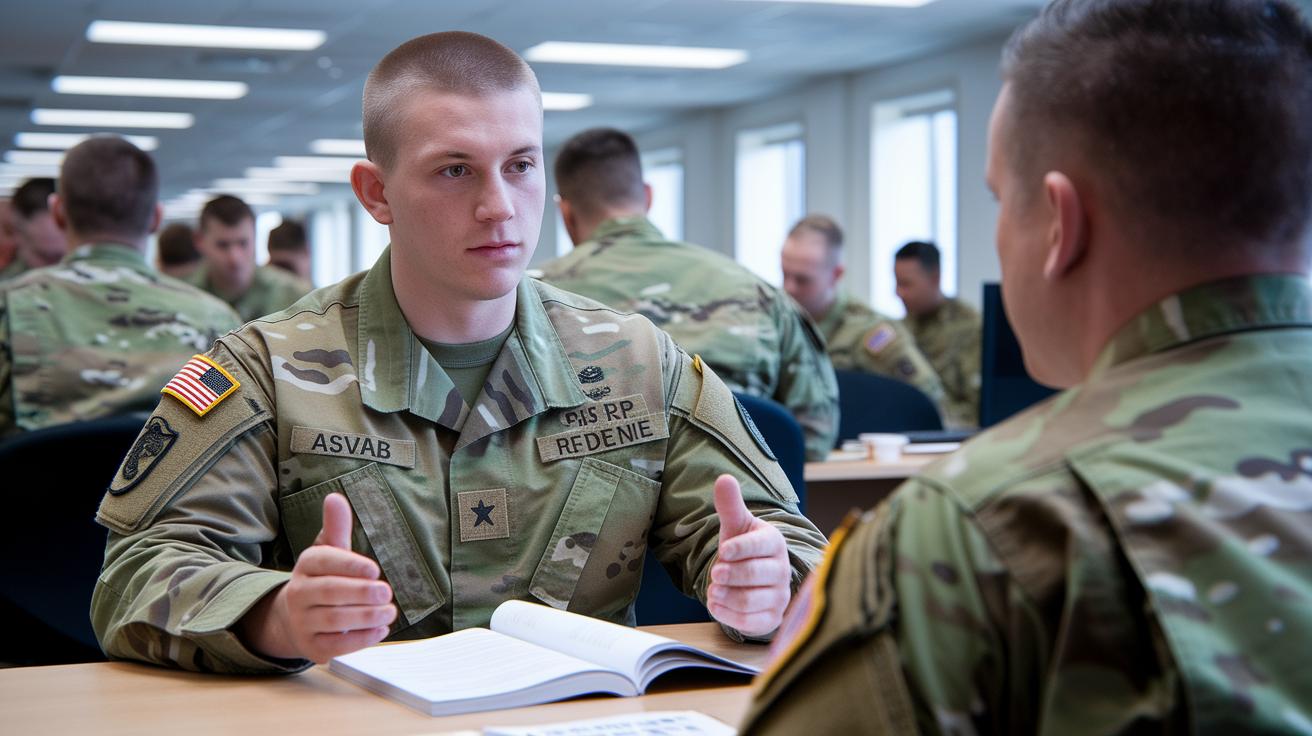
First, get in touch with a recruiter to set things in motion. Your journey begins with the Armed Forces Pretest (APT), a short exam of about 20 questions that helps find areas where you might need extra practice. You might even hear someone say, "I didn’t expect 20 questions to show my weak spots in math, it turns out a little prep makes a big difference."
Next, you'll gear up for the complete testing process. This involves taking the ASVAB (Armed Services Vocational Aptitude Battery), a test introduced back in 1968. The ASVAB examines ten skill areas like arithmetic reasoning, verbal skills, and mechanical comprehension (simply put, how well you solve problems and understand mechanics). It ends with an AFQT score that ranks you from 1 to 99, showing if you qualify for enlistment. Many say the ASVAB feels like a mission, one that highlights your strengths while pointing out where you could use more training.
After the ASVAB, there's more to do. You'll have a physical fitness test, a medical screening, and a background check. Each step is important in setting your final enlistment status. On test day, remember to bring essential documents: a valid ID (like a driver’s license or passport), a birth certificate, and a high school diploma or GED. If you need more details on what to bring, check out the military testing requirements online (https://militaryaptitudetests.com?p=728).
Sometimes, recruiters will schedule the CAT-ASVAB, a computer-based test that adjusts its question difficulty and gives immediate results. If computers aren't available, you might take the paper version, which could have group timing. Once you’re done testing, your recruiter will help match your scores to the military job that best suits your abilities.
Eligibility and Enlistment Exam Requirements

Before you step into the testing room, you need to clear some key academic and health checks to prove you're ready for service. Your AFQT score (a measure of abilities in tests like Arithmetic Reasoning, Word Knowledge, Paragraph Comprehension, and Mathematics Knowledge) must meet branch-specific limits: the Army needs 31, the Navy 35, the Air Force 36, the Marines 32, and the Coast Guard 40. Even a strong showing in Word Knowledge can really help push your score over the line.
You also need to bring important documents. This means proof of U.S. citizenship or legal residency, a valid state ID, your birth certificate, and either a high school diploma or GED. Age limits are usually between 17 and 34, depending on the branch that fits your goals.
On the medical side, things are pretty straightforward. You'll need vision that's at least 20/40 (correctable to 20/20), a pass on hearing screenings, and to meet certain height and weight standards. Keeping your immunization records up-to-date is a must too. When these boxes are checked, you're ready to prove your skills and take the next step in your military journey.
Scheduling and Preparing for Military Entrance Assessments

Start by talking with your recruiter; they book your APT or ASVAB session for you. If you’re taking the computer test (CAT-ASVAB, which is a computer-based assessment), you might have it scheduled within a few days. The paper version, however, could need more coordination with a group. On the CAT, you’ll face shorter sections, 15 to 25 questions in each, with time limits ranging from 10 to 36 minutes. The paper test, on the other hand, has 20 to 40 questions and offers a longer time frame of 15 to 55 minutes.
Mark your calendar and double-check the date, time, and location well before test day. The night before, put together a simple checklist with your valid ID and any other necessary documents, like your birth certificate or high school diploma. This extra step helps make sure nothing important gets left behind.
When test day comes, you can expect quick feedback from the pretest: scores for the CAT-ASVAB are available in minutes, while the paper version typically takes about a week. One recruit shared, “I set aside an hour the night before for a final review and to get my documents in order, and that simple step really eased my nerves.” By getting into the habit of confirming your details and preparing early, you make the whole testing process more manageable and help keep the stress level low.
Navigating the ASVAB and Aptitude Assessments

The ASVAB exam is split into 10 sections that check different skills you might use on duty. Each section, from General Science to the branch-specific part, gives recruiters a clear look at where your strengths lie. Four of these tests, Arithmetic Reasoning, Word Knowledge, Paragraph Comprehension, and Mathematics Knowledge, combine to create your AFQT score (this score shows if you meet the basic requirements for military service). The other tests help build scores that match you with the right military job. Think of every section as a piece of the puzzle that, when put together, reveals the best fit for you.
| Subtest | # of Questions | Time Limit | AFQT Component (Yes/No) |
|---|---|---|---|
| General Science | 25 | 11 minutes | No |
| Arithmetic Reasoning | 30 | 36 minutes | Yes |
| Word Knowledge | 35 | 22 minutes | Yes |
| Paragraph Comprehension | 15 | 13 minutes | Yes |
| Mathematics Knowledge | 25 | 20 minutes | Yes |
| Electronics Information | 20 | 8 minutes | No |
| Auto & Shop Information | 20 | 15 minutes | No |
| Mechanical Comprehension | 25 | 20 minutes | No |
| Assembling Objects | 15 | 15 minutes | No |
| Branch-Specific | 10 | 5 minutes | No |
Every section of the exam is timed to mimic the kind of pressure you might face on the job. Tests that count towards your AFQT score are set up to really test your ability to think on your feet and handle calculations quickly. The computer-adaptive version (CAT-ASVAB, which adjusts the difficulty based on how you answer) tailors the questions to your skill level, while the paper version sticks with a fixed list of questions. This approach ensures that both your overall abilities and your specific skills get a fair look, so recruiters can place you where you'll succeed.
Physical and Medical Screening Benchmarks
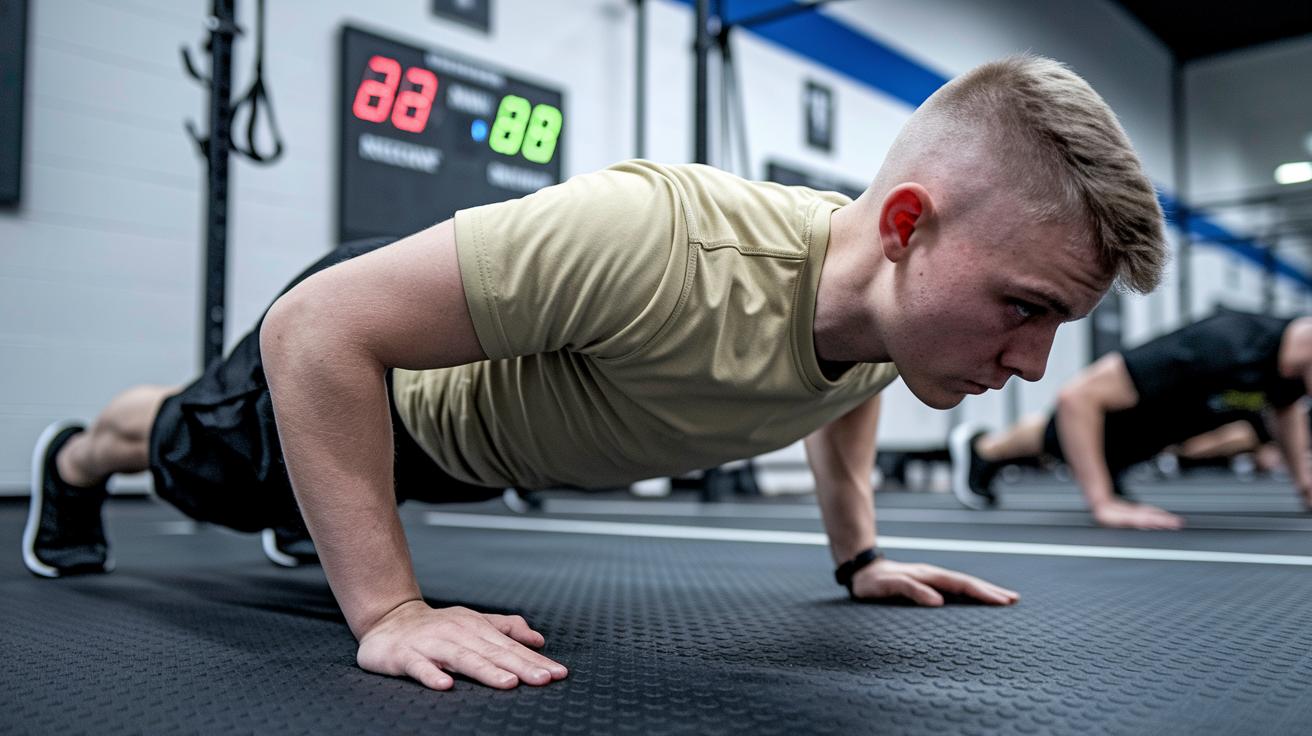
Every recruit needs to pass a fitness test that proves you're ready for service. Depending on your branch, you'll be doing exercises like push-ups, sit-ups, and a run (either 1.5 or 2 miles). The minimum scores vary by your age and gender, so the tests make sure you have the energy and strength you'll need out in the field. I remember one recruit mentioning that the steady beat of his push-ups and sit-ups really helped him gain confidence before his run. These tests are set up to give you a real taste of the physical challenges you might face on the job.
The medical exam is just as important. It checks your vision (you need at least 20/40 with glasses or contacts) and your hearing (aiming for 30 dB or less), along with your height and weight based on BMI charts. You’ll also have blood work, a urine test, and a dental check to make sure you’re in top shape. Here’s a quick look at some of the height requirements:
| Branch | Height Requirements (inches) |
|---|---|
| Navy | 60–80 |
| Army | 58–80 |
If you have any chronic conditions, they’ll take a close look at your medical records, and sometimes waivers can be arranged. Altogether, these fitness and health checks are designed to make sure you're fully ready to meet the demands of military life.
Effective Strategies for Military Test Preparation

Begin by taking the Armed Forces Pretest so you can quickly spot your weak areas. That first bit of feedback can be a real wake-up call, just like when one recruit said, “I never knew my math skills needed a tune-up until the pretest lit the way.” Next, focus on honing your skills for the AFQT subtests using official practice questions and flashcards. And don’t forget to run timed drills that mimic CAT-ASVAB conditions; they help you get comfortable with the type of questions you'll see on test day.
Here are six tactics to boost your readiness:
- Study Tools: Rely on official practice guides and flashcards to strengthen your skills in arithmetic, vocabulary, reading comprehension, and math.
- Simulation Methods: Do timed drills that mirror a computer-adaptive test setting to help you adjust to the pace of the exam.
- Stress Control: Use simple breathing exercises and practice tests to calm your nerves, and try a quick walk between study sessions to keep the stress at bay.
- Nutrition: Keep your energy up with balanced meals and healthy snacks during long study sessions.
- Time Allocation: Organize your day with clear study blocks and regular breaks. For more ideas, check out Time Management for Military Tests at https://militaryaptitudetests.com?p=506.
- Regular Breaks: Combine your study time with physical training and rest. This balance not only sharpens your mind but also builds the endurance needed for exam day.
By following these steps, you'll build a solid foundation to tackle any enlistment exam and perform at your best with thoughtful practice and great preparation.
Understanding Scores, Retakes, and Next Steps in Military Testing
Your AFQT percentile score, which ranges between 1 and 99, is a key number that tells you if you meet your branch’s cutoff and which military job roles might be best for you. This score comes from important subtests along with other scores (line scores) that directly affect your eligibility and job placement. For example, one recruit said that seeing his AFQT score made it clear which roles he was cut out for.
Your score stays valid for two years in most branches, so you have plenty of time to plan your future moves. If your first try doesn’t hit the mark, you can retake the test. Here are the guidelines:
- First retry available after 30 days
- Second retry available after another 30 days
- Third attempt permitted after waiting 180 days
- Unlimited total attempts based on branch-specific rules
Once you finish testing, sit down with your recruiter for a results briefing. In that meeting, you can go over available job listings, technical school options, or advanced training programs based on your performance. For more details on how AFQT categories and line scores work, check out the Military Exam Score Interpretation Guide (https://militaryaptitudetests.com?p=537). This guide is like a map that helps you plan your next steps with confidence as you move forward toward enlistment or consider a retake.
Final Words
In the action, this guide broke down every phase, from initial assessments and document checks to test scheduling and effective study tactics. We covered exam procedures, fitness benchmarks, and score interpretations that shape your next steps. Each section builds on the last, offering clear steps for success while emphasizing practical preparation and confidence. Keep this resource close as you continue navigating the military testing process: a comprehensive guide. Stay focused, remain positive, and move forward with the drive to reach your military career goals.
FAQ
What is the MEPS walkthrough process for military admission?
The MEPS walkthrough process starts with a recruiter screening, moving to medical exams, aptitude tests, and an interview, ensuring you meet physical, mental, and documentation standards for service.
What job should I do in the military?
The military job you should pursue depends on your test scores, skills, and interests. Your ASVAB results help identify roles that match your strengths and career goals.
What does a military aptitude test involve?
A military aptitude test, like the ASVAB, involves several subtests measuring math, verbal, and technical skills to determine your potential for various military occupations.
What are the military joining requirements?
Military joining requirements include meeting age limits, owning a valid ID and birth certificate, holding a high school diploma or GED, and satisfying physical and medical screening standards.
What factors disqualify you from joining the military?
Disqualifications may include certain medical conditions, failing to meet fitness criteria, prior drug use, or criminal records. Each case is reviewed, and waivers sometimes are available.
What does physical military training involve?
Physical military training involves exercises like push-ups, sit-ups, and running tests to verify that you meet branch-specific fitness benchmarks during both initial assessments and ongoing drills.
How challenging is it to pass the military test?
The difficulty of the military test depends on your skills, branch standards, and preparation. Using focused study plans, timed drills, and physical training increases your likelihood of success.
What substances does MEPS test for in 2025?
MEPS tests for a panel of controlled substances and commonly abused drugs. Specifics can vary, so it’s best to discuss details with your recruiter when getting ready for the exam.
Can I join the military at 45 years old?
Most branches prefer applicants under 35, and joining at 45 is rarely allowed. Special waivers may exist in unique situations, but age limits generally make late enlistment challenging.
How do you know if you passed the MEPS drug test?
Your recruiter informs you of the MEPS drug test results during your debriefing. Passing is confirmed when you advance to the next stage of the enlistment process.