
Have you ever noticed how one quick move can change everything on the field? Military agility drills push you to go further than you thought you could. They copy the sudden moves you need in real missions, like quick sprints, quick stops, and powerful jumps. These drills boost your speed, sharpen your balance, and build your power, all while making your reactions faster.
In this article, we break down eight drills that can improve your combat readiness. Think of it as turning everyday routines into lively, mission-ready training. Ready to see how small steps really can lead to big gains on the field?
Essential Military Agility Drills for Combat Readiness

These drills get you moving fast and changing direction quickly, just like you would on a mission. In tight spaces with little gear, you'll dig into quick sprints, abrupt stops, and explosive jumps that boost your speed, stamina, balance, and power. Picture this: you sprint to a cone and then quickly weave between markers. Each move sharpens your reaction time and fine-tunes your precision under pressure.
They’re built to mimic real-life tactical challenges by pairing simple movements with unexpected twists. Add these exercises to your routine and you'll build up both your physical readiness and your skill to handle ever-changing combat scenarios. For a complete program, check out a full military fitness plan that offers step-by-step guidance.
Below is a list of eight drills you can rotate to keep your sessions fresh and challenging:
- Shuttle Runs
- Zigzag Runs
- Obstacle Course Segments
- Cat and Mouse Drill
- Point and Move Drill
- Reactive Hip Turn Drill
- Lateral Plyometric Jumps
- L-drill/Cone Drill
Step-by-Step Military Agility Drill Instructions

These four drills are designed to sharpen your tactical moves, quicken your reactions, and boost overall speed and agility. They build up the skills you need to quickly change direction on the field, just like in real combat situations.
For the Shuttle Run, set up cones at 10, 20, and 30 yards. Sprint to the 10-yard marker, touch the ground, then sprint back to the start. Do the same for 20 and 30 yards. Aim for 4 sets of 3 reps each, taking about 90 seconds of rest between sets. This drill mimics the quick starts, stops, and reversals you might need during fast-paced operations, think of it like a rapid maneuver in the field.
Next up is the Obstacle Course Zigzag. Arrange cones in a zigzag pattern about 5 to 6 yards apart. Run sideways through these markers while keeping a low center of gravity, imagine ducking and weaving to avoid enemy fire. Complete 5 passes per round for 3 rounds, with a 60-second break between rounds. This drill helps you maintain your balance and move fluidly, which is key in many combat situations.
Then, try the Reactive Hip Turn Drill. Stand with your back to the sprint direction. When you hear your coach's cue, pivot on your spot 180 degrees and sprint 15 yards to the next marker before slowing down under control. Do 4 reps on each side. This drill is all about rapidly changing direction, just like you’d need to do during a sudden tactical reposition.
Lastly, there’s the Cat and Mouse Combat Drill. Pair up with a partner about 15 yards apart. One partner, the “Mouse,” makes random side-to-side moves, while the other, the “Cat,” chases and tags them. Switch roles every 30 seconds and do 5 rounds. This drill captures the unpredictable nature of combat, forcing you to react quickly and think on your feet.
Each exercise is meant to mimic real-life scenarios you might face on the field. So, take a moment to picture yourself in these situations as you train. It’s all about getting comfortable with rapid movements and swift decisions, which are essential when it counts.
military agility drills Spark Dynamic Training

Agility ladder workouts and jump drills are great for improving your coordination and quick power on the field. These drills make you move your legs fast, boost your balance, and build strength with short, strong bursts. Imagine stepping quickly through a ladder, driving your knees high with every step, and then jumping side-to-side with speed. This kind of training sharpens your speed and precision, exactly what you need when it counts.
| Drill | Target Muscles | Sets/Reps |
|---|---|---|
| Ladder High-Knee Runs | Quads, hip flexors, core | 3 sets of 10 yards |
| Lateral Plyometric Jumps | Glutes, calves, side leg muscles | 3×10 reps |
| Dot Drills | Knee stabilizers, ankles, calves | 4×30s |
| Jump Box Drills | Quads, glutes, hamstrings | 5 rounds (20s on, 10s off) |
| L-Drill/Cone Drill | Leg muscles, core, quick movers | 4 reps |
Designing a Tactical Agility Circuit with Military Drills

Picture yourself on a training field where every movement helps you improve your speed and reaction time. Begin with a 5-minute warm-up. Do high-knee runs, butt-kickers, and lateral leg swings to get your heart pumping and your muscles ready.
When your warm-up ends, move on to the Reactive Hip Turn Drill. Do 4 controlled reps on each side. This drill helps you turn quickly and get used to sudden shifts, just like in a combat scenario.
Then, try a shuttle run. Sprint 20 yards out, then 20 yards back, and finally 20 yards to the far side. Repeat the sequence 3 times to sharpen your ability to change direction fast and boost your sprint stamina.
Next, do the L-Drill for 30 seconds. Mix up sprinting, shuffling, and quick backpedals to really test your core stability and overall agility.
After that, do 15 lateral plyometric jumps. These jumps build explosive side power and keep your balance steady when it matters most.
Finish the circuit with a zigzag obstacle run. Complete 2 passes so you practice maneuvering through quick turns, much like handling field challenges.
Give yourself a 60-second rest after each circuit. Then, repeat the entire cycle 4 times to build endurance and keep your agility sharp, even when fatigue kicks in.
This circuit is designed to make the best use of your time and space while boosting your core stability, speed, and continuous movement efficiency. For more details on these drills, take a look at the military fitness routines.
Modifying Military Agility Drills for All Fitness Levels
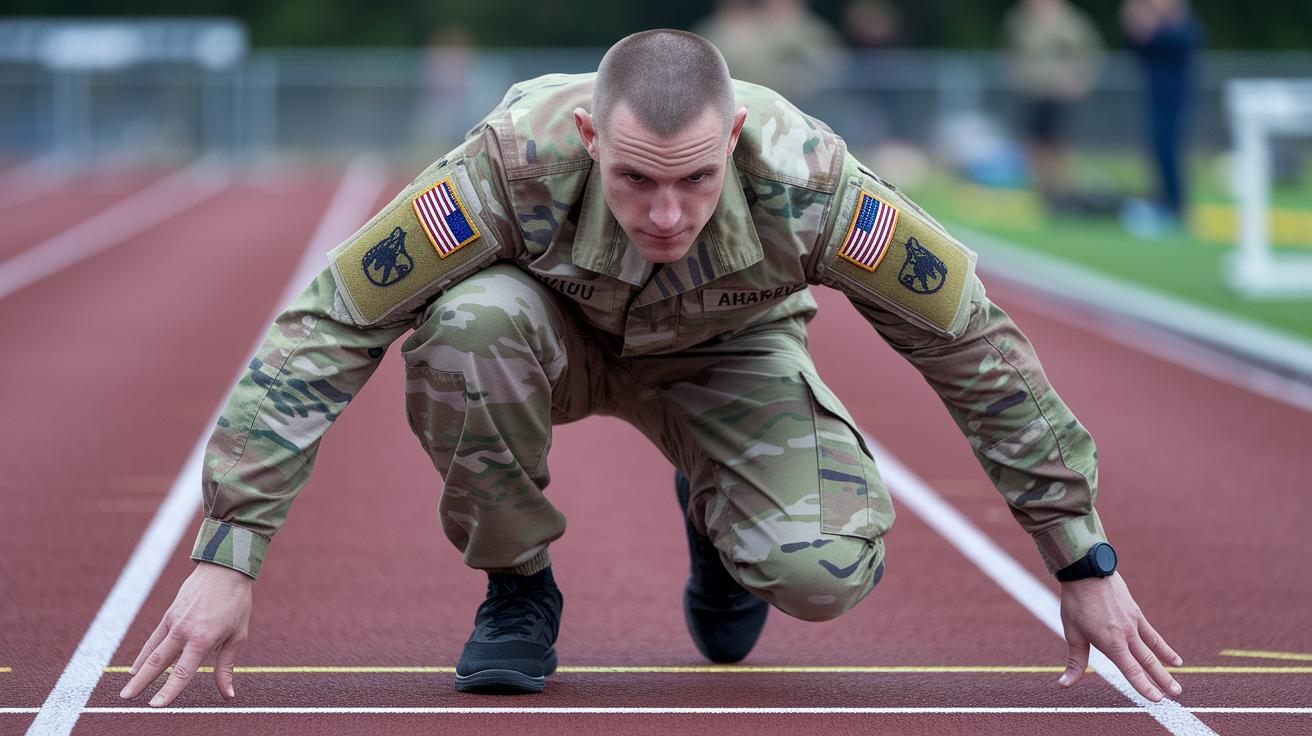
For those just starting out, keep your drills simple so you can build both confidence and proper form. Stick with a 10-yard shuttle and do 2 sets at a slow pace. Instead of explosive plyometric jumps, try walking lunges. This way, you ease into the soldier agility routine as if you're running a relaxed drill, getting familiar with the basics.
For soldiers with some experience, continue with the usual distances but now amp up the intensity a bit. Try to complete 3 or 4 sets and gradually pick up your speed by about 10%. You can add a few 10–12 inch vertical leaps to further challenge your muscles, all while keeping steady recovery in mind. It’s like moving up through your training modules where each drill nudges you to improve your speed and movement.
For the advanced troop, take on a full 30-yard shuttle for 5 or more sets. Adding a 10–20 lb weighted vest gives you extra resistance. Throw in reaction-light cues to mimic real combat situations and test your response times. This stage really pushes your limits and builds a strong, all-around athletic performance on the field.
Equipment and Space Requirements for Military Agility Drills

When setting up your drill, keep things simple and functional. All you really need are a few basic items to mark clear routes and zones. For example, a set of cones or markers can show you where to start, finish, and divide the field into sections. An agility ladder, whether you use one you already have or chalk it on the ground, helps you drill quick footwork. Plyo boxes, usually about 12 to 18 inches high, are great for practicing explosive jumps and smooth movements. You can also use floor markers to set spots for rapid, precise hops. If you're looking for an extra challenge, try adding a weighted vest for more resistance.
Make sure you have an open, flat area to work in, think of a field about 30 by 30 yards or an indoor gym if the weather isn’t cooperating. This safe, unobstructed space lets you focus on the drills without worrying about bumps or obstacles. The goal is to use just enough equipment to challenge yourself, so you’re not bogged down by too much gear. That way, you can concentrate on your timing, speed, and precision.
| Equipment | Purpose | Quantity/Size |
|---|---|---|
| Flat Cones/Markers | Define drill zones | 6-10 pieces |
| Agility Ladder | Enhance footwork | 12-16 rungs/chalk layout |
| Plyo Boxes | Support jump drills | 12-18″ boxes |
| Dot-Drill Markers | Create specific drill points | As needed |
| Weighted Vest | Add resistance to training | 5-20 lbs (optional) |
Measuring Progress in Military Agility Drills
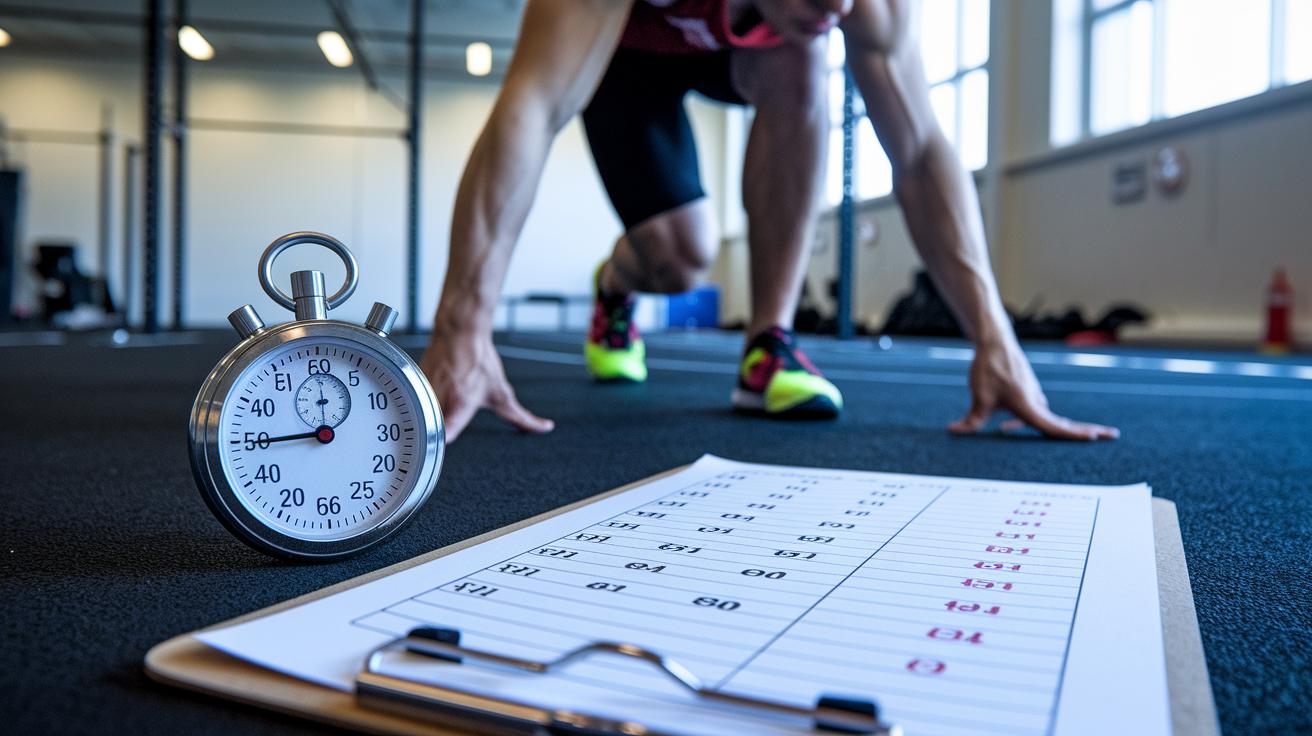
Keeping track of your progress is a smart move, so you know your training is paying off. One good way is noting down the times for your 10-, 20-, and 30-yard shuttle runs. These quick sprints tell you how fast you can start, stop, and change direction, just like you might need in a real mission.
It also helps to log your times on the obstacle course. Watching these numbers gives you clear proof of your ability to move through tight spaces and shift directions on the fly. Another neat metric is timing your reaction to a sound cue during drills. And hey, using video feedback is a simple way to catch little adjustments you might miss in the moment.
Here are some core performance drills:
- Write down your shuttle run times over 10, 20, and 30 yards.
- Keep a record of how fast you clear parts of an obstacle course.
- Track your reaction times with simple sound cues.
- Use video to review your movements and technique.
It’s a good idea to test yourself every 4 to 6 weeks. This steady schedule not only boosts your physical skills but also builds confidence, letting you clearly see how your hard work is paying off.
Final Words
In the action, we broke down key exercises to boost physical strength, quick response, and overall combat readiness. Each section offered clear steps, from shuttle runs and obstacle courses to ladder and plyometric drills, making it easy to follow along. We touched on scaling workouts, recording progress, and designing circuits that match your training level. These military agility drills can sharpen your skills, build confidence, and prepare you for the challenges ahead. Keep pushing forward and keep your training routine strong.
FAQ
Military agility drills for youth
The military agility drills for youth are designed to boost speed, coordination, and body control with simple exercises. They include cone drills, ladder routines, and short shuttle runs that build overall fitness.
Military agility drills for beginners
The military agility drills for beginners are basic exercises like light shuttle runs and simple cone or ladder drills. They emphasize controlled movements that help develop strength and coordination gradually.
Military agility drills at home
The military agility drills at home use minimal equipment, featuring exercises like shuttle runs, ladder routines, and side-to-side cone drills that improve speed and coordination in a small space.
What does Agility do in Train to Fight Roblox
The feature of agility in Train to Fight Roblox boosts movement speed and reaction time in the game. It helps improve dodging and maneuvering around obstacles to increase in-game performance.
What is a 5 10 5 agility drill?
The 5 10 5 agility drill involves sprinting 5 yards, turning to run 10 yards, and then sprinting 5 yards back. It develops quick directional changes and overall movement speed.
What are three drills that train your agility?
The three drills that train agility include shuttle runs, zigzag runs, and lateral plyometric jumps. Each exercise builds quick directional changes, balance, and explosive power during movement.
What are the 6 agility ladder drills?
The six agility ladder drills typically include high-knee runs, lateral shuffles, in-out movements, crossover steps, hopscotch patterns, and single-leg hops. They enhance coordination and quick footwork.
What are the 5 components of agility?
The five components of agility are speed, balance, coordination, strength, and flexibility. Each element contributes to fast reaction times and smooth, effective movement.